
Catalogue Search | MBRL


Are you sure you want to remove the book from the shelf?

{{itemTitle}}
9,677
result(s) for
"Transitional justice"
Sort by:


Lustration and Transitional Justice
How do transitional democracies deal with officials who have been tainted by complicity with prior governments? Should they be excluded or should they be incorporated into the new system? In Lustration and Transitional Justice, Roman David examines major institutional innovations that developed in Central Europe following the collapse of communist regimes. While the Czech Republic approved a lustration (vetting) law based on the traditional method of dismissals, Hungary and Poland devised alternative models that granted their tainted officials a second chance in exchange for truth. David classifies personnel systems as exclusive, inclusive, and reconciliatory; they are based on dismissal, exposure, and confession, respectively, and they represent three major classes of transitional justice.David argues that in addition to their immediate purposes, personnel systems carry symbolic meanings that help explain their origin and shape their effects. In their effort to purify public life, personnel systems send different ideological messages that affect trust in government and the social standing of former adversaries. Exclusive systems may establish trust at the expense of reconciliation, while inclusive and reconciliatory systems may promote both trust and reconciliation.In spite of its importance, the topic of inherited personnel has received only limited attention in research on transitional justice and democratization. Lustration and Transitional Justice is the first attempt to fill this gap. Combining insights from cultural sociology and political psychology with the analysis of original experiments, historical surveys, parliamentary debates, and interviews, the book shows how perceptions of tainted personnel affected the origin of lustration systems and how dismissal, exposure, and confession affected trust in government, reconciliation, and collective memory.
eBook


Feminist and Human Rights Struggles in Peru
In 2001, following a generation of armed conflict and authoritarian rule, the Peruvian state created a Truth and Reconciliation Committee (TRC). Pascha Bueno-Hansen places the TRC, feminist and human rights movements, and related non-governmental organizations within an international and historical context to expose the difficulties in addressing gender-based violence. Her innovative theoretical and methodological framework based on decolonial feminism and a critical engagement with intersectionality facilitates an in-depth examination of the Peruvian transitional justice process based on field studies and archival research. Bueno-Hansen uncovers the colonial mappings and linear temporality underlying transitional justice efforts and illustrates why transitional justice mechanisms must reckon with the societal roots of atrocities, if they are to result in true and lasting social transformation. Original and bold, Feminist and Human Rights Struggles in Peru elucidates the tension between the promise of transitional justice and persistent inequality and impunity.
eBook


Costs of Justice
In The Costs of Justice , Brian K. Grodsky provides
qualitative analyses of how transitional justice processes have
evolved in diverse ways in postcommunist Poland, Croatia, Serbia,
and Uzbekistan, by examining the decision-making processes and
goals of those actors who contributed to key transitional justice
policy decisions. Grodsky draws on extensive interviews with key
political figures, human rights leaders, and representatives of
various international, state, and nongovernmental bodies, as well
as detailed analysis of international and local news reports, to
offer a systematic and qualitatively compelling account of
transitional justice from the perspective of activists who, at the
end of a previous regime, were suddenly transformed from
downtrodden victim to empowered judge.
Grodsky challenges the argument that transitional justice in
post-repressive states is largely a function of the relative power
of new versus old elites. He maintains that a new regime's
transitional justice policy is closely linked to its capacity to
provide goods and services expected by constituents, not to
political power struggles. In introducing this goods variable, so
common to broad political analysis but largely overlooked in the
transitional justice debate, Grodsky argues that we must revise our
understanding of transitional justice. It is not an exceptional
issue; it is but one of many political decisions faced by leaders
in a transition state.
eBook

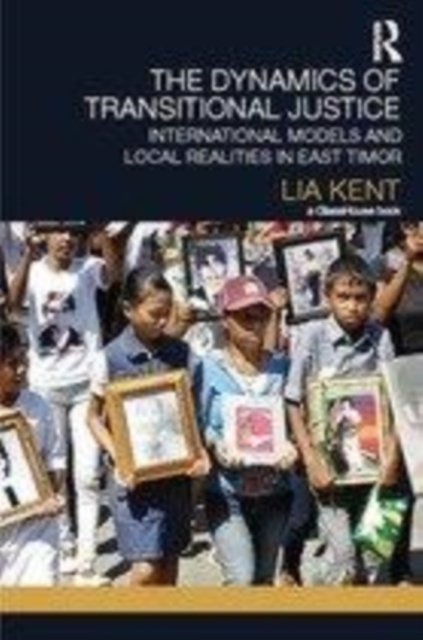
The Dynamics of Transitional Justice
The Dynamics of Transitional Justice draws on the case of East Timor in order to reassess how transitional justice mechanisms actually play out at the local level. Transitional justice mechanisms - including trials and truth commissions - have become firmly entrenched as part of the United Nations 'tool-kit' for successful post-conflict recovery. It is now commonly assumed that by establishing individual accountability for human rights violations, and initiating truth-seeking and reconciliation programs, individuals and societies will be assisted to 'come to terms' with the violent past and states will make the 'transition' to peaceful, stable liberal democracies. Set against the backdrop of East Timor's referendum and the widespread violence of 1999, this book interrogates the gap between the official claims made for transitional justice and local expectations. Drawing on a wide range of sources, including extensive in-depth interviews with victims/survivors, community leaders and other actors, it produces a nuanced and critical account of the complex interplay between internationally-sponsored trials and truth commissions, national justice agendas and local priorities. The Dynamics of Transitional Justice fills a significant gap in the existing social science literature on transitional justice, and offers new insights for researchers and practitioners alike.
eBook


Israeli Pre-Transitional Justice and the Nakba Law
Pre-transitional justice activities that expose past injustices during entrenched conflicts can incite strong reactions among actors who feel threatened by or dislike such activities, and who thus attempt to silence controversial truths. This article illuminates how attempts to silence controversial truths, in parallel with shutting down debate, can also have the unintended outcome of enlarging public discourse on previously marginalised issues. Thus, paradoxically, efforts to curb freedom of expression sometimes result instead in an expanded public capacity to debate previously silenced truths about the conflict. We conduct a case study of reactions to pre-transitional justice in Israeli society focusing on the so-called Nakba Law, enacted in 2011. Through interviews with members of the non-governmental organisation Zochrot, politicians, teachers and media persons, we first show the relationship between pre-transitional justice and enacting the Nakba Law. We then demonstrate that while the Nakba Law indeed aimed to hamper freedom of expression, it also enabled increased public knowledge about the meaning of Nakba. Our theoretical proposition regarding this paradox, in this case activated by instigating new memory laws, is highly relevant to other conflicts-in-resolution that experience pre-transitional justice processes.
Journal Article