
Catalogue Search | MBRL


Are you sure you want to remove the book from the shelf?

{{itemTitle}}
470
result(s) for
"Translators Fiction."
Sort by:

The Gordian knot
\"Georg Polger ekes out a lonely living as a freelance translator in the south of France, until he is approached by a certain Mr. Bulnakov, who has an intriguing proposition: Georg is to take over a local translation agency and finish a project left by the previous owner, who died in a mysterious accident. The money is right and then there is the matter of Bulnakov's secretary, Francoise, with whom Georg has fallen hopelessly in love. Late one night, however, Georg discovers Francoise secretly photographing a sensitive military project. He is shocked and heartbroken. Then, her eventual disappearance leaves him not only bereft, but suspicious of the motivations behind Mr. Bulnakov's offer. To make matters worse, Georg's every move is being watched. Determined to find out who Francoise really is, and to foil who ever is tracking him, Georg sets out on an mission that will take him to New York City, where with each step he is dragged deeper and deeper into a deadly whirlpool in which friend and foe are indistinguishable\"--P. [4] of cover.
Book

Will translators be cyborgs? What would make a cyborg translator?
Previous literature on cyborg translators focus mainly on machine translation as the ultimate science fiction. In 2022 it is relevant to talk about cyborg translators beyond just machine translation to picture new challenges. The aim of this article is to invite the readers to reflect on the subject.
Journal Article

Fives and twenty-fives : a novel
\"It's the rule-- always watch your fives and twenty-fives. When a convoy halts to investigate a possible roadside bomb, stay in the vehicle and scan five meters in every direction. A bomb inside five meters cuts through the armor, killing everyone in the truck. Once clear, get out and sweep twenty-five meters. A bomb inside twenty-five meters kills the dismounted scouts investigating the road ahead. Fives and twenty-fives mark the measure of a marine's life in the road repair platoon. Dispatched to fill potholes on the highways of Iraq, the platoon works to assure safe passage for citizens and military personnel. Their mission lacks the glory of the infantry, but in a war where every pothole contains a hidden bomb, road repair brings its own danger. Lieutenant Donavan leads the platoon, painfully aware of his shortcomings and isolated by his rank. Doc Pleasant, the medic, joined for opportunity, but finds his pride undone as he watches friends die. And there's Kateb, known to the Americans as Dodge, an Iraqi interpreter whose love of American culture-- from hip-hop to the dog-eared copy of Huck Finn he carries-- is matched only by his disdain for what Americans are doing to his country. Returning home, they exchange one set of decisions and repercussions for another, struggling to find a place in a world that no longer knows them. -- Provided by publisher.
Book

Interview with Translator Edward Gauvin
Abstract In this interview, award-winning translator and author Edward Gauvin reflects on his practice as a translator of over four hundred graphic novels, including works by major French comics artists, illustrators, and scriptwriters, such as Gébé, Marjane Satrapi, Alejandro Jodorowsky, Emmanuel Guibert, Joann Sfar, Lewis Trondheim, Zeina Abirached, Christophe Blain, Philippe Druillet, Enki Bilal, Blutch, and so on. He discusses how he approaches the theoretical and practical problems he has encountered as a translator—from well-trodden topics like speech balloon fit to his dynamic understanding of genre fiction. He also offers an insider's perspective on translators’ (often precarious) position within the larger the comics industry and talks about his favourite translations, as well as his current and future projects.
Journal Article

Melmoth : a novel
\"It has been years since Helen Franklin left England. In Prague, working as a translator, she has found a home of sorts--or, at least, refuge. That changes when her friend Karel discovers a mysterious letter in the library, a strange confession and a curious warning that speaks of Melmoth the Witness, a dark legend found in obscure fairy tales and antique village lore\"-- Provided by publisher.
BOOK
An Island Apart: Dejima as a Site of Cultural Mediation in David Mitchell's Historical Novel The Thousand Autumns of Jacob de Zoet
This article analyzes the importance of the setting in David Mitchell's historical novel The Thousand Autumns of Jacob de Zoet (2010). For over two centuries Dejima - an artificial island constructed in Nagasaki Bay and the site of a Dutch trading post - functioned as the sole point of contact between the Western world and Japan, which at that time pursued an isolationist policy. The novel explores the island's double function: that of connecting the two cultures and yet keeping them apart. Due to its peculiar location - within and outside Japan - the island was not only a trading factory, but also acquired symbolic meanings. The article examines Dejima's role in the novel as a site of (limited) cultural exchange by focusing on its dual orientation towards both Japan and the outside world, its protean status in the story, and the crucial role of translation and translators. It is also highlighted that the intercultural encounters depicted in The Thousand Autumns foreground the role of the island in the modernization of Japan.
Journal Article
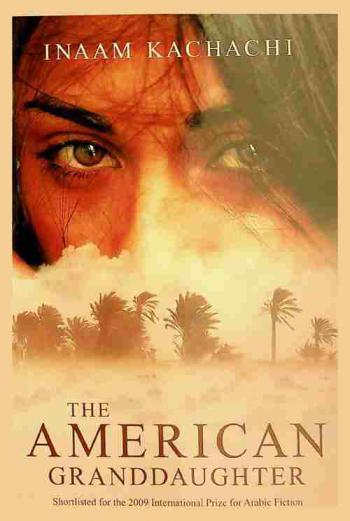
The American granddaughter
At the beginning of America's occupation of Iraq, 15 years after leaving Baghdad, Zeina returns to her war-torn homeland as an interpreter for the US Army where she finds herself torn by conflicting allegiances. Her traditional grandmother, the only family member that Zeina believes she has in Iraq, disapproves of her granddaughter's involvement with the occupying forces. Whilst in Baghdad, Zeina meets two 'brothers' she knows nothing of. When she falls deeply in love with Muhaymin, a militant in the Al Mehdi Army, she begins to question all her values.
Book

Untranslatability in Science Fiction Narratives: A Study of Ideological and Linguistic Constraints in Translation
This study explores the difficulties of untranslatability within science fiction narratives, with a particular emphasis on linguistic limitations (such as neologisms, specialised terminology, and syntactic complexity), cultural limitations (including historical references, mythological allusions, and region-specific metaphors), and ideological limitations (encompassing censorship, political discourse, and philosophical viewpoints). Grounded in the cultural turn of translation studies, the research investigates how science fiction reflects socio-political ideologies and presents distinct challenges for translators, especially when dealing with texts originating from non-Western cultures. The Chinese science fiction novel The Three-Body Problem is chosen as the focal case study owing to its worldwide importance and intricate ideological content. The research seeks to examine how translators negotiate ideological and linguistic obstacles, evaluate the strategies employed to address sensitive material, and consider the impact of translators’ own ideological positions on the resulting translations. A qualitative methodology was adopted, involving semi-structured interviews with eleven professional translators, literary scholars, and editors. The data were subjected to thematic analysis to extract significant themes and common translation strategies. The findings reveal that translators utilise adaptation by modifying culturally specific terms to suit the target audience’s understanding, omission by removing politically sensitive or untranslatable content to avoid misinterpretation, and creative reinterpretation by reformulating complex scientific or ideological ideas to maintain narrative coherence. These approaches uphold cultural accuracy and readability while addressing ideological constraints. Furthermore, the translators’ ideological perspectives markedly affect their translation decisions. This research offers fresh perspectives on the ideological dimensions of literary translation, highlighting the translator’s crucial role in mediating cultural narratives within the global science fiction community.
Journal Article

The American granddaughter
\"In her award-winning novel, Inaam Kachachi portrays the dual tragedy of her native land: America's failure and the humiliation of Iraq. The American Granddaughter depicts the American occupation of Iraq through the eyes of a young Iraqi-American woman, who returns to her country as an interpreter for the US Army. Through the narrator's conflicting emotions, we see the tragedy of a country which, having battled to emerge from dictatorship, then finds itself under foreign occupation. At the beginning of America's occupation of Iraq, Zeina returns to her war-torn homeland as an interpreter for the US Army. Her formidable grandmother-the only family member that Zeina believes she has in Iraq-gravely disapproves of her granddaughter's actions. Then Zeina meets Haider and Muhaymin, two \"brothers\" she knows nothing of, and falls deeply in love with Muhaymin, a militant in the Al Mehdi Army. These experiences force her to question all her values\"-- Provided by publisher.
Book

Translator’s Style in Fiction Translation: A Ten-Year Systematic Literature Review
This research aims to comprehensively analyze the Translator's Style in fiction translation to enhance the understanding of its influence on the quality and effectiveness of translated fiction. The systematic literature review was conducted by extracting relevant content from four databases: Scopus, Web of Science, EBSCO, and Google Scholar. The removed material was then analyzed and synthesized based on a predefined set of rules and criteria. The selected articles underwent a rigorous screening process that met specific inclusion and exclusion criteria. The examination of the chosen studies revealed significant findings regarding the Translator's Style in the translation of fiction over the past decade. The study identified emerging trends, novel research methodologies, and theoretical frameworks within this field and acknowledged their significance. This study suggests that further research should be conducted on the Translator's Style in fiction translation within translation studies. One can improve their understanding of the Translator's Style by employing interdisciplinary methods, including incorporating literary theory, stylometry, and sociocultural perspectives. This study provides essential information for translators and scholars in the field of translation studies, highlighting the significance of the Translator's Style and promoting comparative studies of multiple translations to gain a comprehensive understanding of the various choices and approaches translators employ.
Journal Article