
Catalogue Search | MBRL


Are you sure you want to remove the book from the shelf?

{{itemTitle}}
14
result(s) for
"Transmigration Judaism."
Sort by:

Sleep, death, and rebirth : mystical practices of Lurianic Kabbalah
\"In the sixteenth century, the famous kabbalist Isaac Luria transmitted a secret trove of highly complex mystical practices to a select groups of students. These meditations were designed to capitalize on sleep and death states in order to effectively split one's soul into multiple parts, and which, when properly performed, permitted the adept to free oneself from the cycle of rebirth. Through an in-depth analysis of these contemplative practices within the broader context of Lurianic literature, Zvi Ish-Shalom guides us on a penetrating scholarly journey into a realm of mystical teachings and practices never before available in English, illuminating a radically monistic vision of reality at the heart of Kabbalistic metaphysics and practice\"-- Provided by publisher.
BOOK

Renaissance and Rebirth
Through the theme of metempsychosis as discussed by scholars in Renaissance Italy, this book addresses the problematic question of the roles of Jews who lived in Italy in the development of Renaissance culture in its Jewish and its Christian dimensions.
eBook
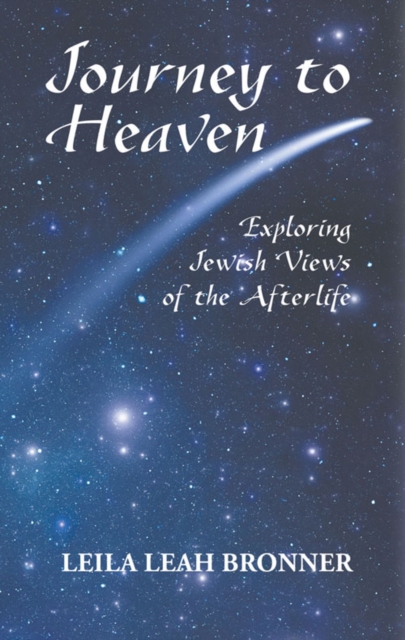
Journey to Heaven
A number of the basic tenets of Jewish belief regarding the afterlife, resurrection, immortality, judgment, messianism, and the world to come are laid out in this fascinating and accessible volume. Beginning with the Bible's references to Sheol and its allusions to resurrection, this survey explores immortality and bodily resurrection in Second Temple literature; the Mishnah's discussions of olam ha-ba, or the world to come, and how to merit entry into it; and the Talmud's depictions of paradise and hell, and the soul's journey through these metaphysical landscapes. The book also explores the views of medieval scholars such as Maimonides and Nahmanides, Jewish mystical teachings about reincarnation, and modern views of faith and belief, as well as the evolving view of the Messiah over the course of Jewish history. This absorbing study demonstrates that the afterlife is indeed a vital part of Judaism as it reveals how generations of Jews, from biblical times to the present, have grappled with the core ideas and beliefs about the hereafter.
eBook

The Psychosocial Function Of Reincarnation Among Druze In Israel
To gain an understanding of the psychosocial function of reincarnation among Druze, interviews were conducted with nine male subjects who had experienced reincarnation (Notq) and with one or two of their family members. Analysis of these interviews revealed that the onset of Notq typically occurs at between two and five years of age. Five of the subjects had displayed psychological distress in their childhood that was alleviated after the Notq. Once the child has displayed initial indications of reincarnation, such as mentioning names that the family construes as being from a past life, the family takes an active role in constructing the past-life story and matching it to a known real story involving a tragic death. This match creates a new order in the life of the child, the family, and the past-life family. All parties benefit from this new order: the child receives new special attention and love and becomes able to control and manipulate the parents; the parents are relieved because they see the child happy, and benefit from the social attention and regard they receive; and the grieving of the bereaved past-life family is alleviated by the realization that the soul of their lost son still lives. The findings support the sociocognitive notion of the constructing of past memories by the social environment. Additional research that should include data collection from the past-life family and examination of the affinity of reincarnation with dissociation and child abuse is recommended.
Journal Article
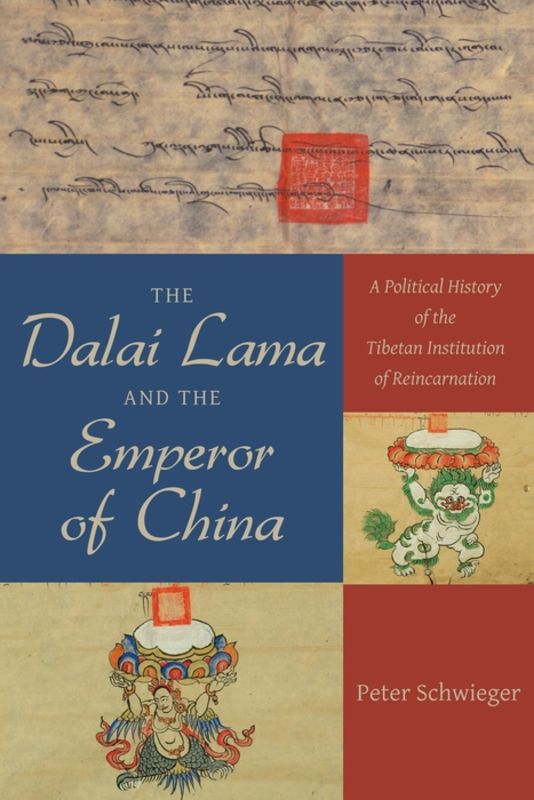
The Dalai Lama and the Emperor of China
A major new work in modern Tibetan history, this book follows the evolution of Tibetan Buddhism'strülku(reincarnation) tradition from the seventeenth to the nineteenth centuries, along with the Emperor of China's efforts to control its development. By illuminating the political aspects of thetrülkuinstitution, Schwieger shapes a broader history of the relationship between the Dalai Lama and the Emperor of China, as well as a richer understanding of the Qing Dynasty as an Inner Asian empire, the modern fate of the Mongols, and current Sino-Tibetan relations.
Unlike other pre-twentieth-century Tibetan histories, this volume rejects hagiographic texts in favor of diplomatic, legal, and social sources held in the private, monastic, and bureaucratic archives of old Tibet. This approach draws a unique portrait of Tibet's rule by reincarnation while shading in peripheral tensions in the Himalayas, eastern Tibet, and China. Its perspective fully captures the extent to which the emperors of China controlled the institution of the Dalai Lamas, making a groundbreaking contribution to the past and present history of East Asia.
eBook

POSSESSED INDIVIDUALISM IN GEORGE ELIOT'S DANIEL DERONDA
[Harris and a female follower] told me about the fays while I was up at Fountain Grove; how at first a little “Two-in-one” would move into a person's breast as soon as they could find entrance, and then clearing a space would begin to build their house; soon they would have a garden and plant fruit-trees; and then little baby fays would be born. The fays have many babies, and so they keep and keep on enlarging the spaces and filling them full of beautiful houses, gardens, and groves, till at last the whole being, to the very extremities of fingers and toes, is all a fairy universe, a world of loveliness. Just think of having lovely little fays bathing in the veins. —A Sister in the New Life, Santa Rosa, California, June 9, 1881
Journal Article


INTRODUCTION
The original impetus for my research on Philo’s position on the idea of reincarnation, first in the form of a Master’s thesis, then as my doctoral dissertation and now as its revised version, came from a single sentence and the related footnote in an article by Samuel Vollenweider.¹ As an undergraduate student of theology, I had been wholly unaware that this doctrine might have had supporters within Second Temple Judaism, and was thus surprised to find Vollenweider writing, “Darüber hinaus zeichnet sich nur gerade einmal bei Philon von Alexandrien das Seelenwanderungsmotiv am fernen Horizont ab.”² The passage referred to states
Book Chapter
Diderot’s Buddhist Brahmins
In the first volumes of the central monument of the French Enlightenment, theEncyclopédie, there are several articles about Asian religions that are either signed by or attributed to Denis Diderot (1713–84). The most important ones in the first volumes are entitled “ASIATIQUES. Philosophie des Asiatiques en général” (1751:1.752–55), “BRACHMANES” (1752:2.391), and “BRAMINES” (1752:2.393–94). Today, these articles have such a bad reputation that they are often criticized and held up for ridicule. For example, Wilhelm Halbfass wrote,
In the article “Brachmanes,” Diderot discusses what he calls “extravagances tout-à-fait incroyables,” stating that the persons who had referred to
Book Chapter