
Catalogue Search | MBRL


Are you sure you want to remove the book from the shelf?

{{itemTitle}}
2,251
result(s) for
"Transportation Great Britain."
Sort by:


Roads to power : Britain invents the infrastructure state
Roads to Power tells the story of how Britain built the first nation connected by infrastructure, how a libertarian revolution destroyed a national economy, and how technology caused strangers to stop speaking.
In early eighteenth-century Britain, nothing but dirt track ran between most towns. By 1848 the primitive roads were transformed into a network of highways connecting every village and island in the nation—and also dividing them in unforeseen ways. The highway network led to contests for control over everything from road management to market access. Peripheries like the Highlands demanded that centralized government pay for roads they could not afford, while English counties wanted to be spared the cost of underwriting roads to Scotland. The new network also transformed social relationships. Although travelers moved along the same routes, they occupied increasingly isolated spheres. The roads were the product of a new form of government, the infrastructure state, marked by the unprecedented control bureaucrats wielded over decisions relating to everyday life.
Does information really work to unite strangers? Do markets unite nations and peoples in common interests? There are lessons here for all who would end poverty or design their markets around the principle of participation. Guldi draws direct connections between traditional infrastructure and the contemporary collapse of the American Rust Belt, the decline of American infrastructure, the digital divide, and net neutrality. In the modern world, infrastructure is our principal tool for forging new communities, but it cannot outlast the control of governance by visionaries.
eBook

Travel fast or smart? : a manifesto for an intelligent transport policy
\"Britain does not have a coherent transport policy, and conventional transport economics has reached a dead end. A transport policy should incorporate systematic thinking about the travel needs of society, but in Britain public investment in the transport system has been extraordinarily volatile. We closed underused railways and then experienced a doubling of passenger numbers, prompting huge new investment. We gave up making substantial investments in motorways, but we have now chosen to revive the road construction effort in a big way. We vacillate on road pricing, introducing congestion charging successfully in London but backing off elsewhere because of local opposition. We have delayed the decision about whether and where to build additional airport capacity for decades. This mess has come about because policy has focused on big construction projects and time savings when it should have been focusing on the part that people and places play in economic development.\" -- Publisher's description.
Book
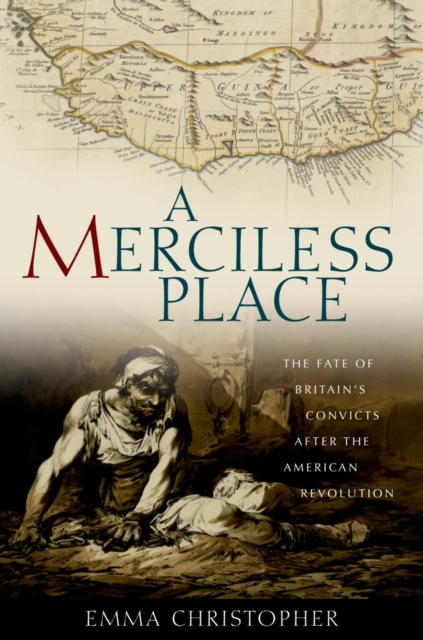
A merciless place : the fate of Britain's convicts after the American Revolution
Since Robert Hughes' The Fatal Shore, the fate of British convicts has burned brightly in the popular imagination. Incredibly, their larger story is even more dramatic--the saga of forgotten men and women scattered to the farthest corners of the British e.
eBook

The transportation experience
While much of the transportation systems in Europe and the United States are mature (if not senescent), the rest of the world is still planning, developing, and deploying new systems. The accomplishments and mistakes of places like the United Kingdom and the United States, then, can teach us lessons that may be applied to places where transportation remains nascent or adolescent. The Transportation Experience seeks to understand the genesis of transportation policy in America and the UK, along with the roles that this policy plays as systems are innovated, deployed, and reach maturity, and how policies might be improved. The second edition updates all data that appeared in the first edition (published in 2005), and features significant revision of approximately half of the book. The book has been reorganized for improved presentation, and smoothly integrates all new material. This second edition also includes two new chapters on safety and security in transportation systems and user interface.
eBook

The Transport Revolution 1770-1985
For the new edition of this classic book Professor Bagwell has included an examination of transport developments since 1974 and particularly the radical changes in policy introduced by Thatcher governments since 1979. The inclusion of a large number of maps, tables and figures, and contemporary illustrations of principal modes of transport enhances the reader's understanding and enjoyment of the text.`The most comprehensive, detailed and up-to-date book on the subject.' -TLS`Full of apt and revealing examples which bring alive and make more readily intelligible the fundamental economic arguments.' - Agricultural History Review
eBook