
Catalogue Search | MBRL


Are you sure you want to remove the book from the shelf?

{{itemTitle}}
6,685
result(s) for
"Transportation engineering History."
Sort by:

From here to there : the story of how we transport ourselves and everything else
\"A history of transportation from primitive technology to driverless cars.\"--Provided by publisher.
Book
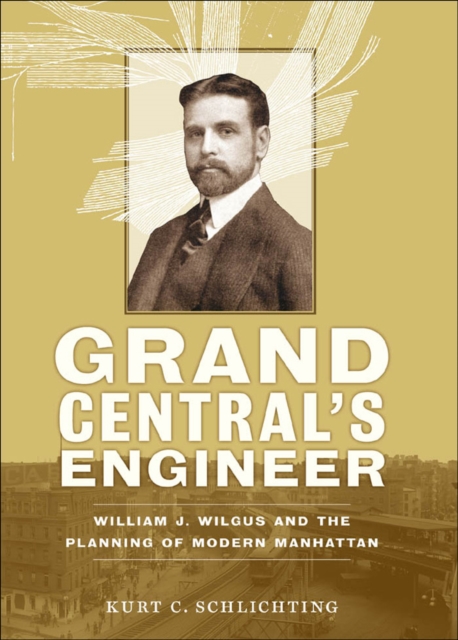
Grand Central's engineer : William J. Wilgus and the planning of modern Manhattan
Few people have had as profound an impact on the history of New York City as William J. Wilgus. As chief engineer of the New York Central Railroad, Wilgus conceived the Grand Central Terminal, the city's magnificent monument to America's Railway Age. Kurt C. Schlichting here examines the remarkable career of this innovator, revealing how his tireless work moving people and goods over and under Manhattan Island's surrounding waterways forever changed New York's bustling transportation system. After his herculean efforts on behalf of Grand Central, the most complicated construction project in New York's history, Wilgus turned to solving the city's transportation quandary: Manhattan—the financial, commercial, and cultural hub of the United States in the twentieth century—was separated from the mainland by two major rivers to the west and east, a deep-water estuary to the south, and the Harlem River to the north. Wilgus believed that railroads and mass transportation provided the answer to New York City's complicated geography. His ingenious ideas included a freight subway linking rail facilities in New Jersey with manufacturers and shippers in Manhattan, a freight and passenger tunnel connecting Staten Island and Brooklyn, and a belt railway interconnecting sixteen private railroads serving the metropolitan area. Schlichting's deep passion for Wilgus and his engineering achievements are evident in the pages of this fascinating work. Wilgus was a true pioneer, and Schlichting ensures that his brilliant contributions to New York City's transportation system will not be forgotten. Praise for Schlichting's Grand Central Terminal \"Grand Central Terminal is celebrated for its Beaux-Arts style, but Kurt C. Schlichting looks behind the facade to see the hidden engineering marvels.\"—New York Times Book Review \"His study peels away our contemporary expectations and experiences and reveals the layers of history and acts of men that served as the foundation for this great structure.\"—H-Urban, H-Net Review \"The most detailed account yet of one of the most important events in the history of 20th-century architecture, railroad development, and city building.\"—Choice \"In his detailed accounts of the fiscal, stylistic, and engineering decisions that went into the creation of . . . Grand Central Terminal, Schlichting clearly shows both how energetic and talented all of the people involved were and how dramatically they altered this central portion of New York City.\"—Journal of the Society of Architectural Historians \"Ably tells the story of the New York rail system's most active and visible symbol: the architectural and engineering masterpiece, with its grand public concourse, in the heart of Midtown.\"—New Scientist
eBook

Speed read Ferrari : the history, technology and design behind Italy's legendary automaker
\"A bite-sized illustrated history of Ferrari, the world's premier sports car manufacturer\"-- Provided by publisher.
Book

In the watches of the night
Before skyscrapers and streetlights glowed at all hours, American cities fell into inky blackness with each setting of the sun. But over the course of the nineteenth and early twentieth century, new technologies began to light up streets, sidewalks, buildings, and public spaces. Peter C. Baldwin's evocative book depicts the changing experience of the urban night over this period, visiting a host of actors—scavengers, newsboys, and mashers alike—in the nocturnal city. Baldwin examines work, crime, transportation, and leisure as he moves through the gaslight era, exploring the spread of modern police forces and the emergence of late-night entertainment, to the era of electricity, when social campaigns sought to remove women and children from public areas at night. While many people celebrated the transition from darkness to light as the arrival of twenty-four hours of daytime, Baldwin shows that certain social patterns remained, including the danger of street crime and the skewed gender profile of night work. Sweeping us from concert halls and brothels to streetcars and industrial forges, In the Watches of the Night is an illuminating study of a vital era in American urban history.
eBook

Innovations in transportation
\"Imagine a street filled with horses and buggies, or the skies without airplanes! You might not realize that, before vehicles, it used to take days--even weeks--to visit friends or family! This title looks at major innovations in transportation over the years, and the ingenious inventors, scientists, and engineers who made them. With a little inventive thinking, what might you create to help us change the way we travel?\"--Provided by publisher.
Book
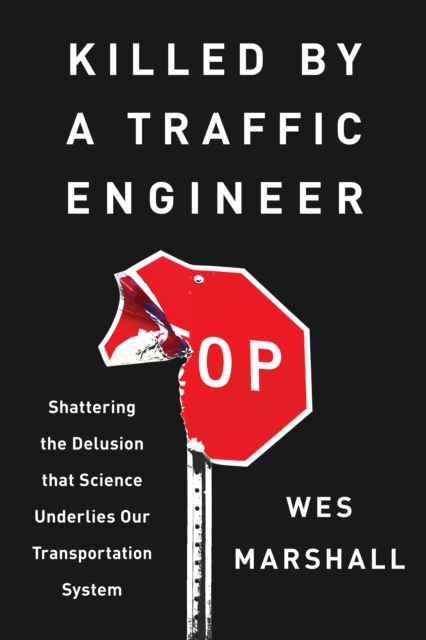
Killed by a Traffic Engineer
In the US we are nearing four million road deaths since we began counting them in 1899. The numbers are getting worse in recent years, yet we continue to accept these deaths as part of doing business. There has been no examination of why we engineer roads that are literally killing us. Fixing the carnage on our roadways requires a change in mindset and a dramatic transformation of transportation. This goes for traffic engineers in particular because they are still the ones in charge of our streets. In
Killed by a Traffic Engineer , civil engineering professor Wes Marshall shines a spotlight on how little science there is behind the way that our streets are engineered, which leaves safety as an afterthought. While traffic engineers are not trying to cause deliberate harm to anyone, he explains, they are guilty of creating a transportation system whose designs remain largely based on plausible, but unproven, conjecture. Thoroughly researched and compellingly written,
Killed by a Traffic Engineer shows how traffic engineering “research” is outdated and unexamined (at its best) and often steered by an industry and culture considering only how to get from point A to B the fastest way possible, to the detriment of safety, quality of life, equality, and planetary health. Marshall examines our need for speed and how traffic engineers disconnected it from safety, the focus on capacity and how it influences design, blaming human error, relying on faulty data, how liability drives reporting, measuring road safety outcomes, and the education (and reeducation) of traffic engineers.
Killed by a Traffic Engineer is ultimately hopeful about what is possible once we shift our thinking and demand streets engineered for the safety of people, both outside and inside of cars. It will make you look at your city and streets—and traffic engineers— in a new light and inspire you to take action.
eBook

The rise of industry (1700-1800)
In only a few decades, new materials, new machines, new sources of power, and new methods of transportation changed the face of the world. Mines, furnaces, and mills formed the basis of towns where the routines of the natural world were subject to the rhythms of the factory. This book explores the innovations of the 18th century and how they changed the world forever.
Book

Fighting Traffic
Before the advent of the automobile, users of city streets were diverse and included children at play and pedestrians at large. By 1930, most streets were primarily a motor thoroughfares where children did not belong and where pedestrians were condemned as \"jaywalkers.\" In Fighting Traffic, Peter Norton argues that to accommodate automobiles, the American city required not only a physical change but also a social one: before the city could be reconstructed for the sake of motorists, its streets had to be socially reconstructed as places where motorists belonged. It was not an evolution, he writes, but a bloody and sometimes violent revolution. Norton describes how street users struggled to define and redefine what streets were for. He examines developments in the crucial transitional years from the 1910s to the 1930s, uncovering a broad anti-automobile campaign that reviled motorists as \"road hogs\" or \"speed demons\" and cars as \"juggernauts\" or \"death cars.\" He considers the perspectives of all users--pedestrians, police (who had to become \"traffic cops\"), street railways, downtown businesses, traffic engineers (who often saw cars as the problem, not the solution), and automobile promoters. He finds that pedestrians and parents campaigned in moral terms, fighting for \"justice.\" Cities and downtown businesses tried to regulate traffic in the name of \"efficiency.\" Automotive interest groups, meanwhile, legitimized their claim to the streets by invoking \"freedom\"--a rhetorical stance of particular power in the United States. Fighting Traffic offers a new look at both the origins of the automotive city in America and how social groups shape technological change.Peter D. Norton is Assistant Professor in the Department of Science, Technology, and Society at the University of Virginia.
eBook

Trains, planes, and ships
Follow the development of trains, planes and ships, as they have grown more powerful, faster, and more fantastical through engineering skill, design and ambition.
Book

The traffic systems of Pompeii
The Traffic Systems of Pompeii is the first sustained examination of the evidence for a regulated circulation of wheeled traffic in the ancient world. The setting to this system is the six-hundred-year evolution of Pompeii’s street network, the focus of which telescopes from the city’s urban grid to the shape of the streets, the treatment of their surfaces, and finally the individual elements of construction—the curbstones, stepping stones, and guard stones—where the evidence for traffic was inscribed. Although ruts are the most evocative evidence of ancient traffic, it is the wearing patterns on the vertical faces of street features that permit the determination of the directions that ancient carts were traveling and undergird the argument for their systematic regulation. Distilled from over five hundred locations recording multiple categories of evidence, all wholly new to archaeology and unique to this research, this book reveals the basic rules of the road and at the same time opens larger historical questions. What does the existence of a traffic system mean for our understanding of ancient urbanism? What other social forces are uncovered in the search for it? To explore these questions, the traffic system at Pompeii is set in its broader contexts as one infrastructural and administrative artifact of the Roman empire, an epiphenomenon of a deeply urban culture.
eBook