
Catalogue Search | MBRL


Are you sure you want to remove the book from the shelf?

{{itemTitle}}
161
result(s) for
"Travel writing -- History -- 19th century"
Sort by:

Romanticism and the Anglo-Hispanic Imaginary
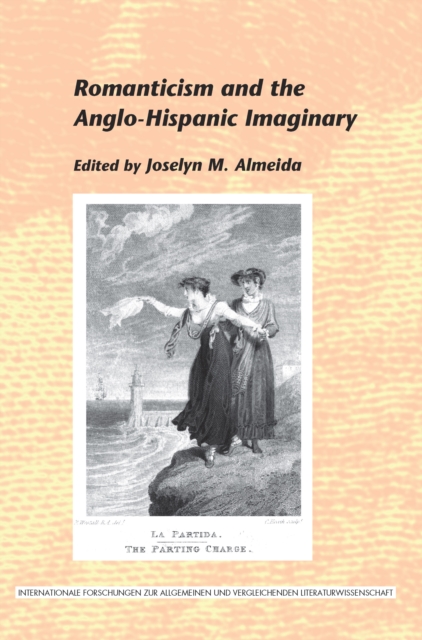
In Romanticism and the Anglo-Hispanic Imaginary, the authors assess British Romanticism's creative and polemical engagements with the Peninsular War, the bid of Spanish American colonies to establish independence with British support, and the impact of travel narratives about Spain and the Americas. The essays analyze questions of language and translation in Anglo-Hispanic literary genealogies, the representation of war and nationalism in poetry, drama, and prose, and the confluence of empire, gender, and authorship in travel narratives. Scholars and students of Romanticism will find in-depth explorations of the relationship between Britain, Spain, and Latin America during the Napoleonic era and its afterlife in cultural memory.
eBook

Curiosity and the aesthetics of travel writing, 1770-1840 : \from an antique land\
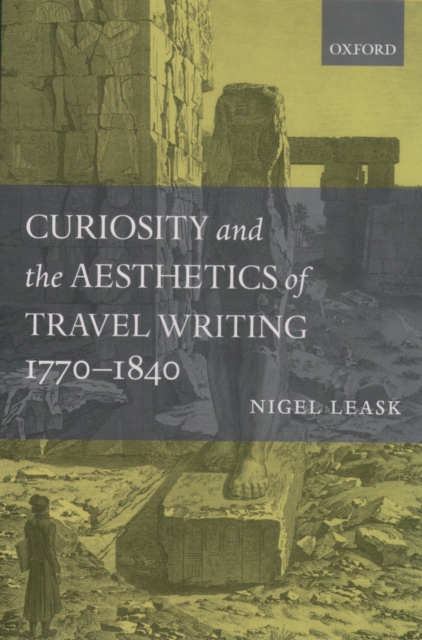
The decades between 1770 and 1840 are rich in exotic accounts of the ruin-strewn landscapes of Ethiopia, Egypt, India, and Mexico. Yet it is a field which has been neglected by scholars and which - unjustifiably - remains outside the literary canon. In this pioneering book, Nigel Leask studies the Romantic obsession with these 'antique lands', drawing generously on a wide range of eighteenth- and nineteenth-century travel books, as well as on recent scholarship in literature, history, geography, and anthropology. Viewing the texts primarily as literary works rather than 'transparent' adventure stories or documentary sources, he sets out to challenge the tendency in modern academic work to overemphasize the authoritative character of colonial discourse. Instead, he addresses the relationship between narrative, aesthetics, and colonialism through the unstable discourse of antiquarianism, exploring the effects of problems of creditworthiness, and the nebulous epistemologicial claims of 'curiosity' (a leitmotif of the accounts studied here), on the contemporary status of travel writing. Attentive to the often divergent idioms of elite and popular exoticism, Curiosity and the Aesthetics of Travel Writing plots the transformation of the travelogue through the period, as the baroque particularism of curiosity was challenged by picturesque aesthetics, systematic 'geographical narrative', and the emergence of a 'transcendental self' axiomatic to Romantic culture. In so doing it offers an important reformulation of the relations between literature, aesthetics, and empire in the late Enlightenment and Romantic periods.
eBook


Antebellum American Women Writers and the Road
A study of American women’s narratives of mobility and travel, this book examines how geographic movement opened up other movements or mobilities for antebellum women at a time of great national expansion. Concerned with issues of personal and national identity, the study demonstrates how women not only went out on the open road, but participated in public discussions of nationhood in the texts they wrote. Roberson examines a variety of narratives and subjects, including not only traditional travel narratives of voyages to the West or to foreign locales, but also the ways travel and movement figured in autobiography, spiritual, and political narratives, and domestic novels by women as they constructed their own politics of mobility. These narratives by such women as Margaret Fuller, Susan Warner, and Harriet Beecher Stowe destabilize the male-dominated stories of American travel and nation-building as women claimed the public road as a domain in which they belonged, bringing with them their own ideas about mobility, self, and nation. The many women’s stories of mobility also destabilize a singular view of women’s history and broaden our outlook on geographic movement and its repercussions for other movements. Looking at texts not usually labeled travel writing, like the domestic novel, brings to light social relations enacted on the road and the relation between story, location, and mobility.
Acknowledgments Introduction: American Mobilities 1: \"What hath befallen me\": Sites of Contestation in Sarah Beavis’s Two Narratives of Her Adventures on the Mississippi River 2: \"With the Wind Rocking the Wagon\": Women’s Narratives of the Way West 3: The Politics of Mobility: Self and Nation In-(Between) Margaret Fuller’s Summer on the Lakes 4: \"A Higher Call\": Mobility, Spirituality, and Social Uplift in the Narratives of Maria Stewart and Jarena Lee 5: Circulations of Body and Word: Women’s Slave Narratives 6: Domesticating the Road in the Wide World of Antebellum Women’s Novels 7: Touristic Writing by Antebellum Women Sightseers 8: Jane Cazneau and Margaret Fuller: The Politics of Mobility—Manifest Destiny and Revolution Epilogue Notes Bibliography Index
Susan Roberson is Professor of English at Texas A & M University--Kingsville. She is the author of Emerson in His Sermons: A Man-Made Self (1995) and the editor of Women, America, and Movement: Narratives of Relocation (1998) and of Defining Travel: Diverse Visions (2001).
eBook


Mark Twain, Travel Books, and Tourism
This illuminating study reevaluates an often overlooked aspect of Mark Twain's writing-his travel narratives-and demonstrates their centrality to his identity and thinking.
Travel books, Jeffrey Melton asserts in this study, are vital to Mark Twain's identity as a writer and to his cultural influence, and not just, as many critics have argued, preliminary sketches or failed attempts at fiction. Furthermore, the identity that Twain establishes for himself in these books as the arch tourist provides the most compelling perspective from which to view his entire body of work.
Melton begins by outlining the conventions of travel writing in the 19th century and proceeds to document Twain's subversion of those conventions to his own ends: a reinvention of the genre. The remainder of the study examines Twain's travel narratives individually, charting a progression from the Old World in The Innocents Abroad and A Tramp Abroad, in which Twain confronts the limitations of the tourist experience of life and discovers the powers of imagination and self-delusion, to the New World in Roughing It and Life on the Mississippi, in which Twain seeks to reconcile his outsider identity with a search for home. The final section considers Twain's last travel narrative, Following the Equator, as Twain searches for a complete escape from the tourist perspective and its imperialistic implications. In the process, Melton shows, Twain's travelogues highlight the author's philosophical and moral evolution as a writer from the worldviews of innocence to experience.
Mark Twain, Travel Books, and Tourism is the first full-length work to treat Twain's travel narratives in depth and in specific context with his contemporary travel writers and with tourism. Academic libraries, students and scholars of American and southern literature, Mark Twain and travelogue enthusiasts-all will welcome this thoughtful look at the 19th century's most popular and best-selling travel writer.
Jeffrey Alan Melton is Associate Professor of English at Auburn University Montgomery.
eBook

Roman Holidays
Featuring essays by twelve prominent American literature scholars,Roman Holidaysexplores the tradition of American travel to Italy and makes a significant contribution to the understanding of nineteenth-century American encounters with Italian culture and, more specifically, with Rome.
The increase in American travel to Italy during the nineteenth century was partly a product of improved conditions of travel. As suggested in the title, Italy served nineteenth-century writers and artists as a kind of laboratory site for encountering Others and \"other\" kinds of experience. No doubt Italy offered a place of holiday-a momentary escape from the familiar-but the journey to Rome, a place urging upon the visitor a new and more complex sense of history, also forced a reexamination of oneself and one's identity. Writers and artists found their religious, political, and sexual assumptions challenged.
Nathaniel Hawthorne'sThe Marble Faunhas a prominent place in this collection: as Henry James commented in his study of Hawthorne, the book was \"part of the intellectual equipment of the Anglo-Saxon visitor to Rome.\" The essayists also examine works by James, Fuller, Melville, Douglass, Howells, and other writers as well as such sculptors as Hiram Powers, William Wetmore Story, and Harriet Hosmer.
Bringing contemporary concerns about gender, race, and class to bear upon nineteenth-century texts,Roman Holidaysis an especially timely contribution to nineteenth-century American studies.
eBook