
Catalogue Search | MBRL


Are you sure you want to remove the book from the shelf?

{{itemTitle}}
1,036
result(s) for
"Trees Ecophysiology."
Sort by:

Twelve trees : the deep roots of our future
A compelling global exploration of nature and survival as seen via a dozen species of trees that represent the challenges facing our planet, and the ways that scientists are working urgently to save our forests and our future. The world today is undergoing the most rapid environmental transformation in human history--from climate change to deforestation. Scientists, ethnobotanists, indigenous peoples, and collectives of all kinds are closely studying trees and their biology to understand how and why trees function individually and collectively in the ways they do. In Twelve Trees, Daniel Lewis, curator and historian at one of the world's most renowned research libraries, travels the world to learn about these trees in their habitats. Lewis takes us on a sweeping journey to plant breeding labs, botanical gardens, research facilities, deep inside museum collections, to the tops of tall trees, underwater, and around the Earth, journeying into the deserts of the American west and the deep jungles of Peru, to offer a globe-spanning perspective on the crucial impact trees have on our entire planet. When a once-common tree goes extinct in the wild but survives in a botanical garden, what happens next? How can scientists reconstruct lost genomes and habitats? How does a tree store thousands of gallons of water, or offer up perfectly preserved insects from millions of years ago, or root itself in muddy swamps and remain standing? How does a 5,000-year-old tree manage to live, and what can we learn from it? And how can science account for the survival of one species at the expense of others? To study the science of trees is to study not just the present, but the story of the world, its past, and its future.
Book
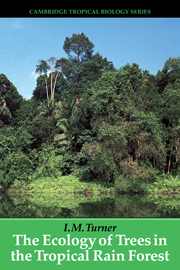
The Ecology of Trees in the Tropical Rain Forest
Our knowledge of the ecology of tropical rain-forest trees is limited, with detailed information available for perhaps only a few hundred of the many thousand of species that occur. Yet a good understanding of the trees is essential to unravelling the workings of the forest itself. This book aims to summarise contemporary understanding of the ecology of tropical rain-forest trees. The emphasis is on comparative ecology, an approach that can help to identify possible adaptive trends and evolutionary constraints and which may also lead to a workable ecological classification for tree species, conceptually simplifying the rain-forest community and making it more amenable to analysis.
eBook

Water and Temperature Ecophysiological Challenges of Forests Plantations under Climate Change
Climate change has impacted the environmental conditions in which forest plantations grow worldwide. Droughts and extreme temperatures have compromised the survival and productivity of plantations, and the effects on carbon and water balance have increased risks to sustained productivity and sustainability. Interestingly, opportunities for improvement rely on a better understanding of the ecophysiological response of species or genotypes, their tolerance or resistance to thermal and water stress, and genetic–environmental interactions. Our manuscript summarizes tree and stand-level major reported ecophysiological responses that could challenge the establishment and development of forest plantations under future climate change scenarios. The manuscript discusses potential climate change effects on plantation forest productivity, carbon balance, water use, and water use efficiency, and suggests some potential silvicultural strategies to avoid or reduce risks under uncertain climate scenarios. An integrated approach to understanding the linkages between water resource availability and plant-stand carbon balance is proposed to provide sustainable management that may alleviate the social and environmental concerns associated with challenges relating to climate change for managed forests and the forest industry.
Journal Article

Extreme climatic events, biotic interactions and species-specific responses drive tree crown defoliation and mortality in Italian forests
The frequency of forest disturbances has increased in recent years, provoking widespread defoliation, crown dieback and tree mortality. The ICP Forests monitoring network offers a unique platform for observing the impacts on forests of heatwaves, droughts and other extreme climatic events, as well as the trends of defoliation and mortality. The Italian ICP Forests Level I network consists of 261 permanent plots where tree crown defoliation and damage symptoms are assessed visually each year by well-trained crews of the Corpo Forestale dello Stato (2001-2016) and the Carabinieri Forestalefrom 2017 onward. This paper aims to assess the main tree species’ responses, in terms of defoliation and mortality, to severe climatic events. The results are discussed in relation to species-specific physiological behaviour and bioclimatic regions. A significant trend toward increasing defoliation and mortality has been observed since 2010 in both conifers and broadleaves. Conifers (especially Picea abies), which are largely diffuse in the Alpine regions, have suffered from bark beetle outbreaks due to severe windstorms (such as Vaia in 2018) and recurrent dry years. In the temperate regions, characterised by deciduous broadleaved trees, the most relevant defoliation events coincided with the driest and hottest years, with low relative humidity (2012, 2017 and 2021-2022), only partially recovering in the subsequent years. Among them, Fagus sylvatica and Quercus cerris, along with increased defoliation, showed symptoms caused by fungi of the genus Biscogniauxia, causal agents of “charcoal canker”, in less favourable site conditions. Quercus pubescens was the most resilient species, able to restore its crown after defoliation. The Mediterranean forests, with evergreen broadleaved species, showed no significant trends but were impacted at the most drought-prone coastal sites. The findings evidenced that the current ICP Forests network in Italy represents a fundamental infrastructure for monitoring impacts and trends connected to climate change and species-specific responses. A local intensification of the grid would help to capture under-represented species or ecological conditions.
Journal Article

Pinus sylvestris switches respiration substrates under shading but not during drought
Reduced carbon (C) assimilation during prolonged drought forces trees to rely on stored C to maintain vital processes like respiration. It has been shown, however, that the use of carbohydrates, a major C storage pool and apparently the main respiratory substrate in plants, strongly declines with decreasing plant hydration. Yet no empirical evidence has been produced to what degree other C storage compounds like lipids and proteins may fuel respiration during drought.
We exposed young scots pine trees to C limitation using either drought or shading and assessed respiratory substrate use by monitoring the respiratory quotient, δ13C of respired CO2 and concentrations of the major storage compounds, that is, carbohydrates, lipids and amino acids.
Only shaded trees shifted from carbohydrate-dominated to lipid-dominated respiration and showed progressive carbohydrate depletion. In drought trees, the fraction of carbohydrates used in respiration did not decline but respiration rates were strongly reduced. The lower consumption and potentially allocation from other organs may have caused initial carbohydrate content to remain constant during the experiment.
Our results suggest that respiratory substrates other than carbohydrates are used under carbohydrate limitation but not during drought. Thus, respiratory substrate shift cannot provide an efficient means to counterbalance C limitation under natural drought.
Journal Article

The Ecophysiological Role of Trees in Dryland Agroecosystems: Implications for Natural Resource Conservation and Sustainable Food Production in Sub-Saharan Africa
Agroforestry involves maintaining trees alongside crops and is widely recognised to provide multiple benefits, including improving food security, production efficiency, and soil quality and mitigating climate change. However, in Sub-Saharan Africa, a predominantly dry landscape, various pressures are leading to the removal of trees from farmlands. Evidence from natural dryland systems shows that trees play a central role in regulating the key ecological processes of nutrient and water redistribution, an aspect also invoked in dryland agroecology. In this paper, we synthesise the ecophysiological functioning of trees, focusing on two key processes: water and nutrient redistribution. Additionally, we synthesise the influence of these functions on soil biotic interactions, detailing their ecological significance. Based on available evidence from both natural and agroecosystems, we review the role of tree ecophysiology in sustainable food production in dryland agroecosystems of Sub-Saharan Africa. We provide caveats related to prevalent interpretations and the current understanding of plant resource use in agroecology. Trees in agroforestry systems of Sub-Saharan Africa play a potentially critical role in the ecological intensification of food production. However, there is a lack of data on the roles of tree functions in enhancing crop yields and conserving resources in this region. Although evidence from natural drylands and indirect evidence from dryland agroforests indicate that tree ecophysiological functions may be crucial for ecological intensification of food production in Sub-Saharan Africa, many claims related to agroecosystems are overstated, underscoring the urgent need for focused research. Importantly, large trees on farms need to be conserved. To effectively exploit ecosystem services provided by trees, a key feature of ecological intensification, research tailored to local farm conditions is needed, with a focus on maintaining soil quality, securing long-term productivity, and conserving resources. Balancing agricultural intensification with ecological sustainability remains a challenge, yet it is vital for addressing food security, land degradation, and climate change.
Journal Article
Compaction of Iron Mining Tailings Impairs Seedling Emergence of Schinus terebinthifolia but Vigor Features Show Tolerance During Early Growth
Soil compaction is a well-known harmful process for germination and seedling growth. Studies about compaction in mining tailings have been neglected despite being essential for the reforestation of impacted areas. This work evaluated the effects of compaction of iron mining tailings on the seedling emergence, early growth, and photosynthesis of Schinus terebinthifolia Raddi, a tolerant species with potential for reforestation. Experiments were implemented in a greenhouse where seeds of S. terebinthifolia were sown in iron mining tailings with four compaction treatments: (1) an uncompacted dry tailing, (2) uncompacted moistened tailing, (3) compacted dry tailing, and (4) compacted moistened tailing. Penetration resistance, seedling emergence, emergence speed index, seedling biometry, and photochemical traits were evaluated. Compacted moistened tailings showed the highest penetration resistance and uncompacted dry tailings the lowest. Other treatments showed intermediate means. The compacted moistened tailings produced the lowest seedling emergence rate and emergence speed index, and these parameters showed the highest means at uncompacted dry tailings with other treatments showing intermediate means. The compaction did not affect the seedling’s biometric parameters, with a similar growth among all treatments. S. terebinthifolia seedlings showed improved growth parameters during the experimental period, evidencing the potential of the species for the reforestation of impacted areas by iron mining tailings.
Journal Article

Contrasting whole-tree water use, hydraulics, and growth in a co-dominant diffuse-porous vs. ring-porous species pair
KEY MESSAGE : Greater transport capacity of diffuse- vs. ring-porous stem networks translated into greater water use by the diffuse-porous co-dominant, but similar growth indicated higher water use efficiency of the ring-porous species. Coexistence of diffuse- vs. ring-porous trees in north-temperate deciduous forests implies a complementary ecology. The contrasting stem anatomies may result in divergent patterns of water use, and consequences for growth rate are unknown. We investigated tree hydraulics and growth rates in two co-dominants: diffuse-porous Acer grandidentatum (“maple”) and ring-porous Quercus gambelii (“oak”). Our goals were (1) document any differences in seasonal water use and its basis in divergent stem anatomy and (2) compare annual growth rates and hence growth-based water use efficiencies. At maximum transpiration, maple trees used more than double the water than oak trees. Maple also had more leaf area per basal area, resulting in similar water use per leaf area between species. Maple had ca. double the tree hydraulic conductance than oak owing to greater conductance of its diffuse-porous stem network (leaf- and root system conductances were less different between species). Water use in maple increased with vapor pressure deficit (VPD), whereas in oak it decreased very slightly indicating a more sensitive stomatal response. Seasonably stable water use and xylem pressure in oak suggested a deeper water source. Although maple used more water, both species exhibited similar annual biomass growth of the above-ground shoot network, indicating greater growth-based water use efficiency of oak shoots. In sum, water use in maple exceeded that in oak and was more influenced by soil and atmospheric water status. The low and stable water use of oak was associated with a greater efficiency in exchanging water for shoot growth.
Journal Article
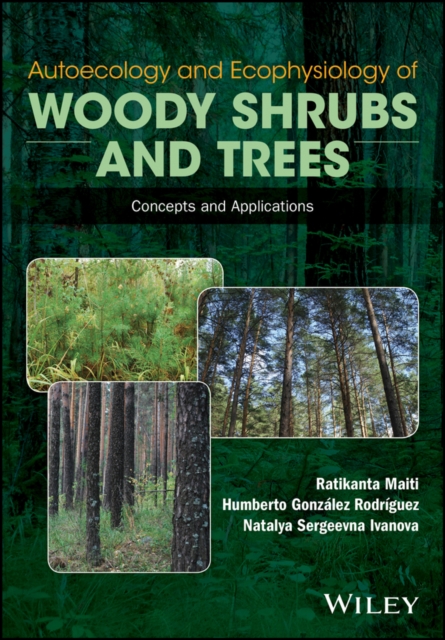
Autoecology and Ecophysiology of Woody Shrubs and Trees
Forest trees and shrubs play vital ecological roles, reducing the carbon load from the atmosphere by using carbon dioxide in photosynthesis and by the storage of carbon in biomass and wood as a source of energy. Autoecology deals with all aspects of woody plants; the dynamism of populations, physiological traits of trees, light requirements, life history patterns, and physiological and morphological characters. Ecophysiology is defined by various plant growth parameters such as leaf traits, xylem water potential, plant height, basal diameter, and crown architecture which are, in turn, influenced by physiological traits and environmental conditions in the forest ecosystem. In short, this book details research advances in various aspects of woody plants to help forest scientists and foresters manage and protect forest trees and plan their future research. Autoecology and Ecophysiology of Woody Shrubs and Trees is intended to be a guide for students of woody plant autoecology and ecophysiology, as well as for researchers in this field. It is also an invaluable resource for foresters to assist in effective management of forest resources.
eBook
The ecology of trees in the tropical rain forest
Our knowledge of the ecology of tropical rain-forest trees is limited, with detailed information available for perhaps only a few hundred of the many thousand of species that occur. Yet a good understanding of the trees is essential to unravelling the workings of the forest itself. This book aims to summarise contemporary understanding of the ecology of tropical rain-forest trees. The emphasis is on comparative ecology, an approach that can help to identify possible adaptive trends and evolutionary constraints and which may also lead to a workable ecological classification for tree species, conceptually simplifying the rain-forest community and making it more amenable to analysis.
eBook