
Catalogue Search | MBRL


Are you sure you want to remove the book from the shelf?

{{itemTitle}}
8,095
result(s) for
"Trees History."
Sort by:

The glory of the tree : an illustrated history
Ninety-one of the world's great tree species in glorious color; describes botany and origin, location, size, characteristics, potential age, climate and history.
Book
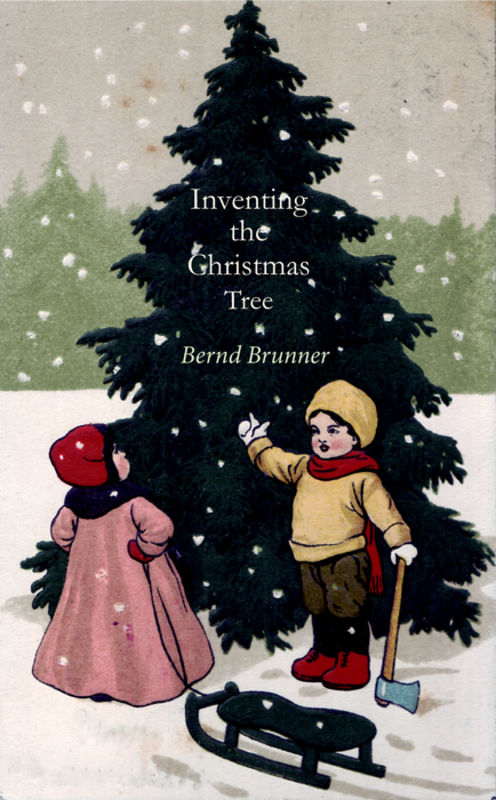
Inventing the Christmas Tree
A colorfully decorated Christmas tree, lit with twinkling lights, provokes awe and delight. We understand the lighted tree as a central symbol of the Christmas season, but what are the roots of the tradition? Who first thought to bedeck a tree, to bring it inside? How and where did the local activity grow into a widespread tradition, and how has the Christmas tree traveled across time and continents? Bernd Brunner's brief history-enriched by a selection of delightful and unusual historical illustrations-spans many centuries and cultures to illuminate the mysteries of the Christmas tree and its enduring hold on the human imagination.
Tracing various European traditions from the Middle Ages forward, Brunner finds that only in the nineteenth century did Christmas trees become common in European family homes. In North America, the imported custom soon fascinated, though some found the tree not quite compatible with a Puritan mindset. Brunner explores how the Christmas tree entered mainstream American culture and how in recent times it has become globally popular. He introduces Jacqueline Kennedy's Nutcracker Tree in the White House, trees used to celebrate the New Year in Turkey, and the world's most expensive Christmas tree, erected in Abu Dhabi. The author also considers the place of the artificial tree and the ecological dimensions of the Christmas tree trade. A book rich with anecdote and insight,Inventing the Christmas Treewill enchant a wide audience.
eBook

Lives of the trees : an uncommon history
This work is an \"uncommon history\" of trees. Alphabetical entries cover tree and leaf descriptions, their products, where the trees are located geographically, where they got their common names, people who described the trees or transported them and made them popular, and folklore and stories about the particular trees.
Book
Trees, woods and forests
Forests-and the trees within them-have always been a central resource for the development of technology, culture, and the expansion of humans as a species. Examining and challenging our historical and modern attitudes toward wooded environments, this engaging book explores how our understanding of forests has transformed in recent years and how it fits in our continuing anxiety about our impact on the natural world. Drawing on the most recent work of historians, ecologist geographers, botanists, and forestry professionals, Charles Watkins reveals how established ideas about trees-such as the spread of continuous dense forests across the whole of Europe after the Ice Age-have been questioned and even overturned by archaeological and historical research. He shows how concern over woodland loss in Europe is not well founded-especially while tropical forests elsewhere continue to be cleared-and he unpicks the variety of values and meanings different societies have ascribed to the arboreal. Altogether, he provides a comprehensive, interdisciplinary overview of humankind's interaction with this abused but valuable resource.
eBook

The genius of trees : how trees mastered the elements and shaped the world
Taking us on an awe-inspiring journey through deep history and across the globe, 'The Genius of Trees' restores trees to their rightful position not as victims of our negligence but as ingenious, stunningly inventive agents in a grand ecological narrative. Some have been using fire as a reproductive tool since prehistoric times. Others have gone to extraordinary lengths to make sure their fruits reach large primates, who can spread their seeds over vast distances, while poisoning smaller and less useful mammals. Some can split solid rock and create fertile ground in barren landscapes, effectively building entire ecosystems from scratch. For the first time, we witness the inventive and astonishing ways trees sculpt and even master their environment and understand the science of how they achieve these feats.
BOOK

Shade tolerance and the functional trait - demography relationship in temperate and boreal forests
Despite being instrumental in forest ecology, the definition and nature of shade tolerance are complex and not beyond controversy. Moreover, the role it plays in the trait-demography relationship remains unclear. Here, we hypothesize that shade tolerance can be achieved by alternative combinations of traits depending on the species' functional group (evergreen vs. deciduous species) and that its ability to explain the array of traits involved in demography will also vary between these two groups. We used dimension reduction to identify the main trait spectra for 48 tree species, including 23 evergreens and 25 deciduous - dispersed across 21 genera and 13 families. We assessed the relationship between functional traits, shade tolerance, and demographic performance at high and low light using structural equation modelling. The dimensions found corresponded to the trait spectra previously observed in the literature and were significantly related to measures of demography. However, our results support the existence of a divergence between evergreen and deciduous species in the way shade tolerance relates to the demography of species along light gradients. We show that shade tolerance can be attained through different combination of traits depending on the functional and geographical context, and thus, its utilization as a predictor of forest dynamics and species coexistence requires previous knowledge on the role it plays in the demographic performance of the species under study.
Journal Article


Is there tree senescence? The fecundity evidence
Despite its importance for forest regeneration, food webs, and human economies, changes in tree fecundity with tree size and age remain largely unknown. The allometric increase with tree diameter assumed in ecological models would substantially overestimate seed contributions from large trees if fecundity eventually declines with size. Current estimates are dominated by overrepresentation of small trees in regression models. We combined global fecundity data, including a substantial representation of large trees. We compared size–fecundity relationships against traditional allometric scaling with diameter and two models based on crown architecture. All allometric models fail to describe the declining rate of increase in fecundity with diameter found for 80% of 597 species in our analysis. The strong evidence of declining fecundity, beyond what can be explained by crown architectural change, is consistent with physiological decline. A downward revision of projected fecundity of large trees can improve the next generation of forest dynamic models.
Journal Article
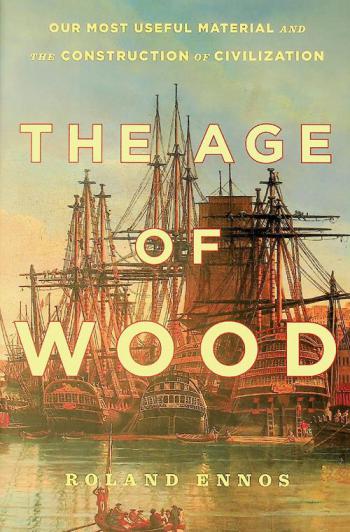
The age of wood : our most useful material and the construction of civilization
Provides a scholarly and scientific examination of the unrecognized role of trees in the planet's ecosystem reveals wood's unexpected influence on human evolution, civilization, and the global economy.

The Long, Long Life of Trees
A lyrical tribute to the diversity of trees, their physical beauty, their special characteristics and uses, and their ever-evolving meanings Since the beginnings of history trees have served humankind in countless useful ways, but our relationship with trees has many dimensions beyond mere practicality. Trees are so entwined with human experience that diverse species have inspired their own stories, myths, songs, poems, paintings, and spiritual meanings. Some have achieved status as religious, cultural, or national symbols. In this beautifully illustrated volume Fiona Stafford offers intimate, detailed explorations of seventeen common trees, from ash and apple to pine, oak, cypress, and willow. The author also pays homage to particular trees, such as the fabled Ankerwyke Yew, under which Henry VIII courted Anne Boleyn, and the spectacular cherry trees of Washington, D.C. Stafford discusses practical uses of wood past and present, tree diseases and environmental threats, and trees' potential contributions toward slowing global climate change. Brimming with unusual topics and intriguing facts, this book celebrates trees and their long, long lives as our inspiring and beloved natural companions.
eBook