
Catalogue Search | MBRL


Are you sure you want to remove the book from the shelf?

{{itemTitle}}
999
result(s) for
"Tribes India."
Sort by:

Tribal Development in Western India
Tribal communities in western India, as elsewhere in the country, have been facing increasing marginalisation and poverty. This is so despite a relatively better record of social movements and work by civil society organisations among them and their political inclusion. Further, the existing literature on tribals focuses more on their socio-cultural situation and less on their economic and human development. Addressing this gap in scholarship, this volume details the processes of tribal development and associated challenges in Gujarat, often viewed as a high-growth economy.
Rich in interdisciplinary, empirical analyses, the book comprehensively addresses three important aspects of tribal development - human development, economic opportunities and governance. It critiques recent policy diagnoses and interventions, rather than evaluate policy-outcomes. The volume traces the genesis of continued marginalisation of tribals in the country, and contributes to the ongoing discourse on integrative tribal development.
The work will interest scholars and students of development studies, tribal studies, economics, sociology, social work, as also policy-makers, activists, and governmental and non-governmental organisations in the field.
eBook

India's scheduled areas : untangling governance, law and politics
This volume explores the complexities of governance, law, and politics in India's Scheduled Areas. The Scheduled Areas (SAs) are those parts of the country which have been identified by the Fifth and Sixth Schedule of the Constitution of India and are inhabited predominantly by tribal communities or Scheduled Tribes. SAs are often identified by their geographical isolation, primitive economies, and relatively egalitarian and closely knit society.
Book
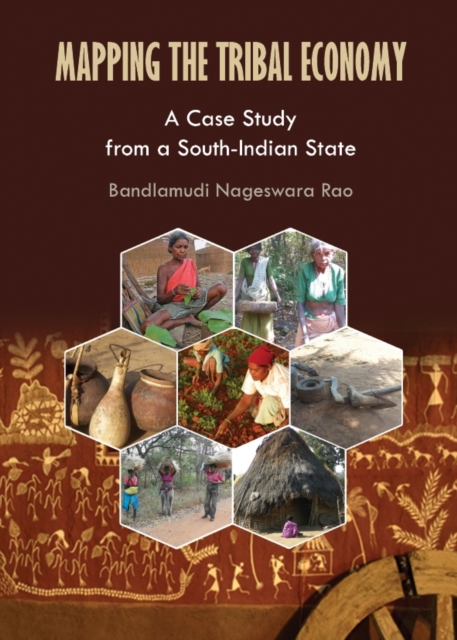
Mapping the Tribal Economy
Indigenous people (tribals) are viewed as historical objects of curiosity worldwide. In India, tribes have been marginalised by the creation of administrative boundaries and further hedged in by administrative (forest and land) policies, legislations, colonial and modern market economic orientations, technology, indifferent state policies and social pressures. The way of life of tribal communities, and production and distribution relations among them, has undergone significant changes in rece.
eBook


The tale of Hansuli Turn
A terrifying sound disturbs the peace of Hansuli Turn, a forest village in Bengal, and the community splits as to its meaning. Does it herald the apocalyptic departure of the gods or is there a more rational explanation? The Kahars, inhabitants of Hansuli Turn, belong to an untouchable \"criminal tribe\" soon to be epically transformed by the effects of World War II and India's independence movement. Their headman, Bonwari, upholds the ethics of an older time, but his fragile philosophy proves no match for the overpowering machines of war. As Bonwari and the village elders come to believe the gods have abandoned them, younger villagers led by the rebel Karali look for other meanings and a different way of life.
As the two factions fight, codes of authority, religion, sex, and society begin to break down, and amid deadly conflict and natural disaster, Karali seizes his chance to change his people's future. Sympathetic to the desires of both older and younger generations, Tarashankar Bandyopadhyay depicts a difficult transition in which a marginal caste fragments and mutates under the pressure of local and global forces. The novel's handling of the language of this rural society sets it apart from other works of its time, while the village's struggles anticipate the dilemmas of rural development, ecological and economic exploitation, and dalit militancy that would occupy the center of India's post-Independence politics.
Negotiating the colonial depredations of the 1939--45 war and the oppressions of an agrarian caste system, the Kahars both fear and desire the consequences of a revolutionized society and the loss of their culture within it. Lyrically rendered by one of India's great novelists, this story of one people's plight dramatizes the anxieties of a nation and the resistance of some to further marginalization.
eBook

Savage attack : tribal insurgency in India
In Savage Attack: Tribal Insurgency in India the authors ask whether there is anything particularly adivasi about the forms of resistance that have been labelled as adivasi movements. What does it mean to speak about adivasi as opposed to peasant resistance? Can one differentiate adivasi resistance from that of other lower castes such as the dalits? In this volume the authors move beyond stereotypes of tribal rebellion to argue that it is important to explore how and why particular forms of resistance are depicted as adivasi issues at particular points in time. Interpretations that have depicted adivasis as a united and highly politicised group of people have romanticised and demonized tribal society and history, thus denying the individuals and communities involved any real agency. Both the interpretations of the state and of left-wing supporters of tribal insurgencies have continued to ignore the complex realities of tribal life and the variety in the expressions of political activism that have resulted across the length and breadth of the Indian subcontinent.
Book


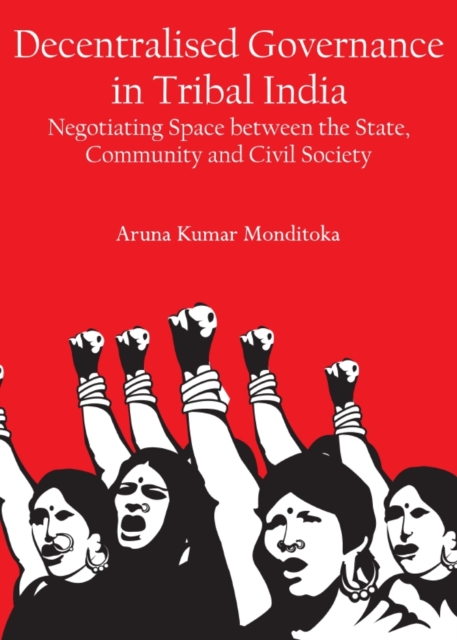
Decentralised Governance in Tribal India
The potential of civil society in interfacing with the government for ensuring good governance has gained currency in academic and policy debates in the recent times. This becomes particularly relevant in an old democracy like India where the State has not been able to meet the need for basic things. However, the State provides space and freedom for people to engage in collective action, to critically evaluate the States policies and demand a revision in policy for effective implementation o.
eBook