
Catalogue Search | MBRL


Are you sure you want to remove the book from the shelf?

{{itemTitle}}
47
result(s) for
"Tristan, Flora, 1803-1844"
Sort by:
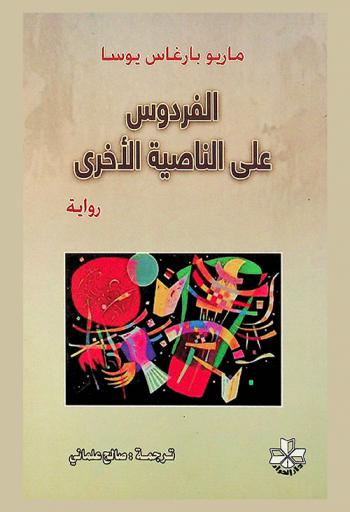
الفردوس على الناصية الأخرى
أين هو الفردوس الأرضي ؟ أهو في بناء مجتمع المساواة، أم في العودة إلى العالم البدائي ؟ من خلال حياتين : حياة فلورا تريسان التي كرست وجودها للنضال في سبيل حقوق المرأة والعمال. وحياة بول غوغان، الرجل الذي اكتشف ولعه بالرسم، وتخلى عن حياته البرجوازية ليسافر إلى تاهيتي، بحثا عن عالم غير ملوث بالأحكام المسبقة. ومن خلال مفهومين عن الجنس : مفهوم فلورا التي لا ترى في الجنس إلا أداة لهيمنة الذكور على النساء، ومفهوم غوغان الذي يعتبر الجنس قوة حيوية، لا غنى عنها في عمله الإبداعي. يكشف ماريو برغاس يوسا عالم اليوتوبيات التي انتشرت في القرن التاسع عشر، رابطا بين حياتين متعارضتين (حياة فلورا وحفيدها غوغان)، تسعيان إلى هدف مشترك : بلوغ فردوس تكون السعادة ممكنة لجميع بني البشر.
Book

A geography of hard times : narratives about travel to South America, 1780-1849
This fascinating glimpse into South America’s past focuses on the works of four European voyagers who came to South America and left a legacy of travel writing in their wake: José Celestino Mutis, a Spanish botanist and doctor; Alexander von Humboldt, a German geographer; Maria Graham, a British historian; and Flora Tristán, a French feminist and labor activist whose father was Peruvian. Each took on his or her voyage as a personal endeavor, and collectively their travels covered the Andes from its northern traces in Venezuela to the southern heights of Chile and Arequipa. Their writing contributed to the construction of a complex map of the Andes in which many levels of physical and social geography may be read. By analyzing the travelers’ narratives, illustrations, and maps, Ángela Pérez-Mejía unravels the rich complexities of the colonial travel experience, explores its impact on both the object of description and the traveler’s subjectivity, and the collective readership seeking a discourse of nationhood.
eBook

Flora Tristan
Flora Tristan is best known as a nineteenth century French social critic and reformer. Her writings can be seen as a precursor to Marxism and Feminism. Flora Tristan: Life Sories by Susan Grogan, investigates the life of Flora Tristan through an exploration of the way she represented herself in her own writings. The author also examines the portrayal of Flora Tristan in paintings and literature. Rather than adopting a chronological approach, the author surveys the personae of Flora Tristan through thematic chapters on her roles as author, socialist, traveller and \"Mother of the Workers\". She places Flora Tristan in the context of contemporary debates and ideas, adding to our understanding of the times in which Flora Tristan lived. Flora Tristan: Life Stories argues that Flora Tristan's self-representations were attempts to claim a role of authority and significance not open to women in the nineteenth century. This authoritative study also engages with attempts to re-evaluate the writing of biography and to explore the meaning of an individual life in historical context.
eBook

White voices, black silences and invisibilities in the XIX century travel narratives
The manipulation of the image of Afro-descendants in XIX century travel narratives accounts for certain ideological practices. This essay does not only reflect on the representation of the Other. It also seeks to explore the ambivalence that occurs in the contact zones as well as discursive strategies used to depict Otherness. The recurrent portrayals of these populations turn out to be revealing because of all the ideas, attitudes and prejudice they convey. How do these rhetorical mechanisms come into play and what tensions do they inscribe? We will attempt to reflect on these issues through the exploration and comparison of travel accounts written by four travelers: Alexander Von Humboldt (1769-1859), Flora Tristán (1803-1844), Charles Darwin (1809-1882) and Miguel Cané (1851-1905). Keywords: Ambivalence, Travel literature, Post-colonialism, Identity, Representation, Race, Diaspora.
Journal Article

Representations of Slavery and Afro-Peruvians in Flora Tristan's Travel Narrative, \Peregrinations of a Pariah\
From 1833-1834, Frenchwoman Flora Tristan made a year-long journey to Peru and later published the narrative of her experiences with the title \"Peregrinations of a Pariah 1833-1834. Paulk examines an aspect of Tristan's text that has not received sufficient critical attention, which is her treatment of slavery and her descriptions of Afro-Peruvians in Arequipa. She devotes particular attention to Tristan's representation of the participation of people of African descent in a religious procession, for it helps to illustrate the ways in which Tristan's narration provides important information despite the prejudices and even the failures of comprehension evident in the text.
Journal Article

Flora Tristán: una viajera de su tiempo
La participación de Flora Tristán en el campo político, está necesariamente relacionada con su historia de vida. Los dos temas centrales que aborda en su obra: la mujeres y el proletariado, son inquietudes que corresponden a su realidad y, por tanto, el resultado de esa historia personal que se jugó entre la lucha por la afirmación de unas identidades liberadas y en oposición a los roles que establecen limitaciones desde la alteridad. La desventura de ser mujer sin libertades y la posición de (ex)burguesa trabajadora, le permitieron establecer una teoría política de la liberación. En ese sentido, el objetivo de este artículo es presentar el pensamiento de Flora Tristán bajo tres perspectivas. En primer lugar, la formación de un método de trabajo desde las prácticas y los viajes. En segundo lugar, la configuración de sus dos principales sujetos políticos: los obreros y obreras y las mujeres. Finalmente, establecer la relación de esta construcción política, anclada a un programa ético del amor universal.
Journal Article

FLORA TRISTAN: DE LA NÉCESSITÉ DE FAIRE BON ACCUEIL AUX FEMMES ÉTRANGÈRES
Dans son traité De la nécessité de faire bon accueil aux femmes étrangères (1835), Flora Tristan (1803-1844), l'écrivaine française qui adopte l'état psychologique d'une étrangère dans son propre pays, traite de la situation des femmes \"étrangères\" qui voyagent seules en France et/ou commencent une nouvelle vie dans le pays, en particulier à Paris. Politiquement engagée auprès des plus défavorisés à partir du socialisme, Tristan propose la création d'une association pour ces femmes. En assimilant les deux groupes d'\"étrangères\" (nationales et non nationales), car elle pense que le même type d'accueil doit être fourni à toutes, Tristan préconise l'aide à la voisine nécessiteuse, voisine qui est à la fois un sujet national ou un sujet en transit, une femme sans-papiers ou une réfugiée.
Journal Article
SOUTH AMERICA: SEXUAL ASSAULT TOPS WOMEN'S FEARS IN CITIES
The Argentine study was carried out by the Center for Exchange and Services for the Southern Cone - Argentina (CICSA), while the Peruvian project was conducted by the Flora Tristan Women's Center. Both received support from the U.N. Fund in Support of Actions to Eliminate Violence Against Women, established by the U.N. Development Fund for Women (UNIFEM). \"We set out to uncover the specific gender aspects that are at the root of urban violence against women, but it was difficult to make the problem visible. Lack of safety was always associated with robberies and assaults, which can happen to anyone,\" Maite Errodigou, research director at CICSA, told IPS. Diana Miloslavich, of [Flora Tristan], told IPS that, the study results had led to agreements in the municipalities of San Juan de Miraflores and Villa El Salvador to include urban security strategies specifically designed to protect women.
Newsletter

Flora Tristan and Peruvian Feminists in the Twentieth Century
Busse explores the ways in which Peruvian feminists appropriated the early-nineteenth-century French activist Flora Tristan as their symbol at two historical moments. She states that as much as Tristan used cultural elements of her own context to create a persona through which to perform in the public arena, Virginia Vargas and Magda Portal used the symbol of Tristan to justify their public presence and their feminist claims.
Journal Article

From Paris to Tahiti
1895 Diagnosed with syphilis. Departs again for Tahiti. 1888 Lives and paints with Van Gogh for nine weeks in Arles - an experiment that ends with Van Gogh severing his own ear.
Newspaper Article