
Catalogue Search | MBRL


Are you sure you want to remove the book from the shelf?

{{itemTitle}}
12
result(s) for
"Trolls Folklore."
Sort by:

Trolls : an unnatural history
Trolls lurk under bridges waiting to eat children, threaten hobbits in Middle-Earth, and invade the dungeons of Hogwarts. Often they are depicted as stupid, slow, and ugly creatures, but they also appear as comforting characters in some children' s stories or as plastic dolls with bright, fuzzy hair. Today, the name of this fantastic being from Scandinavia has found a wider reach: it is the word for the homeless in California and slang for the antagonizing and sometimes cruel people on the Internet. But how did trolls go from folktales to the World Wide Web? To explain why trolls still hold our interest, John Lindow goes back to their first appearances in Scandinavian folklore, where they were beings in nature living beside a preindustrial society of small-scale farming and fishing. He explores reports of actual encounters with trolls - meetings others found plausible in spite of their better judgment - and follows trolls' natural transition from folktales to other domains in popular culture.
Book
Trolls
Cover; Trolls: An Unnatural History; Imprint Page; Contents; Introduction; 1. The Earliest Trolls; 2. Medieval Trolls; 3. Folklore Trolls; 4. Fairy-tale Trolls and Trolls Illustrated; 5. Trolls in Literature; 6. Trolls, Children, Marketing and Whimsy; Epilogue; Sources and Further Reading; Acknowledgements and Photo Acknowledgements; Index. Trolls lurk under bridges waiting to eat children, threaten hobbits in Middle-Earth, and invade the dungeons of Hogwarts. Often they are depicted as stupid, slow, and ugly creatures, but they also appear as comforting characters in some children’ s stories or as plastic dolls with bright, fuzzy hair. Today, the name of this fantastic being from Scandinavia has found a wider reach: it is the word for the homeless in California and slang for the antagonizing and sometimes cruel people on the Internet. But how did trolls go from folktales to the World Wide Web? To explain why trolls still hold our interest, John Lindow goes back to their first appearances in Scandinavian folklore, where they were beings in nature living beside a preindustrial society of small-scale farming and fishing. He explores reports of actual encounters with trolls - meetings others found plausible in spite of their better judgment - and follows trolls’ natural transition from folktales to other domains in popular culture.
eBook


Seven ways to trick a troll
A collection of seven Norwegian folktales from various historical and international sources, all featuring trolls and showing how even small children can trick them. Includes an introduction explaining what trolls are and how they came to be.
Book
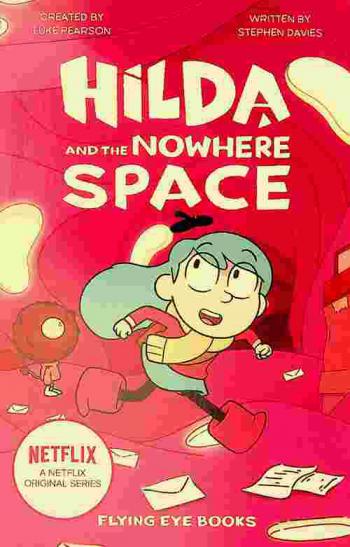
Hilda and the nowhere space
\"Meet Hilda -- explorer, adventurer, avid sketchbook-keeper, and friend to every creature in the valley! Well ... almost every creature ... Newly initiated into the Sparrow Scouts, Hilda and her friends are ready to explore and document the wilderness. Yet as luck would have it, there is a dark, menacing creature afoot near Trolberg, and Hilda is whisked back home to safety. Even so, intrigue seems to follow our blue-haired heroine wherever she goes, and she's about to discover the city has many more secrets to reveal...\" --Jacket flap.

Trolls
In this article, I compare the nature and function of the troll figure in three contemporary, fictional texts written in Nordic countries. Although grounded in an ancient tradition of Nordic folklore, I claim that the figure of the troll in contemporary literature is made up of an intersection of different axes of power and can thus be understood in light of a postcolonial world order, the development of the Nordic welfare states in the twentieth century, and modern, Western standards relating to gender and sexuality. Ultimately, this figure challenges the Enlightenment's concept of human as a stable entity that is once and for all established and, rather, points at posthumanist processes of qualification. To a large extent, this is done by the re-employment of old folkloristic beliefs. Finally, I predict a \"troll-turn\" in Nordic literature, in which this figure is further used to enlighten, establish, undermine and subvert age-old notions of a \"true\" Nordic people.
Book Chapter