
Catalogue Search | MBRL


Are you sure you want to remove the book from the shelf?

{{itemTitle}}
211
result(s) for
"Trotskyism"
Sort by:
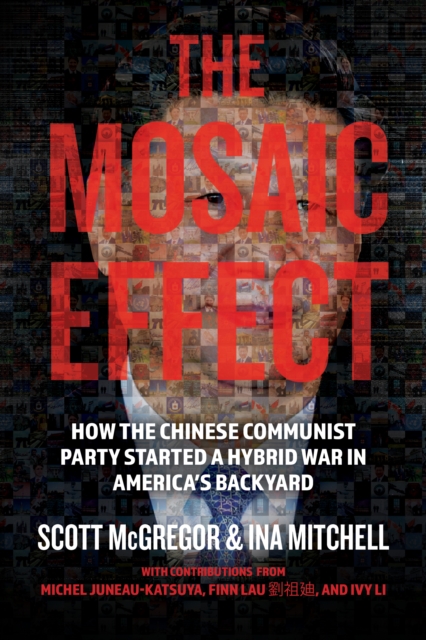
The Mosaic Effect
'In The Mosaic Effect, the authors chronicle how they assembled a formidable team of intelligence collectors, including seasoned journalists, former agents, law enforcement experts, dedicated researchers, and incognito informants within the Chinese diaspora. With precision and dedication, they employ a fusion of modern investigative techniques and age-old tradecraft. Together, they assemble a captivating mosaic of intelligence, piecing together the intricate web of CCP influence that reaches into the highest echelons of global power. The Mosaic Effectisn't just an expos© but an urgent cautionary tale. It invites you to peer into the covert realm manipulated by the CCP within the Western sphere. This isn't merely a story it's a high-stakes narrative of intrigue and espionage that offers an intimate look into a dimension of global affairs concealed from public gaze. Welcome to a world of international espionage, intrigue, and the relentless pursuit of democratic values, all woven into a narrative that demands the attention of discerning readers immersed in global politics and the preservation of democracy. For those who are well-versed in global politics, espionage aficionados, and public policy writers, The Mosaic Effect is your exclusive passageway to understand what has happened and what needs to be done to safeguard democracy. '
eBook

Growing Up Communist in the Netherlands and Britain
Growing Up Communist in the Netherlands and Britain: Childhood, Political Activism, and Identity Formation documents communists' attempts, successful and otherwise, to overcome their isolation and to connect with the major social and political movements of the twentieth century. Communist parties in Britain and the Netherlands emerged from the Second World War expecting to play a significant role in post-war society, due to their domestic anti-fascist activities and to the part played by the Soviet Union in defeating fascism. The Cold War shattered these hopes, and isolated communist parties and their members. By analysing the accounts of communist children, Weesjes highlights their struggle to establish communities and define their identities within the specific cultural, social, and political frameworks of their countries.
eBook
Gay men and the Left in post-war Britain
Available in paperback for the first time, his book demonstrates how the personal became political in post-war Britain, and argues that attention to gay activism can help us to fundamentally rethink the nature of post-war politics. While the Left were fighting among themselves and the reformists were struggling with the limits of law reform, gay men started organising for themselves, first individually within existing organisations and later rejecting formal political structures altogether. Culture, performance and identity took over from economics and class struggle, as gay men worked to change the world through the politics of sexuality. Throughout the post-war years, the new cult of the teenager in the 1950s, CND and the counter-culture of the 1960s, gay liberation, feminism, the Punk movement and the miners' strike of 1984 all helped to build a politics of identity. There is an assumption among many of today's politicians that young people are apathetic and disengaged. This book argues that these politicians are looking in the wrong place. People now feel that they can impact the world through the way in which they live, shop, have sex and organise their private lives. Robinson shows that gay men and their politics have been central to this change in the post-war world.
eBook

Remembering Communism
Remembering Communism examines the formation and transformation of the memory of communism in the post-communist period. The majority of the articles focus on memory practices in the post-Stalinist era in Bulgaria and Romania, with occasional references to the cases of Poland and the GDR. Based on an interdisciplinary approach, including history, anthropology, cultural studies and sociology, the volume examines the mechanisms and processes that influence, determine and mint the private and public memory of communism in the post-1989 era. The common denominator to all essays is the emphasis on the process of remembering in the present, and the modalities by means of which the present perspective shapes processes of remembering, including practices of commemoration and representation of the past.
The volume deals with eight major thematic blocks revisiting specific practices in communism such as popular culture and everyday life, childhood, labor, the secret police, and the perception of \"the system\".
eBook
A Communist for the RCMP
In 1941, the RCMP recruited Frank Hadesbeck, a Spanish Civil War veteran, as a paid informant to infiltrate the Communist Party. For decades, he informed not only upon communists, but also upon hundreds of other people who held progressive views. Hadesbeck's \"Watch Out\" lists on behalf of the Security Service included labour activists, medical doctors, lawyers, university professors and students, journalists, Indigenous and progressive farm leaders, members of the clergy, and anyone involved in the peace and human rights movements.
Defying every warning given to him by his handlers, Hadesbeck kept secret notes. Using these notes, author Dennis Gruending recounts how the RCMP spied upon thousands of Canadians. Hadesbeck's life and career are in the past, but RCMP surveillance continues in new guises. As Canada's petroleum industry doubles down on its extraction plans in the oil sands and elsewhere, the RCMP and other state agencies provide support, routinely branding Indigenous land defenders and their allies in the environmental movement as potential terrorists. They share information and tactics with petroleum industry \"stakeholders\" in what has been described as a \"surveillance web\" intended to suppress dissent. A Communist for the RCMP provides an inside account of Hadesbeck's career and illustrates how the RCMP uses surveillance of activists to enforce the status quo.
eBook


Under Stalin's Shadow
Under Stalin's Shadow examines
the history of the Communist Party of Greece (KKE) from 1918 to
1956, showing how closely national Communism was related to
international developments. The history of the KKE reveals
the role of Moscow in the various Communist parties of Southeastern
Europe, as Nikos Marantzidis shows that Communism's international
institutions (Moscow Center, Comintern, Balkan Communist
Federation, Cominform, and sister parties in the Balkans) were not
merely external factors influencing orientation and policy
choices.
Based on research from published and unpublished archival
documents located in Greece, Russia, Eastern and Western Europe,
and the Balkan countries, Under Stalin's Shadow traces the
KKE movement's interactions with fraternal parties in neighboring
states and with their acknowledged supreme mentors in Stalin's
Soviet Russia. Marantzidis reveals how, because the boundaries
between the national and international in the Communist world were
not clearly drawn, international institutions, geopolitical soviet
interests, and sister parties' strategies shaped in fundamental
ways the KKE's leadership, its character and decision making as a
party, and the way of life of its followers over the years.
eBook

Prensa Obrera, Política Obrera y el deporte: 1995-2020
This paper aims to reconstruct the positions about sports of the Trotskyist
newspapers Prensa Obrera and Politica Obrera of Argentina between 1995 and 2020, both
belonging to two groups of militants who dispute control of the Partido Obrero. Emphasis
will be placed on possible continuities and ruptures, as well as on the dialogue of these
positions with the contributions of Marxism in the social sciences to think about sports
phenomena.
Este trabajo se propone reconstruir las posiciones acerca del deporte de los
periódicos trotskistas Prensa Obrera y Política Obrera de Argentina entre 1995 y 2020,
ambos pertenecientes a dos agrupamientos de militantes que se disputan el control del
Partido Obrero. Se pondrá énfasis en posibles continuidades y rupturas, así como en el
diálogo de estas posiciones con los aportes del marxismo en las ciencias sociales para
pensar los fenómenos deportivos.
Journal Article
El trotskismo frente a la cuestión agraria argentina. El caso de Política Obrera en la década de 1970
The convulsed 1970s in Argentina was marked by an increase in social conflict in different areas. Historiography has studied in depth the conflicts of the working and student world, and the actions of the left. However, there are only a few studies on the agrarian insurgency and the updating, since the 1950s, of the so-called “agrarian question”. In this work we examine the treatment that this problem received from a Trotskyist party, Politica Obrera, in the 1970s. We study the way in which he described the Argentine agrarian structure, identified the problems of the revolution in that area, and developed a specific intervention in the field. To do this, we selected a documentary heritage nurtured from the internal documents that emerged from congresses, and its periodic press that allows us to reconstruct their positions linked to the political situation. Our hypothesis is that, based on a tradition in which the peasantry had an accessory role (as opposed to other traditions such as Maoism and Guevarism), those who were affiliated with Trotsky's ideas, gave little importance to agrarian problems. nationals. However, the socio-economic structure of the country forced them to adopt definitions on the matter, which ultimately led to a superficial analysis that was very closely related to those rival traditions (Maoism, Guevarism and Stalinism).
Resumen: La convulsionada década de 1970 en Argentina, estuvo signada por un incremento de la conflictividad social en diferentes ámbitos. La historiografía ha estudiado con profundidad los conflictos del mundo obrero y estudiantil, y el accionar de las izquierdas. Sin embargo, hay un terreno poco transitado, el de la insurgencia agraria y de la reactualización, desde la década del ’50, de la llamada “cuestión agraria”. En este trabajo examinamos el tratamiento que esta problemática recibió por parte de un partido trotskista, Política Obrera, en la década del ’70. Buscamos estudiar la forma en que describió la estructura agraria argentina, identificó los problemas de la revolución en ese ámbito y desarrolló una intervención específica en el campo. Para ello, seleccionamos un acervo documental nutrido de los documentos internos surgidos de instancias congresales, y su prensa periódica que permite reconstruir sus posicionamientos ligados a la coyuntura política. Nuestra hipótesis de trabajo es que, partiendo de una tradición en la que el campesinado tenía un rol accesorio (en oposición a otras tradiciones como el maoísmo y el guevarismo), quienes se filiaron en las ideas de Trotsky, brindaron poca importancia a los problemas agrarios nacionales. Sin embargo, la estructura socio-económica del país los obligaba a adoptar definiciones sobre el asunto, lo que condujo, finalmente, a un análisis superficial que se emparentó muy fuertemente, con aquellas tradiciones rivales (maoísmo, guevarismo y estalinismo).
Journal Article