
Catalogue Search | MBRL


Are you sure you want to remove the book from the shelf?

{{itemTitle}}
1,973
result(s) for
"Truth Fiction."
Sort by:

The sad little fact
\"A sad little fact who is locked away for telling the truth. In its underground prison, it meets other facts, all hidden away because they could not lie. Finally, with the help of a few skillful fact-finders, the facts are set free\"-- Provided by publisher.
Book

Fictional Content
It is usually taken for granted that a necessary condition for knowing that P is the truth of P. It may therefore be claimed that if we assume that we gain some kind of knowledge through fiction (let us call it fictional knowledge) of P
, then P
should be true—in at least a certain sense. My hypothesis is that this assumption grounds the different ways adopted by philosophers for attributing truth-conditions to fictional sentences. My claim in this work is that fictional sentences do not have truth-values and truth-conditions, but I want to maintain that we gain some kind of knowledge through fiction: to this aim, I will characterize the objective content of fictional sentences not in terms of truth-conditions (which are usually described by appealing to rules of the language or rules of interpretation of language independent of the actual users), but in dispositional terms and I will define a necessary condition for fictional knowledge accordingly.
Journal Article


Truth in interactive fiction
This paper provides an account of truth in interactive fiction. Interactive fiction allows the audience to make choices, resulting in many different possible fictions within each interactive fiction, unlike in literary fiction where there is just one. Adequately capturing this feature of interactive fiction requires us to address familiar issues regarding impossible fiction and the nature of time in fiction. Truth in interactive fiction thus requires a complex account to capture its multitude of fictions. It is argued that a full account of truth in interactive fiction requires distinguishing two works for each interactive fiction, which contain distinct fictional truths. The actual work encompasses what is in fact represented as fictional (hence mistakes can be fictionally true in this work), whilst in the implied work, truth in fiction is governed by authorial intention, hence mistakes are not fictionally true. This dual account best captures our aesthetic evaluation of interactive fictions, for which we often need to distinguish how the work actually is from how it was intended to be.
Journal Article

My best frenemy
Almost-ten-year-old Ida May finally has a new best friend at school, but after bossy Jenna Drews starts an increasingly dangerous game of Truth or Dare, Ida is not quite sure who her friends really are.
Book
Imagining fictional contradictions
It is widely believed, among philosophers of literature, that imagining contradictions is as easy as telling or reading a story with contradictory content. Italo Calvino’s The Nonexistent Knight (1962), for instance, concerns a knight who performs many brave deeds, but who does not exist. Anything at all, they argue, can be true in a story, including contradictions and other impossibilia. While most will readily concede that we cannot objectually imagine contradictions, they nevertheless insist that we can propositionally imagine them, and regularly do, simply by entertaining a text which prompts us to do so. I argue that this narrative does not bear scrutiny for two main reasons. First, because propositional imagining is beside the point, where truth in fiction is concerned; evaluating truth in fiction engages the cognitive architecture in ways that prohibit the mobilization of merely propositional imagination to that end. And second, because it is not obvious, given the strategies usually suggested, that we ever propositionally imagine contradictions in the first place—in fact, it seems we go out of our way to avoid directly imagining them.
Journal Article

Merrow
Enduring whispers about her absent mother's alleged merrow origins after her father drowns, twelve-year-old Neen questions her identity as she becomes increasingly torn between the worlds of the sea and her island home.
Book
Models and Fiction
Most scientific models are not physical objects, and this raises important questions. What sort of entity are models, what is truth in a model, and how do we learn about models? In this paper I argue that models share important aspects in common with literary fiction, and that therefore theories of fiction can be brought to bear on these questions. In particular, I argue that the pretence theory as developed by Walton (1990, Mimesis as make-believe: on the foundations of the representational arts. Harvard University Press, Cambridge/MA) has the resources to answer these questions. I introduce this account, outline the answers that it offers, and develop a general picture of scientific modelling based on it.
Journal Article
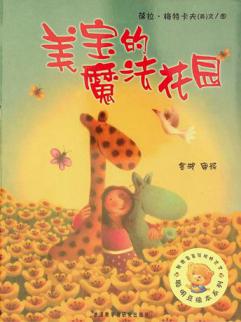
Meibao de mo fa hua yuan
Meibao suspects that her friends steal flowers from her garden. She builds a wall around the garden. Later she realizes that her friends do not steal them. She also understands that true friendship should be based on trust.
Book
On modality in fiction
This paper investigates the truth values of modal sentences within fictional discourse. I investigate the consequences of (im)possible worlds–based theories of truth in fiction for the truth, in fiction, of (explicit) modal sentences. I elaborate on the consequences of explicit reliable (modal) sentences within the truth-in-fiction operators if we embed the normal modal logics. I prove that the current main possible worlds theories of truth-in-fiction make explicit reliable sentences within fiction truth-value equivalent to their possibility. This has non-intuitive consequences if we employ normal modal logics. These consequences are shown to be contradictory. The main argument of the paper thus concerns the inconsistency of embedding the systems of normal modal logics within the truth-in-fiction operators provided in the discussion.
Journal Article