
Catalogue Search | MBRL


Are you sure you want to remove the book from the shelf?

{{itemTitle}}
9,940
result(s) for
"Tunisia."
Sort by:

Lost walls : a calligraffiti journey through Tunisia
Lost or forgotten were the walls that now proudly carry the messages of calligraffiti artist eL Seed. \"Lost Walls\", his first book, beautifully and poetically documents these walls, handpicked during his road trip around Tunisia. \"Lost Walls\" is a calligraffiti journey of discovery for eL Seed, who chronicles the painting of 24 walls in four weeks. Inspired by the reaction to his largest project to date, the minaret of the Jara mosque in his ancestral home of Gabes, eL Seed decided to set out on this month-long personal journey across his motherland, painting \"lost\" walls along the way. This book provides unique and rare insight into the world of calligraffiti and the Tunisian people.

Women, Gender, and the Palace Households in Ottoman Tunisia
In this first in-depth study of the ruling family of Tunisia in the eighteenth and nineteenth centuries, Kallander investigates the palace as a site of familial and political significance. Through extensive archival research, she elucidates the domestic economy of the palace as well as the changing relationship between the ruling family of Tunis and the government, thus revealing how the private space of the palace mirrored the public political space.
\"Instead of viewing the period as merely a precursor to colonial occupation and the nation-state as emphasized in precolonial or nationalist histories, this narrative moves away from images of stagnation and dependency to insist upon dynamism,\" Kallander explains. She delves deep into palace dynamics, comparing them to those of monarchies outside of the Ottoman Empire to find persuasive evidence of a global modernity. She demonstrates how upper-class Muslim women were active political players, exerting their power through displays of wealth such as consumerism and philanthropy. Ultimately, she creates a rich view of the Husaynid dynastic culture that will surprise many, and stimulate debate and further research among scholars of Ottoman Tunisia.
eBook
Lost walls : a calligraffiti journey through Tunisia
Lost or forgotten were the walls that now proudly carry the messages of calligraffiti artist eL Seed. \"Lost Walls\", his first book, beautifully and poetically documents these walls, handpicked during his road trip around Tunisia. \"Lost Walls\" is a calligraffiti journey of discovery for eL Seed, who chronicles the painting of 24 walls in four weeks. Inspired by the reaction to his largest project to date, the minaret of the Jara mosque in his ancestral home of Gabes, eL Seed decided to set out on this month-long personal journey across his motherland, painting \"lost\" walls along the way. This book provides unique and rare insight into the world of calligraffiti and the Tunisian people.
Book
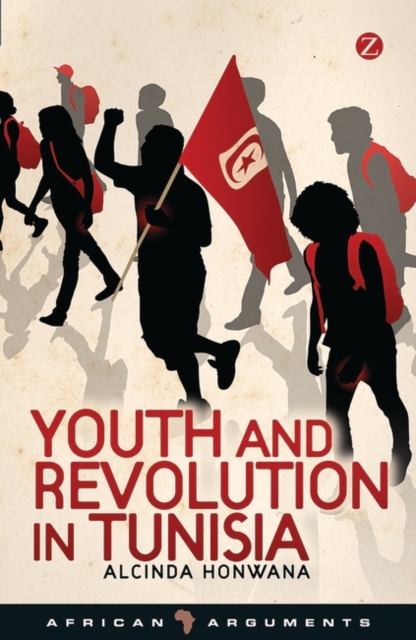
Youth and revolution in tunisia
The uprising in Tunisia has come to be seen as the first true revolution of the twenty-first century, one that kick-started the series of upheavals across the region now known as the Arab Spring. In this remarkable work, Alcinda Honwana goes beyond superficial accounts of what occurred to explore the defining role of the country's youth, and in particular the cyber activist. Drawing on fresh testimony from those who shaped events, the book describes in detail the experiences of young activists through the 29 days of the revolution and the challenges they encountered after the fall of the regime and the dismantling of the ruling party. Now, as old and newly established political forces are moving into the political void created by Ben Ali's departure, tensions between the older and younger generations are sharpening. An essential account of an event that has inspired the world, and its potential repercussions for the Middle East, Africa and beyond.
eBook

Europe and Tunisia
This book is concerned with EU democracy promotion inside Tunisia, the first Arab signatory of an Association Agreement with the EU. Focusing on the content, context, mechanisms, and outcomes of democratization via association, the authors examine whether Tunisia’s specific mode of democratization works in tandem with EU democracy promotion objectives, and the extent to which both adapt association in a way that neither sabotages EU democracy promotion nor undermines Tunisia’s specificity.
Drawing on Arabic, English and French sources, the book deploys a variety of methods and disciplinary approaches - discourse analysis, interviews, democratization theory, foreign policy analysis, security studies, political history, nationalism and identity – and takes an interpretivist perspective, conceiving of political processes as fluid and tentative. The first comprehensive study of the effects of the Union’s Mediterranean democracy promotion strategy on a single recipient state, this book will be relevant to students of Middle East politics, European foreign policy, Euro-Mediterranean studies, democratization theory, and Euro-Arab relations, this book will also be of great interest to researchers, academics and policy-makers.
Introduction 1. Tunisia and Europe: The Dialectics of Association and Reform from Khayr Al-Din to Bin Ali 2. Forging the Association: The Evolution of EU Democracy Promotion in the Mediterranean 3. Unfulfilled Reform: Implementing Democracy Promotion in Tunisia 4. Stability, Democracy, or Both? EU Indecision and Tunisian Inaction 5. The ‘Second Republic’ and Citizenship in Bin Ali’s Tunisia: Democracy versus Unity, 1987-2001 6. The ‘Republic of Tomorrow’: The Twin Quest for Association and Democratisation, 2002-2009. Conclusion
Brieg Powel is a Lecturer in International Relations at the University of Plymouth, teaching modules on International Relations theory and on democratisation in the Middle East and North Africa. His research interests include Middle East and North African politics, Welsh politics, and the role of identity in political behaviour. He is also part of the editorial board of the journal EthnoPolitics.
Larbi Sadiki is Senior Lecturer in Middle East Politics at the University of Exeter, teaching modules on democratization in the Middle East and North Africa. He has published a number of books and journal articles on the Middle East. A Non-Resident Expert with the Carnegie Endowment for International Peace (Washington, Beirut) for 2007 and 2008, he has featured in numerous TV programmes in both Arabic and English and is a frequent commentator on Arab affairs in Al-Jazeera Satellite TV.
eBook


Mediterraneans
Today labor migrants mostly move south to north across the Mediterranean. Yet in the nineteenth century thousands of Europeans and others moved south to North Africa, Egypt, and the Levant. This study of a dynamic borderland, the Tunis region, offers the fullest picture to date of the Mediterranean before, and during, French colonialism. In a vibrant examination of people in motion, Julia A. Clancy-Smith tells the story of countless migrants, travelers, and adventurers who traversed the Mediterranean, changing it forever. Who were they? Why did they leave home? What awaited them in North Africa? And most importantly, how did an Arab-Muslim state and society make room for the newcomers? Combining fleeting facts, tales of success and failure, and vivid cameos, the book gives a groundbreaking view of one of the principal ways that the Mediterranean became modern.
eBook


The Politicisation of Islam
The Politicisation of Islam: A Case Study of Tunisia traces the emergence, rise, and recent eclipse of the modern Tunisian Islamic movement, al-Nahda, and provides a comprehensive analysis of its political, social, and intellectual discourse. The first two chapters concentrate on the factors behind the emergence of al-Nahda and its policisation. The three major confrontations between the movement and the Tunisian regime, which culminated in 1991 in the banning of all al-Nahda activities inside Tunisia, is explored in Chapter Three. The author discusses the basic concepts of political Islam in the movement's literature in Chapter Four, in paticular the Islamists' rejection of secularism, and al-Nahda's proposal for a modern Islamic state in Chapter Five. In the concluding chapter, the author addresses the Islamists' cultural agenda and their insistence on an Islamic identity for Tunisia.
eBook