
Catalogue Search | MBRL


Are you sure you want to remove the book from the shelf?

{{itemTitle}}
2,200
result(s) for
"Turism."
Sort by:

The SAGE handbook of tourism studies
Tourism Studies developed as a sub-branch of older disciplines in the social sciences, such as anthropology, sociology and economics, and newer applied fields of study in hospitality management, civil rights and transport studies. This Handbook is a sign of the maturity of the field. It provides an essential resource for teachers and students to determine the roots, key issues and agenda of tourism studies. Among the key features covered in the book are: a) The evolution and position of tourism studies; b) The relationship of tourism to culture; c) Route maps to the ecology and economics of tourism; d) Special events, destination management and tourism; e) Methodologies of study; f) Tourism and transport; g) Tourism and heritage; h) Tourism and postcolonialism; and i) Global tourist business operations. Ranging from local to global issues, and from questions of management to the ethical dilemmas of tourism, this is a comprehensive, critically informed, constructively organized overview of the field. It draws together an inter-disciplinary group of contributors who are among the most celebrated names in the field. It will be quickly recognized as a landmark in the new and expanding field of tourism studies.
Book
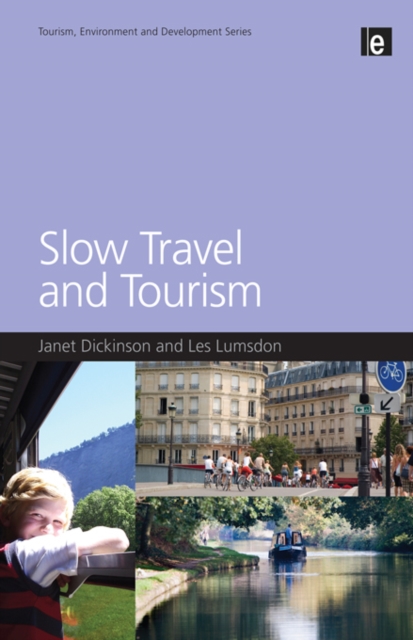
Slow Travel and Tourism
Winner of Choice Magazine - Outstanding Academic Titles for 2007
Sustainability promises both reduced environmental impacts and real cash savings for any organization - be it a business, non-profit/NGO or government department. This easy-to-use manual has been written by top business consultants specifically to help managers, business owners, organizational leaders and aspiring environmental managers/sustainability coordinators to improve their organization's environmental, social and economic performance.
The authors demystify 'sustainability', untangle the plethora of sustainability frameworks, tools and practices, and make it easy for the average person in any organization to move towards sustainability. Organized by sector (manufacturing, services and office operations, and government) and common organizational functions (senior management, facilities, human resources, purchasing, environmental affairs and compliance, marketing and public relations, and finance and accounting), the authors show how organizations can incorporate sustainability into their everyday work through the application of useful tools and self-assessments.
eBook

Tourism and national parks : international perspectives on development, histories, and change
\"In 1872 Yellowstone was established as a National Park. The name caught the public's imagination and by the close of the century, other National Parks had been declared, not only in the USA, but also in Australia, Canada, and New Zealand. Yet as it has spread, the concept has evolved and diversified. In the absence of any international controlling body, individual countries have been free to adapt the concept for their own physical, social and economic environments. Some have established national parks to protect scenery, others to protect ecosystems or wildlife. Tourism has also been a fundamental component of the national parks concept from the beginning and predates ecological justifications for national park establishment though it has been closely related to landscape conservation rationales at the outset.
Book
The Relationship Between the Tourism Industry and Sustainable Development Goals – Word Cloud Analysis
The worldwide adoption of sustainable models has been motivated by an increasing awareness of the negative environmental impacts caused by unsustainable economic development models. The paper explores the relationship between the tourism industry and sustainable development goals during the period 2015-2021, using 245 studies from the Google Academic database. Various approaches, such as Word Cloud analysis, correlation network, and word network, were used to identify frequently occurring words and word pairs in the research domain. The R software was used for this research. Empirical results were used to identify the most relevant journals in the field and the most prolific authors. The Journal of Sustainable Tourism addresses specific themes such as “food”, “community”, “sanctions”, and “social”. Sustainability focuses on “culture”, “heritage”, “local”, and “environment”, while the Worldwide Hospitality and Tourism Themes journal represents a niche in the field, covering topics such as “community”, “health”, “well-being”, “investment”, and “growth”. Thus, the results obtained can provide significant contributions to public policies and independently applied practices within the industry, facilitating more informed decision-making in support of sustainable development. This research contributes to the specialised literature by identifying current research trends in the tourism industry and its relationship with sustainable development goals, highlighting dominant themes based on the keywords used. These interdisciplinary connections can lead to deeper understanding and more efficient solutions for sustainable development.
Journal Article

Tourist behaviour
Tourism is an inherently social phenomenon. Tourists travel with others and experience places and cultures through interacting with both familiar and unfamiliar others. This volume presents a thorough tour of the social psychological processes which underpin contemporary travel. The fascinating phenomenon of tourist behaviour deals with topics such as motivation, destination choice, travellers' on site experiences, satisfaction and learning. This book uses an array of developing and recently constructed conceptual frameworks to both synthesise what is established, and to create new insights and directions for further analysis and, ultimately, management action.
eBook

Heritage and Globalisation
This volume analyzes the politics, policy and practice of cultural heritage at the global level, identifying the major directions in which international heritage practice is moving, and exploring the key issues likely to shape the cultural heritage field well into the twenty-first century. It examines the tensions between the universal claims of much heritage practice, particularly that associated with the World Heritage system, and national and local perspectives. It explores the international legal framework developed since World War Two to protect heritage, particularly at times of war, and from theft, showing how contemporary global problems of conflict and illicit trade continue to challenge the international legal system.
Heritage and Globalisation critiques the incorporation of heritage in the world economy through the policies of international development organisations and the global tourism trade. It also approaches heritage from seldom-considered perspectives, as a form of aid, as a development paradigm, and as a form of sustainable practice.
The book identifies some of the most pressing issues likely to face the heritage industry at a global level in coming decades, including the threat posed by climate change and the need for poverty reduction. Providing a historically and theoretically rigorous approach to heritage as a form of and manifestation of globalisation, the volume’s emphasis is on contemporary issues and new fields for heritage practice.
Part 1: Global and Local Tensions 1. The Magic List of Global Status: UNESCO, World Heritage and the Agendas of States Marc Askew 2. Politics and Power: The Hiroshima Peace Memorial (Genbaku Dome) as World Heritage Olwen Beazley 3. World Heritage, Authencity and Post-authenticity: International and National Perspectives Sophoa Labadi 4. An Ivory Bull Head from Afghanistan: Legal and Ethical Dilemmas in National and Globalized Heritage Juliette van Krieken-Pieters 5. Globalizing Intangible Cultural Heritage? Between International Arenas and Local Aappropriations Chiara Bortolotto Part 2: Heritage, Development and Globalisation 6. Heritage Tourism: The Dawn of a New Era? Tim Winter 7. The Glocalisation of Heritage through Tourism: Balancing Standardization and Differentiation Noel Salazar 8. The Business of Heritage and the Private Sector Fiona Starr Part 3: The Future of the Past: Twenty-first Century Challenges 9. Cultural Heritage and the Global Environmental Ccrisis Colin Long and Anita Smith 10. Conflict Heritage and Expert Failure Lynn Meskell 11. Material Heritage and Poverty Reduction Kathryn Lafrenz Samuels
'Almost every researcher, teacher, and student working in the field of heritage studies will find this collection a valuable source of information and inspiration, and it should also be required reading for politicians, heritage professionals, and community activists developing strategies for the coming decade.' – Conservation and Management of Archaeological Sites
eBook

Is tourism damaging ecosystems in the Andes? Current knowledge and an agenda for future research
Despite the popularity of tourism and recreation in the Andes in South America and the regions conservation value, there is limited research on the ecological impacts of these types of anthropogenic use. Using a systematic quantitative literature review method, we found 47 recreation ecology studies from the Andes, 25 of which used an experimental design. Most of these were from the Southern Andes in Argentina (13 studies) or Chile (eight studies) with only four studies from the Northern Andes. These studies documented a range of impacts on vegetation, birds and mammals; including changes in plant species richness, composition and vegetation cover and the tolerance of wildlife of visitor use. There was little research on the impacts of visitors on soils and aquatic systems and for some ecoregions in the Andes. We identify research priorities across the region that will enhance management strategies to minimise visitor impacts in Andean ecosystems.
Journal Article
Globalization and transnational surrogacy in India
From computer support and hotel reservations to laboratory results and radiographic interpretations, it seems everything can be ‘outsourced’ in our globalized world. One would not think so with parenthood, however, especially motherhood, as it is a fundamental activity humans have historically preserved as personal and private. In our modern age, however, the advent and accessibility of assisted reproductive technologies (ARTs) and the ease with which they have traversed global borders, has fundamentally altered the meaning of childbearing and parenting. In the twenty-first century, parenthood is no longer achieved only through gestation, adoption, or traditional surrogacy, but also via assisted reproductive technologies (ARTs), where science and technology play lead roles. Furthermore, in a globalized world economy, where the movement and transfer of people and commodities are increasing to serve the interests of capitalism, gamete donation and surrogate birth can traverse innumerable geographic, socio-economic, racialized, and political borderlands. Thus, reproduction itself can be outsourced. This edited volume explores one specific aspect of the new assisted reproductive technologies: gestational surrogacy and how its practice is changing the traditional concept of parenthood across the globe. The phenomenon of transnational surrogacy has given rise to a thriving international industry where money is being ‘legally’ exchanged for babies and ‘reproductive labor’ has taken on a lucrative commercial tone. Yet, law, research, and activism are barely aware of this experience and are still playing catch-up with rapidly changing on-the-ground realities. This interdisciplinary collection of essays assuages the dearth of knowledge and addresses significant issues in transnational commercial gestational surrogacy as it takes shape in a peculiar relation between the West (primarily the United States) and India.
eBook
National Park Development in China: Conservation or Commercialization?
The rapid development of parks and ecotourism in China has attracted worldwide attention, not only for the beauty of the landscape that the parks are protecting but also for their abundant and often unique biodiversity. However, in some areas, the development of ecotourism has actually led to the degradation of local ecological, economic, and social systems. Using National Forest Parks for demonstration, this article analyzes the current political, institutional, legal, environmental, and economic issues concerning National Parks in China, and examines their potential future development. Although the intention of National Park systems in China is to raise environmental quality, and to protect biodiversity and social livelihoods, their success has varied. Future success will be measured by their capacity to reduce poverty, to promote long-term rehabilitation of wildlife habitats, and to simultaneously protect Chinese culture and biodiversity.
Journal Article

Information and Communication Technologies for Sustainable Tourism
Sustainable development is a highly topical issue and is of critical importance to tourism as the environment is of utmost importance for the continued development and prosperity of the industry. There have been numerous texts written on sustainable tourism and the measures to mitigate and manage this but none which acknowledges Information and Communication Technologies (ICT) as a mechanism of doing so despite being an emerging area of research. ICT in this context refers to innovative tools which form an integrated system of software and networked equipment that facilitates data processing information sharing communication and the ability to search and select from an existing range of products and services for an organisation's benefits. Despite the symbiotic relationship, which exists between ICT and sustainable tourism, there has been little research, which has considered how the use of such technology can be used to make sustainable tourism development a more workable reality.
This opportune book is the first to provide a focus on the interrelationship of these two important topics demonstrating their synergies and providing insight into a new and innovative approach to managing sustainable tourism development. It considers the use of technology to reduce the negative impacts of tourism from both the demand and supply side perspectives. A critical review of a range of cutting edge technologies used by tourists and businesses to assess their usefulness in managing sustainable tourism development from the macro to the micro level is also discussed. It further integrates examples and practical applications to show how ICT can be an invaluable mechanism in the management of sustainable tourism development.
This cutting-edge volume provides a wealth of information on an important yet neglected subject. This book will be invaluable reading for students, researchers, academics and members of the tourism industry looking for new and
eBook