
Catalogue Search | MBRL


Are you sure you want to remove the book from the shelf?

{{itemTitle}}
34
result(s) for
"Turkey Boundaries History."
Sort by:

From the Abode of Islam to the Turkish Vatan
How does a people move from tribal and religiously based understandings of society to a concept of the modern nation-state? This book examines the complex and pivotal case of Turkey. Tracing the shifting valences ofvatan(Arabic for \"birthplace\" or \"homeland\") from the Ottoman period-when it signified a certain territorial integrity and imperial ideology-through its acquisition of religious undertones and its evolution alongside the concept ofmillet(nation), Behlül Özkan engages readers in the fascinating ontology of Turkey's protean imagining of its nationhood and the construction of a modern national-territorial consciousness.
eBook


Defending the Border
This book, one of the first in English about everyday life in the Republic of Georgia, describes how people construct identity in a rapidly changing border region. Based on extensive ethnographic research, it illuminates the myriad ways residents of the Caucasus have rethought who they are since the collapse of the Soviet Union.
Through an exploration of three towns in the southwest corner of Georgia, all of which are situated close to the Turkish frontier, Mathijs Pelkmans shows how social and cultural boundaries took on greater importance in the years of transition, when such divisions were expected to vanish. By tracing the fears, longings, and disillusionment that border dwellers projected on the Iron Curtain, Pelkmans demonstrates how elements of culture formed along and in response to territorial divisions, and how these elements became crucial in attempts to rethink the border after its physical rigidities dissolved in the 1990s.
The new boundary-drawing activities had the effect of grounding and reinforcing Soviet constructions of identity, even though they were part of the process of overcoming and dismissing the past. Ultimately, Pelkmans finds that the opening of the border paradoxically inspired a newfound appreciation for the previously despised Iron Curtain as something that had provided protection and was still worth defending.
eBook


The Environmental Legacy of War on the Hungarian-Ottoman Frontier, c. 1540-1690
This book is the first monographic attempt to follow the environmental changes that took place in the frontier zone of the Ottoman Empire and the Kingdom of Hungary in the sixteenth and seventeenth centuries. On the one hand, it looks at how the Ottoman–Hungarian wars affected the landscapes of the Carpathian Basin – specifically, the frontier zone. On the other hand, it examines how the environment was used in the military tactics of the opposing realms. By taking into consideration both perspectives, this book intends to pursue the dynamic interplay between war, environment, and local society in the early modern period.
eBook
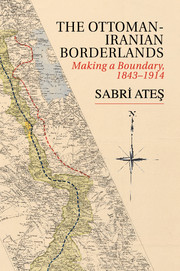
The Ottoman-Iranian Borderlands : Making a Boundary, 1843-1914
Using a plethora of hitherto unused and underutilized sources from the Ottoman, British, and Iranian archives, The Ottoman-Iranian Borderlands (1843-1914) traces seven decades of intermittent work by Russian, British, Ottoman, and Iranian technical and diplomatic teams to turn an ill-defined and highly porous area into an internationally recognized boundary. By examining the process of boundary negotiation by the international commissioners and their interactions with the borderland peoples they encountered, the book tells the story of how the Muslim world's oldest borderland was transformed into a bordered land. It details how the borderland peoples, whose habitat straddled the frontier, responded to those processes as well as to the ideas and institutions that accompanied their implementation. It shows that the making of the boundary played a significant role in shaping Ottoman-Iranian relations and in the identity and citizenship choices of the borderland peoples.
eBook

From Constantinople to the Frontier
From Constantinople to the Frontier: The City and the Cities provides twenty-five articles addressing the concept of centres and peripheries in the late antique and Byzantine worlds, focusing specifically on urban aspects of this paradigm. Spanning from the fourth to thirteenth centuries, and ranging from the later Roman empires to the early Caliphate and medieval New Rome, the chapters reveal the range of factors involved in the dialectic between City, cities, and frontier.Including contributions on political, social, literary, and artistic history, and covering geographical areas throughout the central and eastern Mediterranean, this volume provides a kaleidoscopic view of how human actions and relationships worked with, within, and between urban spaces and the periphery, and how these spaces and relationships were themselves ideologically constructed and understood.Contributors are Walter F. Beers, Lorenzo M. Bondioli, Christopher Bonura, Lynton Boshoff, Averil Cameron, Jeremiah Coogan, Robson Della Torre, Pavla Drapelova, Nicholas Evans, David Gyllenhaal, Franka Horvat, Theofili Kampianaki, Maximilian Lau, Valeria Flavia Lovato, Byron MacDougall, Nicholas S.M. Matheou, Daniel Neary, Jonas Nilsson, Cecilia Palombo, Maria Alessia Rossi, Roman Shliakhtin, Sarah C. Simmons, Andrew M. Small, Jakub Sypianski, Vincent Tremblay and Philipp Winterhager.
eBook