
Catalogue Search | MBRL


Are you sure you want to remove the book from the shelf?

{{itemTitle}}
51
result(s) for
"Turkey Foreign relations 21st century."
Sort by:
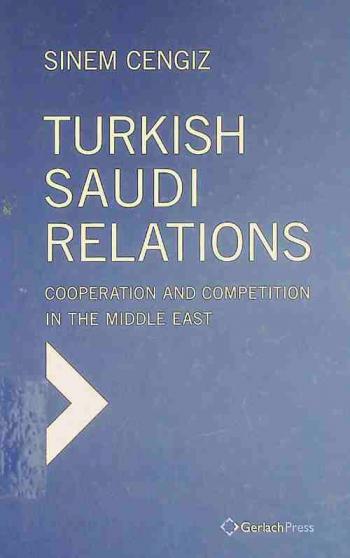
Turkish-Saudi Relations : cooperation and competition in the Middle East
Are the Middle East?s two heavyweights, Turkey and Saudi Arabia, friends or foes? What are the main drivers behind their rivalry or cooperation? The nature of their relationship has region-wide repercussions, affecting the calculations of both regional and global actors. 0This book is the first to offer a comprehensive and nuanced examination of the main drivers in the complex relationship between Turkey and Saudi Arabia, focusing on the role of domestic, regional and international dynamics. 0Three decades are examined: the 1990s, the 2000s and the 2010s. Thus a review of the recent history of the relationship outlining the background dynamics goes on to identify the key turning points in the post- 2011 Middle East, in which the two states have frequently found themselves on a collision course due to their widely differing domestic, regional and international agendas.
Book

Debating Security in Turkey
Debating Security in Turkey: Challenges and Changes in the Twenty-First Century, edited by Ebru Canan-Sokullu, gives a detailed account of the strategic security agenda facing Turkey in an era of uncertainty and swift transformation in global politics, and regional and local dynamics. The contributors to this volume describe the challenges and changes that Turkey encounters in the international, regional, and national environment at a time of extraordinary flux. This study provides a framework for Turkish security agenda locating it in theoretical discussions, and developing a conceptual framework of security challenges to Turkey, and to a broader region where the country and its interests are located. The book positions Turkey in the new global security order addressing a multidimensional political agenda, and points to the need not only to elaborate on the overall evaluation of Turkey’s political affairs—domestic and foreign— but also to trace a critical conjuncture of transatlantic relations, its recent role in the Middle East, Caucasus and Central Asia, and bid for full membership in the EU within the security context. Finally, the contributors reflect upon where Turkey’s security challenges and prospects stand from internal and external perspectives with an interactive foreign policy assessment. Debating Security in Turkey is an essential contribution to the literature of Turkish national security, and the effects of that security in the region.
eBook


The possibility and limit of liberal middle power policies
This book is a comprehensive analysis of Turkish foreign policy through the concept of “middle power”. The author explores why and how Turkey has constructed middle power identity based on liberal foreign policies, in order to illuminate the change in post-Cold War Turkish state identity in relation to foreign policy behaviors. The author further explores state identity and how changes of circumstances, norms, state self-perception, and the perceptions of others effects that identity. This is done first through a policy analysis of Turgut Özal, Necmettin Erbakan and İsmail Cem and second through an examination of AKP’s foreign policy experiences and ideas, especially in relation to Ahmet Davutoğlu.
eBook

Turkish-Saudi Relations : cooperation and competition in the Middle East
Are the Middle East?s two heavyweights, Turkey and Saudi Arabia, friends or foes? What are the main drivers behind their rivalry or cooperation? The nature of their relationship has region-wide repercussions, affecting the calculations of both regional and global actors. 0This book is the first to offer a comprehensive and nuanced examination of the main drivers in the complex relationship between Turkey and Saudi Arabia, focusing on the role of domestic, regional and international dynamics. 0Three decades are examined: the 1990s, the 2000s and the 2010s. Thus a review of the recent history of the relationship outlining the background dynamics goes on to identify the key turning points in the post- 2011 Middle East, in which the two states have frequently found themselves on a collision course due to their widely differing domestic, regional and international agendas.
Book

Turkey in the 21st Century
This unique book investigates the complex transformation of Turkey's foreign policy, focusing on changing threat perceptions and the reformulation of its Western identity. This transformation cannot be explained solely in terms of strategic choices or agency driven policies but encompasses power shifts and systemic transformations. Is Turkey shifting its axis? Will this affect its traditional Western-oriented foreign policy? The book begins by discussing the relationship between security and globalization, using examples of Turkey's regional positioning. It then focuses on to what extent the 'traditional' discourse on security in Turkish politics, which prevailed during the Cold War era and beyond, has undergone a change in the new era. This timely book is a much needed account of how pragmatism rather than ideology is the main determinant in Turkey's current foreign policy and should be read by all looking for a fresh and stimulating take on Turkey's response to globalization and the internationalization of security in the 21st Century.
eBook

The Kurds in Erdogan's \new\ Turkey : domestic and international implications
\"This book focuses on the AKP government since 2002 during which time the state's approach to the Kurdish Question has undergone several changes. Examining what preceded and followed the failed putsch of 2016, it explains and critiques that situates the Kurdish Question in its broader context. It stands out with the main objective to avoid any 'policy-oriented bias' through an interdisciplinary and multi-thematic approach. The volume discusses the state and policies in the Kurdish region of Turkey, as well as counter-hegemonic discourses that seek to reform existing institutions. Some chapters focus on the domestic aspects and gender perspectives of the Kurdish Question in Turkey, which focus has been taken over by recent developments in Syria and the Middle East in general. Other chapters include a range of new aspects of Turkish society and politics, and the international aspects of Ankara's policies and its implications not only inside Turkey but also internationally. Taking both domestic and foreign policy aspects into account, the book offers a set of innovative explanations for the state of crisis in Turkey and a solid basis for thinking about the likely path forward. Scholars, researchers and post-graduates, interested in political theory, Kurdish and Middle East politics will find this book invaluable\"-- Provided by publisher.
Book

Turkey under Erdogan
An incisive account of Erdogan's Turkey - showing how its troubling transformation may be short-lived Since coming to power in 2002 Recep Tayyip Erdogan has overseen a radical transformation of Turkey. Once a pillar of the Western alliance, the country has embarked on a militaristic foreign policy, intervening in regional flashpoints from Nagorno-Karabakh to Libya. And its democracy, sustained by the aspiration to join the European Union, has given way to one-man rule. Dimitar Bechev traces the political trajectory of Erdogan's populist regime, from the era of reform and prosperity in the 2000s to the effects of the war in neighboring Syria. In a tale of missed opportunities, Bechev explores how Turkey parted ways with the United States and Europe, embraced Putin's Russia and other revisionist powers, and replaced a frail democratic regime with an authoritarian one. Despite this, he argues that Turkey's democratic instincts are resilient, its economic ties to Europe are as strong as ever, and Erdogan will fail to achieve a fully autocratic regime.
eBook

Turkey-West relations : the politics of intra-alliance opposition
\"Turkey's strategic geopolitical positioning as a bridge between Europe, the Middle East, the Balkans, the Mediterranean, the Black Sea, and South Caucasus, and its religious, cultural, and historical affiliations with countries in its immediate neighborhood, make it an indispensable actor in European and transatlantic security. In the early 1950s, Turkey was so eager to join the North Atlantic Treaty Organization (NATO) that it fought in the Korean War and incurred heavy casualties. Subsequently, it has traditionally been well embedded in Western security infrastructures\"-- Provided by publisher.
BOOK

Turkey as a mediator
This book provides an overview of successes and failures of Turkey's mediation initiatives in different fragile and post-conflict societies. It is the first of its kind to run a systematic analysis of Turkey's peacemaking. This edited collection treats its readers with a variety of analyses on the dominant narratives that guide Turkish mediation, the tools used by the Turkish government, and Turkey's evolving self-image as a mediator since the mid-2000s. The book sheds a critical spotlight on the learning curve of the Turkish Foreign Policy as it initiated and supported peace processes between the western Balkan countries, in the Middle East, in post-civil war Somalia, and in the nuclear talks between Iran and P5+1. The book concludes with a summary of assets, challenges, and opportunities for Turkey's sustained emergence as a mediator in international politics.
eBook