
Catalogue Search | MBRL


Are you sure you want to remove the book from the shelf?

{{itemTitle}}
493
result(s) for
"Turkey History 20th century."
Sort by:


Building Modern Turkey
Building Modern Turkeyoffers a critical account of how the built environment mediated Turkey's transition from a pluralistic (multiethnic and multireligious) empire into a modern, homogenized nation-state following the collapse of the Ottoman Empire at the end of World War I. Zeynep Kezer argues that the deliberate dismantling of ethnic and religious enclaves and the spatial practices that ensued were as integral to conjuring up a sense of national unity and facilitating the operations of a modern nation-state as were the creation of a new capital, Ankara, and other sites and services that embodied a new modern way of life. The book breaks new ground by examining both the creative and destructive forces at play in the making of modern Turkey and by addressing the overwhelming frictions during this profound transformation and their long-term consequences. By considering spatial transformations at different scales-from the experience of the individual self in space to that of international geopolitical disputes-Kezer also illuminates the concrete and performative dimensions of fortifying a political ideology, one that instills in the population a sense of membership in and allegiance to the nation above all competing loyalties and ensures its longevity.
eBook


How happy to call oneself a Turk : provincial newspapers and the negotiation of a Muslim national identity
The modern nation-state of Turkey was established in 1923, but when and how did its citizens begin to identify themselves as Turks? Mustafa Kemal Atatrk, Turkeys founding president, is almost universally credited with creating a Turkish national identity through his revolutionary program to secularize the former heartland of the Ottoman Empire. Yet, despite Turkeys status as the lone secular state in the Muslim Middle East, religion remains a powerful force in Turkish society, and the country today is governed by a democratically elected political party with a distinctly religious (Islamist) orientation. In this history, Gavin D. Brockett takes a fresh look at the formation of Turkish national identity, focusing on the relationship between Islam and nationalism and the process through which a religious national identity emerged. Challenging the orthodoxy that Atatrk and the political elite imposed a sense of national identity from the top down, Brockett examines the social and political debates in provincial newspapers from around the country. He shows that the unprecedented expansion of print media in Turkey between 1945 and 1954, which followed the end of strict, single-party authoritarian government, created a forum in which ordinary people could inject popular religious identities into the new Turkish nationalism. Brockett makes a convincing case that it was this fruitful negotiation between secular nationalism and Islamrather than the imposition of secularism alonethat created the modern Turkish national identity.
eBook

The Turks today
\"In this sequel to his acclaimed biography, Ataturk, Andrew Mango traces the republic's development since the death of its founder and bringing to life the Turkish people and their vibrant society. The Turks Today interprets the latest academic research for a broader audience, making this book the definitive work on modern Turkey.\"--BOOK JACKET.

Turkey, Islam, nationalism, and modernity : a history, 1789-2007
This title reveals the historical dynamics propelling two centuries of Ottoman and Turkish history. Findley's reassessment of political, economic and cultural history highlights the dialectical interaction between radical and conservative currents of change.
eBook


The Young Turks' crime against humanity : the Armenian genocide and ethnic cleansing in the Ottoman Empire
Introducing evidence from more than 600 secret Ottoman documents, this book demonstrates in unprecedented detail that the Armenian Genocide and the expulsion of Greeks from the late Ottoman Empire resulted from an official effort to rid the empire of its Christian subjects.
eBook

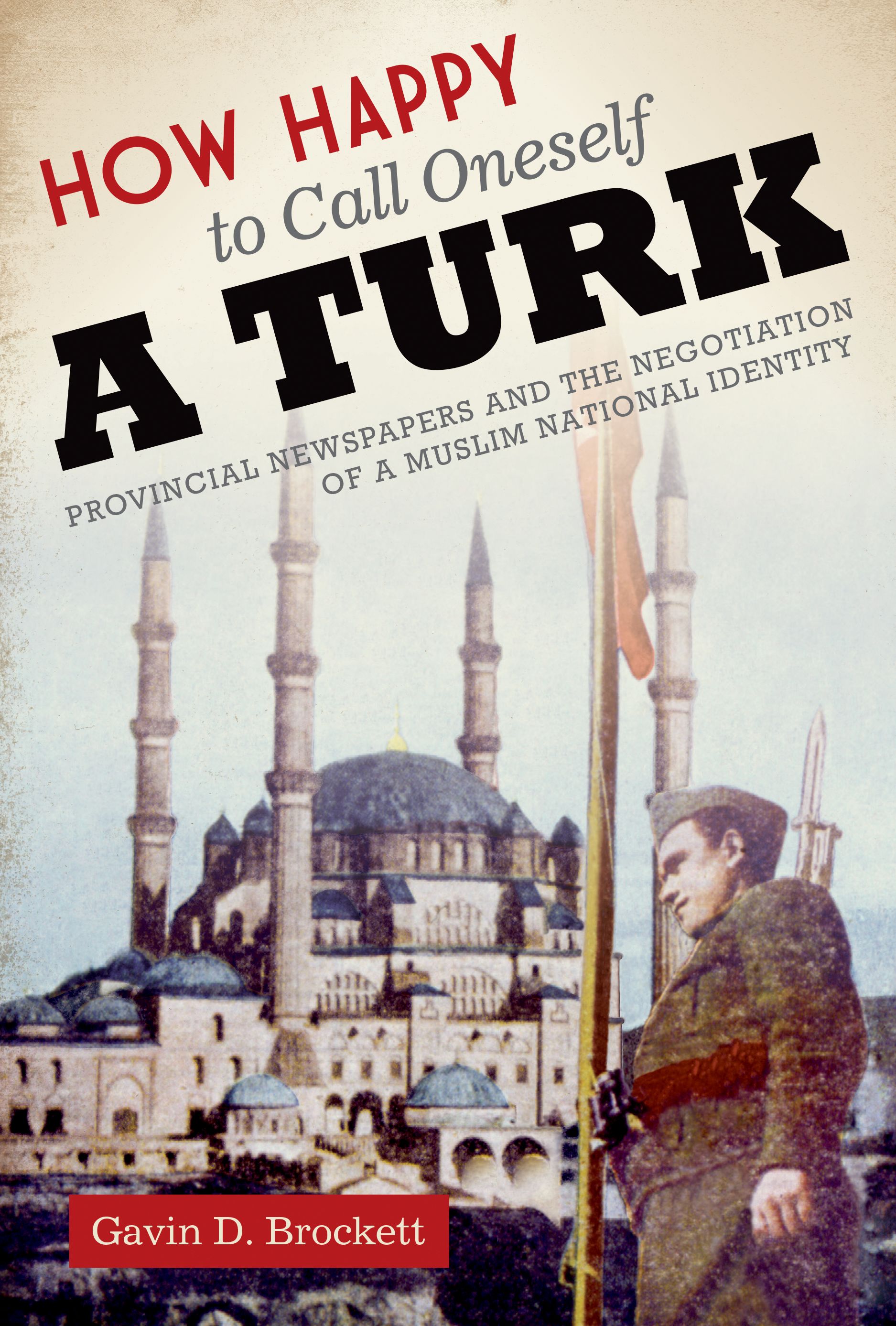
How Happy to Call Oneself a Turk
The modern nation-state of Turkey was established in 1923, but when and how did its citizens begin to identify themselves as Turks? Mustafa Kemal Atatürk, Turkey's founding president, is almost universally credited with creating a Turkish national identity through his revolutionary program to \"secularize\" the former heartland of the Ottoman Empire. Yet, despite Turkey's status as the lone secular state in the Muslim Middle East, religion remains a powerful force in Turkish society, and the country today is governed by a democratically elected political party with a distinctly religious (Islamist) orientation. In this history, Gavin D. Brockett takes a fresh look at the formation of Turkish national identity, focusing on the relationship between Islam and nationalism and the process through which a \"religious national identity\" emerged. Challenging the orthodoxy that Atatürk and the political elite imposed a sense of national identity from the top down, Brockett examines the social and political debates in provincial newspapers from around the country. He shows that the unprecedented expansion of print media in Turkey between 1945 and 1954, which followed the end of strict, single-party authoritarian government, created a forum in which ordinary people could inject popular religious identities into the new Turkish nationalism. Brockett makes a convincing case that it was this fruitful negotiation between secular nationalism and Islam—rather than the imposition of secularism alone—that created the modern Turkish national identity.
eBook