
Catalogue Search | MBRL


Are you sure you want to remove the book from the shelf?

{{itemTitle}}
2,489
result(s) for
"Turmeric"
Sort by:

Environmentally Safe Photodynamic Control of IAedes aegypti/I Using Sunlight-Activated Synthetic Curcumin: Photodegradation, Aquatic Ecotoxicity, and Field Trial
This study reports curcumin as an efficient photolarvicide against Aedes aegypti larvae under natural light illumination. Larval mortality and pupal formation were monitored daily for 21 days under simulated field conditions. In a sucrose-containing formulation, a lethal time 50 (LT[sub.50]) of 3 days was found using curcumin at 4.6 mg L[sup.−1]. This formulation promoted no larval toxicity in the absence of illumination, and sucrose alone did not induce larval phototoxicity. The photodegradation byproducts (intermediates) of curcumin were determined and the photodegradation mechanisms proposed. Intermediates with m/z 194, 278, and 370 were found and characterized using LC-MS. The ecotoxicity of the byproducts on non-target organisms (Daphnia, fish, and green algae) indicates that the intermediates do not exhibit any destructive potential for aquatic organisms. The results of photodegradation and ecotoxicity suggest that curcumin is environmentally safe for non-target organisms and, therefore, can be considered for population control of Ae. aegypti.
Journal Article

Study on the genetic variability and adaptability of turmeric
Turmeric, a globally cultivated spice, holds significance in medicine, and cosmetics, and is also a very popular ingredient in South Asian cuisine. A study involving 53 turmeric genotypes evaluated for rhizome yield and related traits at Spices Research Center, Bogura, Bangladesh over three years (2019-22). A randomized complete block design was followed with two replications. ANOVA revealed significant trait variations among genotypes. Genotype T0015 emerged as the highest yielder at 28.04 t/ha. High heritability (0.58-0.99) and genetic advance characterized plant height (PH), mother rhizome weight (WMR), primary and secondary finger weights (WPF and WSF), and yield per plant (YPP) across seasons. Genetic gain (GG) was prominent in these traits. Genotypic and phenotypic coefficient variations (GCV and PCV) (6.24-89.46 and 8.18-90.88, respectively) across three years highlighted mother rhizome weight's importance followed by numbers of primary finger (NPF), and WPF. Positive and significant correlations, especially with PH, WMR, WPF, and YPP, emphasized their relevance to fresh yield (FY). Multiple linear regression identified PH, number of mother rhizome (NMR) and WMR as key contributors, explaining 37-79% of FY variability. Cluster analysis grouped genotypes into five clusters with maximum distance observed between clusters II and III. The geometric adaptability index (GAI) assessed adaptability and superiority, revealing nine genotypes outperforming the best existing cultivar. Genotype T0117 as the top performer based on GAI, followed by T0103 and T0094. Mean rank analysis favoured T0121 as the best performer, succeeded by T0117, T0082 and T0106. The top ten genotypes (T0015, T0061, T0082, T0085, T0094, T0103, T0106, T0117, T0121 and T0129) were identified as superior based on yield and overall ranking, warranting further evaluation. These findings may induce a window for improving turmeric research and ultimately play a role in enhancing its cultivation and productivity.
Journal Article

Oral administration of turmeric-derived exosome-like nanovesicles with anti-inflammatory and pro-resolving bioactions for murine colitis therapy
Background
Ulcerative colitis (UC) is an inflammatory bowel disease (IBD) characterized by diffuse inflammation of the colonic mucosa and a relapsing and remitting course. The current therapeutics are only modestly effective and carry risks for unacceptable adverse events, and thus more effective approaches to treat UC is clinically needed.
Results
For this purpose, turmeric-derived nanoparticles with a specific population (TDNPs 2) were characterized, and their targeting ability and therapeutic effects against colitis were investigated systematically. The hydrodynamic size of TDNPs 2 was around 178 nm, and the zeta potential was negative (− 21.7 mV). Mass spectrometry identified TDNPs 2 containing high levels of lipids and proteins. Notably, curcumin, the bioactive constituent of turmeric, was evidenced in TDNPs 2. In lipopolysaccharide (LPS)-induced acute inflammation, TDNPs 2 showed excellent anti-inflammatory and antioxidant properties. In mice colitis models, we demonstrated that orally administrated of TDNPs 2 could ameliorate mice colitis and accelerate colitis resolution via regulating the expression of the pro-inflammatory cytokines, including TNF-α, IL-6, and IL-1β, and antioxidant gene, HO-1. Results obtained from transgenic mice with NF-κB-RE-Luc indicated that TDNPs 2-mediated inactivation of the NF-κB pathway might partially contribute to the protective effect of these particles against colitis.
Conclusion
Our results suggest that TDNPs 2 from edible turmeric represent a novel, natural colon-targeting therapeutics that may prevent colitis and promote wound repair in colitis while outperforming artificial nanoparticles in terms of low toxicity and ease of large-scale production.
Journal Article
Extending the lore of curcumin as dipteran Butyrylcholine esterase
Since its origin, the emergence of vector-borne infections has taken a toll on incalculable human lives. The use of chemical insecticides is one of the early known methods of vector control and although their use is still a prevalent way to combat insect population sadly the perils of insects related transmission still persists. Most commonly, the existing insecticides face the wrath of getting resisted repeatedly, paying way to develop resilient, efficient, and cost-effective natural insecticides. In this study, computational screening was performed using homology modelling, E-pharmacophore feature mapping, molecular docking, Density Function Theory (DFT) assessment, Molecular mechanics generalized Born surface area (MM-GBSA) based binding free energy calculations and Molecular Dynamics (MD) simulation to identify a potential lead phytochemical out of a manually curated library from published literature. The protein target used under this study is insect Butyrylcholine esterase (BChE). Additionally, in vitro insect (Aedes aegypti) BChE inhibition assay was also performed with the top phytochemical identified from in silico assessments. Our research highlights that curcumin leads to inhibition of enzyme BChE of Ae. aegypti. The identified mode of action of curcumin as an insect BChE inhibitor indicates the possibility of its use as an environment friendly and natural futuristic insecticide.
Journal Article
Physicochemical investigation of a novel curcumin diethyl gamma-aminobutyrate, a carbamate ester prodrug of curcumin with enhanced anti-neuroinflammatory activity
Curcumin is a polyphenol compound that alleviates several neuroinflammation-related diseases including Alzheimer's disease, Parkinson's disease, multiple sclerosis, epilepsy and cerebral injury. However, the therapeutic efficacy of curcumin is limited by its poor physicochemical properties. The present study aimed to develop a new carrier-linked curcumin prodrug, curcumin diethyl [gamma]-aminobutyrate (CUR-2GE), with improved physicochemical and anti-neuroinflammatory properties. CUR-2GE was designed and synthesized by conjugating curcumin with gamma-aminobutyric acid ethyl ester (GE) via a carbamate linkage. The carbamate linkage was selected to increase stability at acidic pH while GE served as a promoiety for lipophilic enhancement. The synthesized CUR-2GE was investigated for solubility, partition coefficient, stability, and bioconversion. The solubility of CUR-2GE was less than 0.05 [mu]g/mL similar to that of curcumin, while the lipophilicity with log P of 3.57 was significantly increased. CUR-2GE was resistant to chemical hydrolysis at acidic pH (pH 1.2 and 4.5) as anticipated but rapidly hydrolyzed at pH 6.8 and 7.4. The incomplete hydrolysis of CUR-2GE was observed in simulated gastrointestinal fluids which liberated the intermediate curcumin monoethyl [gamma]-aminobutyric acid (CUR-1GE) and the parent curcumin. In plasma, CUR-2GE was sequentially converted to CUR-1GE and curcumin within 1 h. In lipopolysaccharide (LPS)-stimulated BV-2 microglial cells, CUR-2GE effectively attenuated the pro-inflammatory mediators by decreasing the secretion of nitric oxide and cytokines (TNF-[alpha] and IL-6) to a greater extent than curcumin due to an increase in cellular uptake. Altogether, the newly developed acid-stable CUR-2GE prodrug is a potential pre-clinical and clinical candidate for further evaluation on neuroprotective and anti-neuroinflammatory effects.
Journal Article

Turmeric‐Derived Nanoparticles Functionalized Aerogel Regulates Multicellular Networks to Promote Diabetic Wound Healing
Regulation of excessive inflammation and impaired cell proliferation is crucial for healing diabetic wounds. Although plant‐to‐mammalian regulation offers effective approaches for chronic wound management, the development of a potent plant‐based therapeutic presents challenges. This study aims to validate the efficacy of turmeric‐derived nanoparticles (TDNPs) loaded with natural bioactive compounds. TDNPs can alleviate oxidative stress, promote fibroblast proliferation and migration, and reprogram macrophage polarization. Restoration of the fibroblast–macrophage communication network by TDNPs stimulates cellular regeneration, in turn enhancing diabetic wound healing. To address diabetic wound management, TDNPs are loaded in an ultralight‐weight, high swelling ratio, breathable aerogel (AG) constructed with cellulose nanofibers and sodium alginate backbones to obtain TDNPs@AG (TAG). TAG features wound shape‐customized accessibility, water‐adaptable tissue adhesiveness, and capacity for sustained release of TDNPs, exhibiting outstanding performance in facilitating in vivo diabetic wound healing. This study highlights the potential of TDNPs in regenerative medicine and their applicability as a promising solution for wound healing in clinical settings. TDNPs@AG (TAG), an aerogel dressing containing turmeric‐derived nanoparticles (TDNPs), enhances diabetic wound healing by continued controlled release of TDNPs, which reduce inflammation and oxidative stress. Owing to their bioregulatory properties, water–air balance, easy preparation, and storage capacity, TAG holds promise for tissue regeneration.
Journal Article
Pharmacological Profile, Bioactivities, and Safety of Turmeric Oil
The pharmacological attributes of turmeric have been extensively described and frequently related to the action of curcuminoids. However, there is also scientific evidence of the contribution of turmeric oil. Since the oil does not contain curcuminoids in its composition, it is crucial to better understand the therapeutic role of other constituents in turmeric. The present review discusses the pharmacokinetics of turmeric oil, pointing to the potential application of its active molecules as therapeutic compounds. In addition, the bioactivities of turmeric oil and its safety in preclinical and clinical studies were revised. This literature-based research intends to provide an updated overview to promote further research on turmeric oil and its constituents.
Journal Article

Stable Isotope Ratio Analysis for the Authentication of Natural Antioxidant Curcuminoids from ICurcuma longa/I
Curcuminoid complex, a mixture of curcumin, demethoxycurcumin and didemethoxycurcumin, is one of the most popular antioxidants of natural origin, and it has a multitude of other health benefits. It is threatened by the proliferation of counterfeit products on the market containing synthetic curcuminoids whose addition is difficult to identify as they present the three curcuminoid forms in the correct ratios. Consequently, the necessity to detect this fraudulent practice is escalating. Carbon-14 analysis is the most effective available method, but it is also expensive and difficult to implement. This paper describes the first attempt to characterize natural curcuminoids and their synthetic form, used as an adulterant, through the analysis of stable isotope ratios of carbon and hydrogen (expressed as δ[sup.13]C and δ[sup.2]H). Carbon values greater than −28.6‰ and hydrogen values greater than −71‰ may indicate the addition of synthetic curcuminoids to the natural ones.
Journal Article
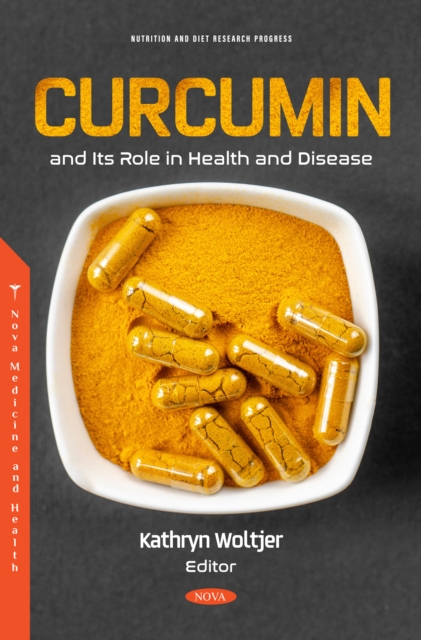
Curcumin and Its Role in Health and Disease
This book contains eight chapters discussing curcumin and its role in health and disease. Chapter One evaluates curcumin's role in cancer prevention. Chapter Two reviews curcumin's function as a natural systemic disease modulator. Chapter Three looks at the effects of curcumin supplantation and exercise training on Alzheimer's disease and age-associated cognitive decline. Chapter Four focuses on the antiviral effects of curcumin, with a special emphasis on COVID-19. Chapter Five examines green extraction techniques for curcumin, synthetic approaches, as well as its anti-inflammatory, anti-oxidant, and anti-neoplastic effects. Chapter Six reviews the possible effects of immune responses to the preventive combined effects of exercise training and curcumin supplementation in chronic disease. Chapter Seven is a mini review of the essential therapeutic effects of curcumin. The eighth and final chapter examines the promises and challenges of curcumin in medical research.
eBook
Turmeric Essential Oil Constituents as Potential Drug Candidates: A Comprehensive Overview of Their Individual Bioactivities
The therapeutic properties of turmeric essential oil have been extensively documented in both preclinical and clinical studies. Research indicates that its primary active compounds are promising candidates for addressing a wide range of pathologies, exhibiting anticancer, anti-inflammation, antioxidant, cardiovascular, hypoglycemic, dermatological, hepatoprotective, neurological, antiparasitic, antiviral, insecticidal, antifungal, and antivenom activities. While numerous compounds possess similar potential applications, the isolated active constituents of turmeric essential oil stand out due to their unique pharmacological profiles and absence of toxicity. This literature review meticulously compiles and analyzes the bioactivities of these constituents, emphasizing their molecular mechanisms of action, reported pharmacological effects, and potential therapeutic applications. The aim of this review is to provide a comprehensive synthesis of currently available clinical and preclinical findings related to individual turmeric essential oil compounds, while also identifying critical knowledge gaps. By summarizing these findings, this work encourages further research into the isolated compounds from turmeric oil as viable drug candidates, ultimately contributing to the development of innovative therapeutic strategies.
Journal Article