
Catalogue Search | MBRL


Are you sure you want to remove the book from the shelf?

{{itemTitle}}
78
result(s) for
"Tweetaligheid."
Sort by:

Excellence in bilingual education : a guide for school principals
\"Produced with Cambridge International Examinations, this is a practical guide to support school principals in the implementation of bilingual education, and to help schools with an existing bilingual programme to evaluate and improve their practice. This is the first guide to focus on the development and organisation of a bilingual education programme from the perspective of the school principal. The book suggests how the major stakeholders--principal, teachers, students and parents--can work together effectively as a cohesive team. Drawing on best practice and research, it includes perspectives from school managers and teachers around the world.\" Publisher's website.
Book
Discourse in Content and Language Integrated Learning (CLIL) Classrooms
The label CLIL stands for classrooms where a foreign language (English) is used as a medium of instruction in content subjects. This book provides a first in-depth analysis of the kind of communicative abilities which are embodied in such CLIL classrooms. It examines teacher and student talk at secondary school level from different discourse-analytic angles, taking into account the interpersonal pragmatics of classroom discourse and how school subjects are talked into being during lessons. The analysis shows how CLIL classroom interaction is strongly shaped by its institutional context, which in turn conditions the ways in which students experience, use and learn the target language. The research presented here suggests that CLIL programmes require more explicit language learning goals in order to fully exploit their potential for furthering the learners' appropriation of a foreign language as a medium of learning.
eBook

Language and Cognition in Bilinguals and Multilinguals
Psycholinguistics – the field of science that examines the mental processes and knowledge structures involved in the acquisition, comprehension, and production of language – had a strong monolingual orientation during the first four decades following its emergence around 1950. The awareness that a large part of mankind speaks more than one language – that this may impact both on the way each individual language is used and on the thought processes of bilinguals and multilinguals, and that, consequently, our theories on human linguistic ability and its role in non-linguistic cognition are incomplete and, perhaps, false – has led to a steep growth of studies on bilingualism and multilingualism since around 1995.
This textbook introduces the reader to the field of study that examines language acquisition, comprehension and production from the perspective of the bilingual and multilingual speaker. It furthermore provides an introduction to studies that investigate the implications of being bilingual on various aspects of non-linguistic cognition. The major topics covered are the development of language in children growing up in a bilingual environment either from birth or relatively soon after, late foreign language learning, and word recognition, sentence comprehension, speech production, and translation processes in bilinguals. Furthermore, the ability of bilinguals and multilinguals to generally produce language in the \"intended\" language is discussed, as is the cognitive machinery that enables this. Finally, the consequences of bilingualism and multilingualism for non-linguistic cognition and findings and views regarding the biological basis of bilingualism and multilingualism are presented.
The textbook’s primary readership are students and researchers in Cognitive Psychology, Linguistics, and Applied Linguistics, but teachers of language and translators and interpreters who wish to become better informed on the cognitive and biological basis of bilingualism and multilingualism will also benefit from it.
1. Introduction. 2. Early Bilingualism and Age Effects on (First and) Second Language Learning. 3. Late Foreign Vocabulary Learning and Lexical Representation. 4. Comprehension Processes: Word Recognition and Sentence Processing. 5. Word Production and Speech Accents. 6. Language Control. 7. Cognitive Consequences of Bilingualism and Multilingualism. 8. Bilingualism and the Brain.
\"Language and Cognition in Bilinguals and Multilinguals: An Introduction is much more than an introduction. The volume makes a major contribution to the field, and in spite of its accessibility it is a serious read for interested researchers and postgraduate students from different backgrounds. ... a tour de force.\" - Benedetta Bassetti, Centre for Language Learning Research, University of York, UK, in the American Journal of Psychology, Fall 2013
\"De Groot offers a comprehensive and complete state-of-the-art approach to language and multilingualism.\" - Kees de Bot, University of Groningen, The Netherlands, in the Dutch Journal of Applied Linguistics
\"[This book] is an important volume that provides a theoretically sophisticated, lucid, exceptionally well-written overview of the complex, interdisciplinary field of psycholinguistics. ... [The book] provides far more than its title would lead one to expect. It provides a beautifully clear blend of cutting-edge theory, a thorough and well integrated overview of important trends in the current literature, an exemplary model of critical thinking, and a sound basis for experimental analysis of thought and language. ... The author has produced a work of lasting value that should become a standard text in this important emerging specialty field.\" - James A. Moses Jr., Ph.D., Stanford University School of Medicine, USA, in PsycCRITIQUES
\"This volume is a really impressive achievement and a major contribution to the field. It provides historical depth, lucid exposition and up-to-date theoretical treatment.\" - David W. Green, Ph.D., University College London, UK
\"The introductory nature of the book and format of the chapters, including the introduction, methods and task, evidence and summary of the main findings provides a coherent structure making the book easy for anyone to read: bilinguals, bilingual program administrators, interpreters and bilingual teachers. The glossary, figures and references provided in the book should also encourage graduate students and researchers in the field of bilingualism and psycholinguistics to conduct future research on bilingualism.\" - Muhammad Asif Qureshi, Department of English, Northern Arizona University (NAU), Flagstaff, Arizona, USA
eBook
Learning and teaching languages through content
Based on a synthesis of classroom SLA research that has helped to shape evolving perspectives of content-based instruction since the introduction of immersion programs in Montreal more than 40 years ago, this book presents an updated perspective on integrating language and content in ways that engage second language learners with language across the curriculum. A range of instructional practices observed in immersion and content-based classrooms is highlighted to set the stage for justifying a counterbalanced approach that integrates both content-based and form-focused instructional options as complementary ways of intervening to develop a learner's interlanguage system. A counterbalanced approach is outlined as an array of opportunities for learners to process language through content by means of comprehension, awareness, and production mechanisms, and to negotiate language through content by means of interactional strategies involving teacher scaffolding and feedback.
eBook

Bilingualism and the Latin Language
Since the 1980s, bilingualism has become one of the main themes of sociolinguistics - but there are as yet few large-scale treatments of the subject specific to the ancient world. This book is the first work to deal systematically with bilingualism during a period of antiquity (the Roman period, down to about the fourth century AD) in the light of sociolinguistic discussions of bilingual issues. The general theme of the work is the nature of the contact between Latin and numerous other languages spoken in the Roman world. Among the many issues discussed three are prominent: code-switching (the practice of switching between two languages in the course of a single utterance) and its motivation, language contact as a cause of change in one or both of the languages in contact, and the part played by language choice and language switching in the establishment of personal and group identities.
eBook
The Bilingual Child
How does a child become bilingual? The answer to this intriguing question remains largely a mystery, not least because it has been far less extensively researched than the process of mastering a first language. Drawing on new studies of children exposed to two languages from birth (English and Cantonese), this book demonstrates how childhood bilingualism develops naturally in response to the two languages in the children's environment. While each bilingual child's profile is unique, the children studied are shown to develop quite differently from monolingual children. The authors demonstrate significant interactions between the children's developing grammars, as well as the important role played by language dominance in their bilingual development. Based on original research and using findings from the largest available multimedia bilingual corpus, the book will be welcomed by students and scholars working in child language acquisition, bilingualism and language contact.
eBook

Call it english
Call It English identifies the distinctive voice of Jewish American literature by recovering the multilingual Jewish culture that Jews brought to the United States in their creative encounter with English. In transnational readings of works from the late-nineteenth century to the present by both immigrant and postimmigrant generations, Hana Wirth-Nesher traces the evolution of Yiddish and Hebrew in modern Jewish American prose writing through dialect and accent, cross-cultural translations, and bilingual wordplay.
eBook
Bilingual Education and Language Policy in the Global South
This volume considers a range of ways in which bilingual programs can make a contribution to aspects of human and economic development in the global South. The authors examine the consequences of different policies, programs, and pedagogies for learners and local communities through recent ethnographic research on these topics. The revitalization of minority languages and local cultural practices, management of linguistic and cultural diversity, and promotion of equal opportunities (both social and economic) are all explored in this light.
eBook

Redreaming America
What would American literature look like in languages other than English, and what would Latin American literature look like if we understood the United States to be a Latin American country and took seriously the work by U.S. Latinos/as in Spanish? Debra A. Castillo explores these questions by highlighting the contributions of Latinos/as writing in Spanish and Spanglish. Beginning with the anonymously published 1826 novel Jicoténcal and ending with fiction published at the turn of the twenty-first century, the book details both the characters’ and authors’ struggles with how to define an American self. Writers from Cuba, Puerto Rico, and Mexico are featured prominently, alongside a sampling of those writers from other Latin American heritages (Peru, Colombia, Chile). Castillo concludes by offering some thoughts on U.S. curricular practice.
eBook
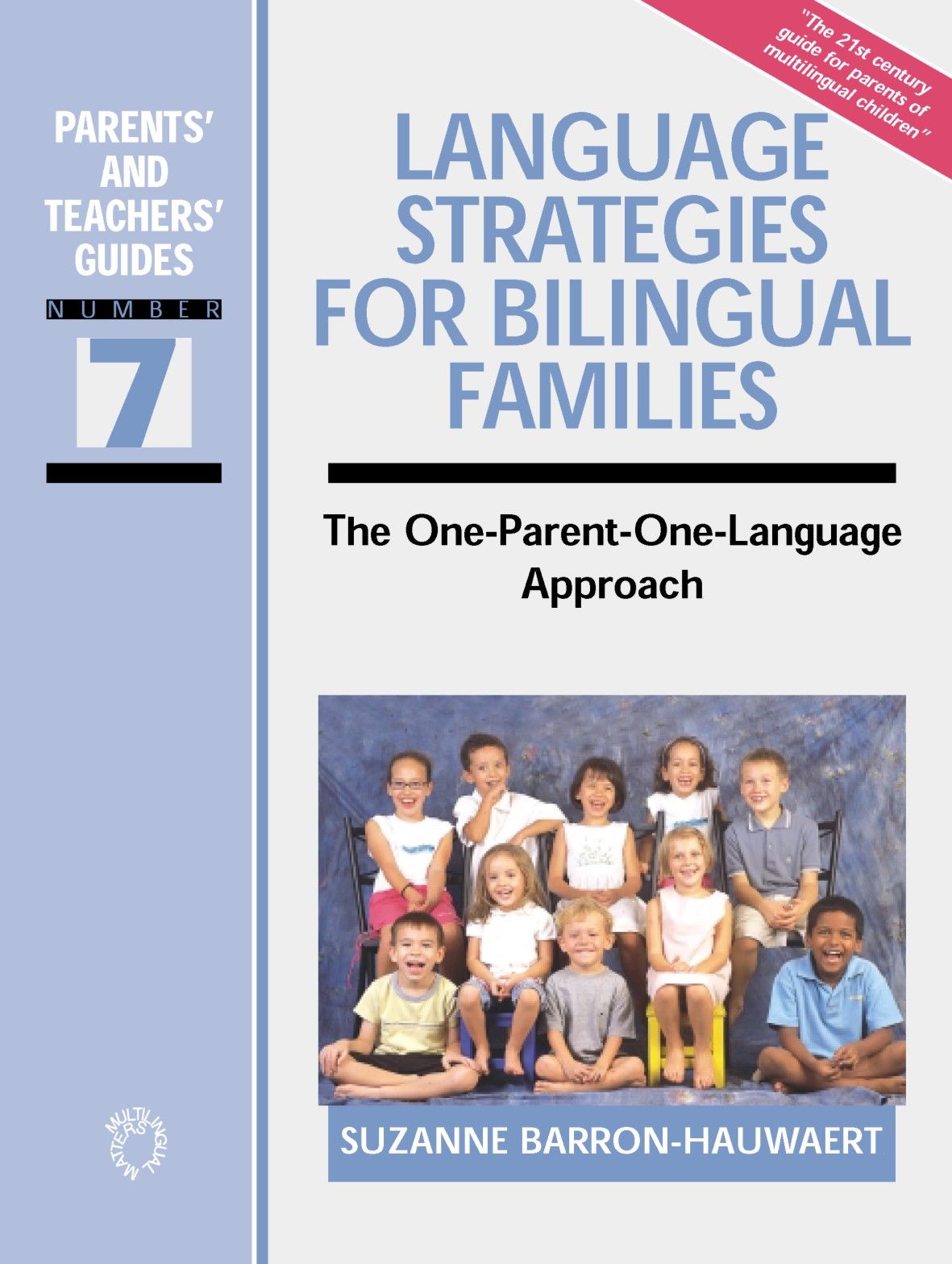
Language strategies for bilingual families : the one-parent-one-language approach
Lots of new parents these days have the opportunity to bring up their child with two or more languages because of increasing job mobility and the global community. The benefits of bilingualism and biculturalism such as higher cognitive skills, an awareness of language and sensitivity to other cultures, are being increasingly recognised. However many parents don't know how to start, what methods to use or where to seek help when facing problems.
Now Suzanne Barron-Hauwaert, a mother of three trilingual children, teacher and linguist who has lived and worked all over the world, has written a book which provides an inspiring approach to passing on two or more languages to your children. In Language Strategies for Bilingual Families she considers several methods of bilingualism and focuses on the one-person one-language approach, in which each parent speaks his or her native language and is responsible for passing on his or her culture.
Suzanne questioned over a hundred bilingual families about their experiences and she interviewed thirty families in depth. The results of her study are linked to current academic research, but the book is both readable and relevant to non-academics and provides fascinating insights into being a multilingual family. It will prove an exciting and stimulating read for potential and current mixed-language families.
eBook