
Catalogue Search | MBRL


Are you sure you want to remove the book from the shelf?

{{itemTitle}}
143
result(s) for
"Twenty-first century Fiction"
Sort by:

All tomorrow's parties
Rydell is on his way back to near-future San Francisco. A stint as a security man in an all-night Los Angeles convenience store has convinced him his career is going nowhere, but his friend Laney, phoning from Tokyo, says there's more interesting work for him in Northern California. And there is, although it will eventually involve his former girlfriend, a Taoist assassin, the secrets Laney has been hacking out of the depths of DatAmerica, the CEO of the PR firm that secretly runs the world and the apocalyptic technological transformation of, well, everything. William Gibson's new novel, set in the soon-to-be-fact world of \"Virtual Light\" and \"Idoru\", completes a stunning, brilliantly imagined trilogy about the post-Net world.
Book

Technology and 21st Century Fiction: Resisting/Embracing an Impending Irrelevance
This article asks how the technological devices and achievements that hold unmistakable status in contemporary life are represented in contemporary fiction. I suggest three levels of engagement with which to define and analyse the presence of technology in contemporary texts. These are: the reference to technology within fiction, the representation of a digital environment by fiction, and the creation of digital fiction. A variety of literary works are considered in this analysis, including works by Don DeLillo, Jennifer Egan, Else Fitzgerald, A.M Homes, Martin Lukes and Lucy Kellaway, Ruth Ozeki, and Richard Powers. Wendy Hui Kyong Chun’s work on obsolescence is utilised as consistent frame in analysis of each literary example, used to question the effects and issues in engaging with digital culture. The danger of irrelevance due to the relentless cycle of digital upgrading is highlighted as a perceived, but not always realised, threat to engagement and legacy. Consistent attention is paid to literary heritage in interrogating both fiction’s established record of technological experimentation and the resistance to depictions of contemporary digitality. Conclusions uphold the value of fictional engagement with technology in a continuation of this heritage, and in authentically depicting the contemporary moment.
Journal Article

The three stigmata of Palmer Eldritch
Palmer Eldritch returns from a distant galaxy with a new drug called Chew-Z, which claims to deliver eternal life. Barney Mayerson confronts questions of loyalty, judgement and love, as well as his own insecurities about his ex-wife. His addictive personality thrusts him in the middle of a mystery as to the true nature of Chew-Z and what it means for the future of the galaxy. Palmer Eldritch is omnipresent throughout the novel as the reader tries to figure out his intentions.
Book
The Digital Underclass Glitch: Theorising a Digital Labour Public through Fiction
Acceleration is central to the stories told of the network. This temporal pace is upheld by a digital labour public, optimised and sustained by the material and immaterial labour of endlessly replaceable and re-programmable human and nonhuman actors (Terranova 2000). Whilst users and their labour have become protagonists in both contemporary literature and digital media theory, this sentiment is less often explored from the perspective of the members of the digital underclass who are entangled in uneven power structures. The network privileges those classified as human, at the expense of not-quite-human, globalised and diffracted bodies. This classification becomes a dominant mode of recognition for the digital underclass, functioning as a form of bio-political control necessary to the manifestations of the digital labour public, and an aesthetic violence which maintains the normative genres of class and race. In turn, digital labour has become an 'empty signifer', as Alessandro Gandini (2020) writes, that forgoes the geographies of relations within the network infrastructure. Through a reading of Little Eyes by Samantha Schweblin and The Employees by Olga Ravn, this article frames fiction as particularly suitable to conceptualise the digital labour public as an infrastructure of affect that maps uneven vectors and adjacent spaces. A mode of relationality between members of the digital underclass, and users, emerges that is centred around what I call the ‘glitch of ambivalence’.
Journal Article
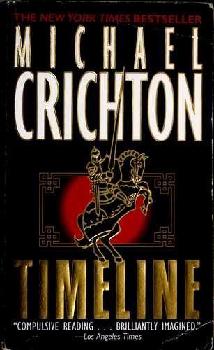
Timeline
A Yale history professor travels back in time to 15th century France and gets stuck, unable to return to the present. His colleagues organize a rescue and on landing in France become involved in the Hundred Years War.
Book

The Trespassers
Fleeing their pandemic-stricken homelands, a shipload of migrant workers departs the UK, dreaming of a fresh start in prosperous Australia.For nine-year-old Cleary Sullivan, deaf for three years, the journey promises adventure and new friendships; for Glaswegian songstress Billie Galloway, it's a chance to put a shameful mistake firmly behind.
eBook

Parable of the talents : a novel
\"Parable of the Talents celebrates the classic Butlerian themes of alienation and transcendence, violence and spirituality, slavery and freedom, separation and community, to astonishing effect, in the shockingly familiar, broken world of 2032. Long awaited, Parable of the Talents is the continuation of the travails of Lauren Olamina, the heroine of 1994's Nebula-Prize finalist, bestselling Parable of the Sower. Parable of the Talents is told in the voice of Lauren Olamina's daughter--from whom she has been separated for most of the girl's life--with sections in the form of Lauren's journal. Against a background of a war-torn continent, and with a far-right religious crusader in the office of the U.S. presidency, this is a book about a society whose very fabric has been torn asunder, and where the basic physical and emotional needs of people seem almost impossible to meet\"-- Provided by publisher.
Book
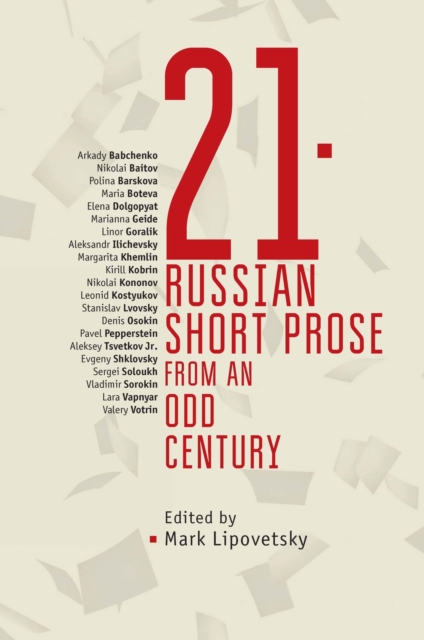
21
This collection of Russian short stories from the 21st century includes works by famous writers and young talents alike, representing a diversity of generational, gender, ethnic and national identities. Most of texts in this volume appear in English for the first time. 21 will appeal to anyone interested in contemporary Russia.
eBook

Review: Contemporary Women’s Post-Apocalyptic Fiction by Susan Watkins (2020)
The main argument that Watkins posits is that male-authored post-apocalyptic fiction tends to focus on ‘men who are trying to survive, trying to protect women and trying to rebuild things the way they were before’ (1) whereas contemporary women’s post-apocalyptic fiction envisions ways to create the world anew after the apocalyptic event. Watkins claims that the desire to create change and imagine multiple possible futures in contemporary women’s post-apocalyptic fiction is tied to gender as the female characters are desperate to escape their limited positions in a patriarchal society. Whilst describing the maternal imaginary in contemporary women’s post-apocalyptic fiction in a positive light, Watkins also warns us that there is a risk that this is ‘merely the mirror image of the paternal narrative rather than something that is truly different’ (126). Lauren Beukes’ post-apocalyptic novel Afterland (2020) focuses on the mother-son relationship and Maggie Shen King’s short story ‘Heihaizi’ (2017)—a companion story to her dystopian novel An Excess Male (2017)—is set in China during the one-child policy years and focuses on the relationship between a mother and her daughter and son, who is given the hukou (household registration) instead of his sister who is a non-citizen.
Journal Article