
Catalogue Search | MBRL


Are you sure you want to remove the book from the shelf?

{{itemTitle}}
139
result(s) for
"Ukraine Conflict, 2014-"
Sort by:


Everyday War
Everyday War provides an
accessible lens through which to understand what noncombatant
civilians go through in a country at war. What goes
through the mind of a mother who must send her child to school
across a minefield or the men who belong to groups of volunteer
body collectors? In Ukraine, such questions have been part of the
daily calculus of life. Greta Uehling engages with the lives of
ordinary people living in and around the armed conflict over Donbas
that began in 2014 and shows how conventional understandings of war
are incomplete.
In Ukraine, landscapes filled with death and destruction
prompted attentiveness to human vulnerabilities and the cultivation
of everyday, interpersonal peace. Uehling explores a constellation
of social practices where ethics of care were in operation. People
were also drawn into the conflict in an everyday form of war that
included provisioning fighters with military equipment they
purchased themselves, smuggling insulin, and cutting ties to former
friends. Each chapter considers a different site where care can
produce interpersonal peace or its antipode, everyday war.
Bridging the fields of political geography, international
relations, peace and conflict studies, and anthropology,
Everyday War considers where peace can be cultivated at an
everyday level.
eBook
Internat : roman
A young teacher wants to take his 13-year-old nephew home from boarding school at the other end of town. The school where his working sister placed her son has come under fire and no longer provides security. It takes a whole day to get to the place where civilian life has collapsed. The way home becomes a test. The two are in the immediate vicinity of the fighting, without being able to see more than the milky fog, in the flash yellow fire. Machine guns rattle, mines explode, more often than the day before. Paramilitary troops, stray dogs appear in the rubble, apathetic people stumble disoriented through an apocalyptic urban landscape.
Book
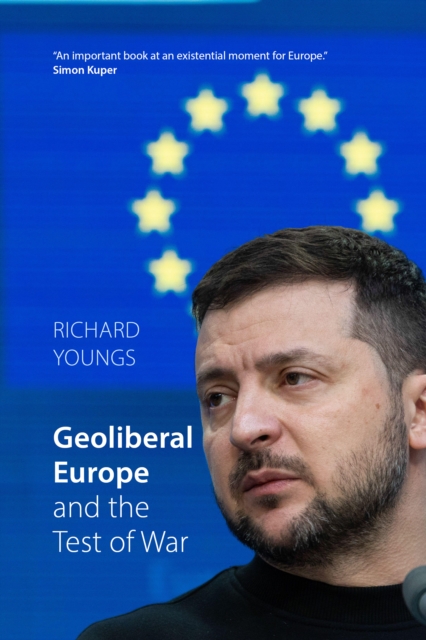
Geoliberal Europe and the Test of War
Russia's invasion of Ukraine has pushed Europe into a new strategic era. The knock-on effects of the war have combined to open a period of reordering across the European continent. European governments and the European Union collectively have begun to fashion policies for this shift, recognizing this to be a pivotal historical moment.
Richard Youngs unpacks the different dynamics that have come to characterize European policies in the wake of the war: the nature of EU integration, geopolitical power, defence priorities, European borders, liberal values, the green transition and economic sovereignty. The book looks to the future and outlines the issues and choices with which European governments still need to grapple. Youngs develops the notion of geoliberalism as a way of addressing these challenges and guiding European governments and the EU into the fragile order taking shape in the shadow of Ukraine's war.
eBook

A refugee's journey from Ukraine
\"Miron's life in Ukraine is happy until a war breaks out in his city, Donetsk. Surrounded by political instability and increasing violence, Miron and his family decide to flee to find safety in a more stable part of Ukraine. But life as an internally displaced person is not stable. He and his family aren't sure if true safety lies ahead for them. Interspersed with facts about Ukraine and its people, this narrative tells a story common to many refugees fleeing the country. Readers will learn about the conflict there and how they can help refugees in their communities and around the world who are struggling to find permanent homes\"-- Provided by publisher.
Book
Forging Europe's Leadership
The world has been splintered by geopolitics and yet is still bound by interdependence. As competition between the world's great powers surges, multiple trends point towards the collapse of the international order. Russia's aggression against Ukraine marks a tipping point, potentially turning an already contested world into one of lasting regression on the political, security, economic, social and environmental fronts. While this scenario is not inevitable, it will take determined leadership to ward it off. This book argues that the European Union can, in cooperation with others, play a crucial role in averting a regressive world. However, doing so will require a decisive change of gear: deepening European integration while pursuing EU enlargement, enhancing all dimensions of Europe's power, and shifting from crisis management to delivering structural solutions to systemic challenges.
eBook
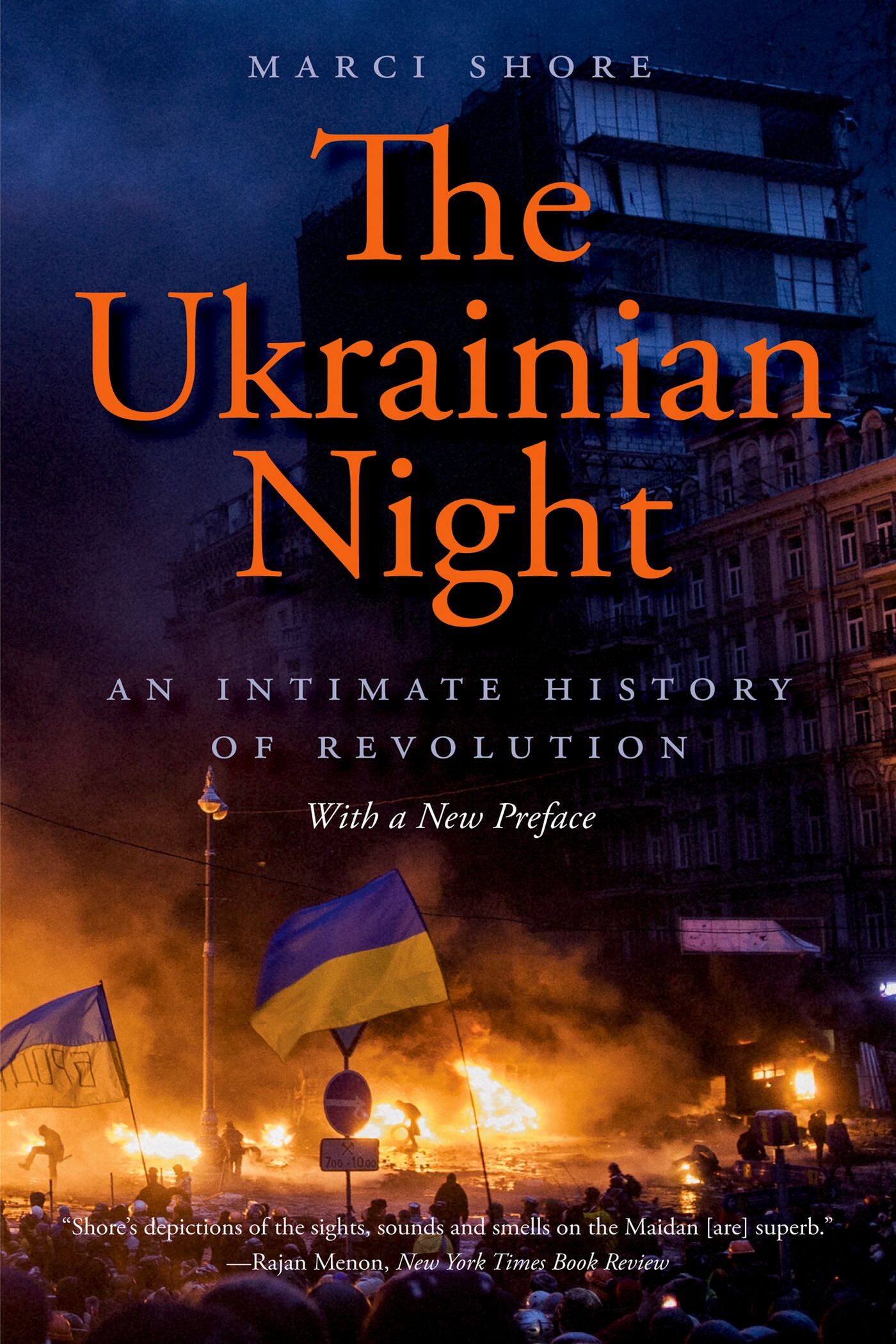
The Ukrainian night : an intimate history of revolution
A vivid and intimate account of the Ukrainian Revolution, the rare moment when the political became the existential What is worth dying for? While the world watched the uprising on the Maidan as an episode in geopolitics, those in Ukraine during the extraordinary winter of 2013-14 lived the revolution as an existential transformation: the blurring of night and day, the loss of a sense of time, the sudden disappearance of fear, the imperative to make choices. In this lyrical and intimate book, Marci Shore evokes the human face of the Ukrainian Revolution. Grounded in the true stories of activists and soldiers, parents and children, Shore's book blends a narrative of suspenseful choices with a historian's reflections on what revolution is and what it means. She gently sets her portraits of individual revolutionaries against the past as they understand it-and the future as they hope to make it. In so doing, she provides a lesson about human solidarity in a world, our world, where the boundary between reality and fiction is ever more effaced.
eBook
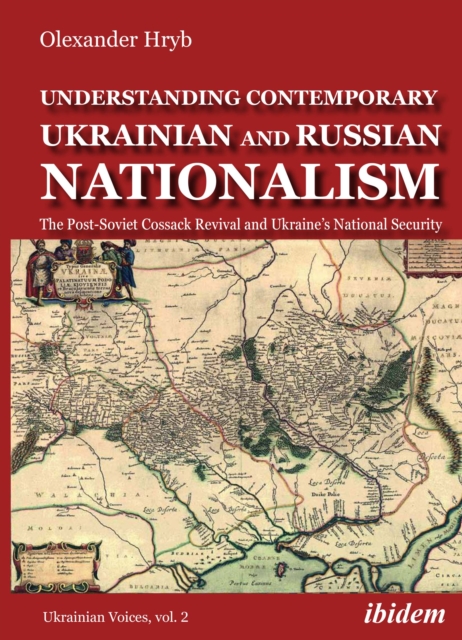
Understanding Contemporary Ukrainian and Russian Nationalism
Nationalism, national identity, and ethnicity are complex social phenomena worldwide and especially so in post-Soviet Ukraine. This monograph explores the causes and conditions of post-communist nationalist revivals focusing on the re-emergence of Cossack movements in Russia and Ukraine since the late 1980s. The study explores how different theories of nationalist movements underpinned different national policies and, ultimately, different socially constructed realities that led to the armed conflict between Russia and Ukraine.
eBook