
Catalogue Search | MBRL


Are you sure you want to remove the book from the shelf?

{{itemTitle}}
456
result(s) for
"Ukraine Ethnic relations."
Sort by:


Blood of Others
Blood of Others offers a cultural history of Crimea and
the Black Sea region, one of Europe's most volatile flashpoints, by
chronicling the aftermath of Stalin's 1944 deportation of the
Crimean Tatars in four different literary traditions.
eBook

Making Ethnicity in Southern Bessarabia : Tracing the Histories of an Ambiguous Concept in a Contested Land
\"In Making Ethnicity, Simon Schlegel offers a history of ethnicity and its political uses in southern Bessarabia, a region that has long been at the crossroads of powerful forces: in the 19th century between the Russian and Ottoman Empires, since World War I between the Soviet Union and Romania, and since the collapse of the Soviet Union between Russia and the European Union's respective zones of influence. Drawing on biographical interviews and archival documents, Schlegel argues that ethnic categories gained relevance in the 19th century, as state bureaucrats took over local administration from the church. After mutating into a dangerous instrument of social engineering in the mid-20th century, ethnicity today remains a potent force for securing votes and allocating resources. \"-- Provided by publisher.
Book

City of Rogues and Schnorrers
Old Odessa, on the Black Sea, gained notoriety as a legendary city of Jewish gangsters and swindlers, a frontier boomtown mythologized for the adventurers, criminals, and merrymakers who flocked there to seek easy wealth and lead lives of debauchery and excess. Odessa is also famed for the brand of Jewish humor brought there in the 19th century from the shtetls of Eastern Europe and that flourished throughout Soviet times. From a broad historical perspective, Jarrod Tanny examines the hybrid Judeo-Russian culture that emerged in Odessa in the 19th century and persisted through the Soviet era and beyond. The book shows how the art of eminent Soviet-era figures such as Isaac Babel, Il'ia Ilf, Evgenii Petrov, and Leonid Utesov grew out of the Odessa Russian-Jewish culture into which they were born and which shaped their lives.
eBook

Minority report : Mennonite identities in imperial Russia and Soviet Ukraine reconsidered, 1789-1945
\"The history of the Black Sea littoral, an area of longstanding interest to Russia, provides important insight into Ukraine as a contemporary state. In Minority Report, Leonard G. Friesen and the volume's contributors boldly reassess Mennonite history in Imperial Russia and the former Soviet Ukraine. This volume engages scholars from Ukraine, Russia, and North America, and includes translated and accessible contributions by scholars from the Ukrainian-German Institute of Dnipropetrovsk State University. Minority Report is divided into four sections: New Approaches to Mennonite History; Imperial Mennonite Isolationism Revisited; Mennonite Identities in Diaspora; and Mennonite Identities in the Soviet Cauldron. An appendix is included which recounts for the first time the emergence of Mennonite public history in southern Ukraine after the collapse of the Soviet Union. The volume's contributors reveal that far from being isolated from the larger society, Mennonites played an integral role in shaping the entire region. Minority Report successfully places Mennonite history within the recent historiographical insights offered by Ukrainian and Russian scholars and significantly enriches our understanding of minority relations in Soviet Ukraine.\"-- Provided by publisher.
Book

Cosmopolitan Spaces in Odesa
Cosmopolitan Spaces in Odesa: A Case Study of an Urban Context is the first book to explore Odesa’s cosmopolitan spaces in an urban context from the nineteenth to twenty-first centuries. Leading scholars shed new light on encounters between Jewish, Ukrainian, and Russian cultures. They debate different understandings of cosmopolitanism as they are reflected in Odesa’s rich multilingual culture, ranging from intellectual history and education to music, opera, and literature. The issues of language and interethnic tensions, imperialist repression, and language choice are still with us today. Moreover, the book affords a historical view of what lay behind the Odesa myth, as well as insights into the Jewish and Ukrainian cultural revivals of the early twentieth century.
eBook

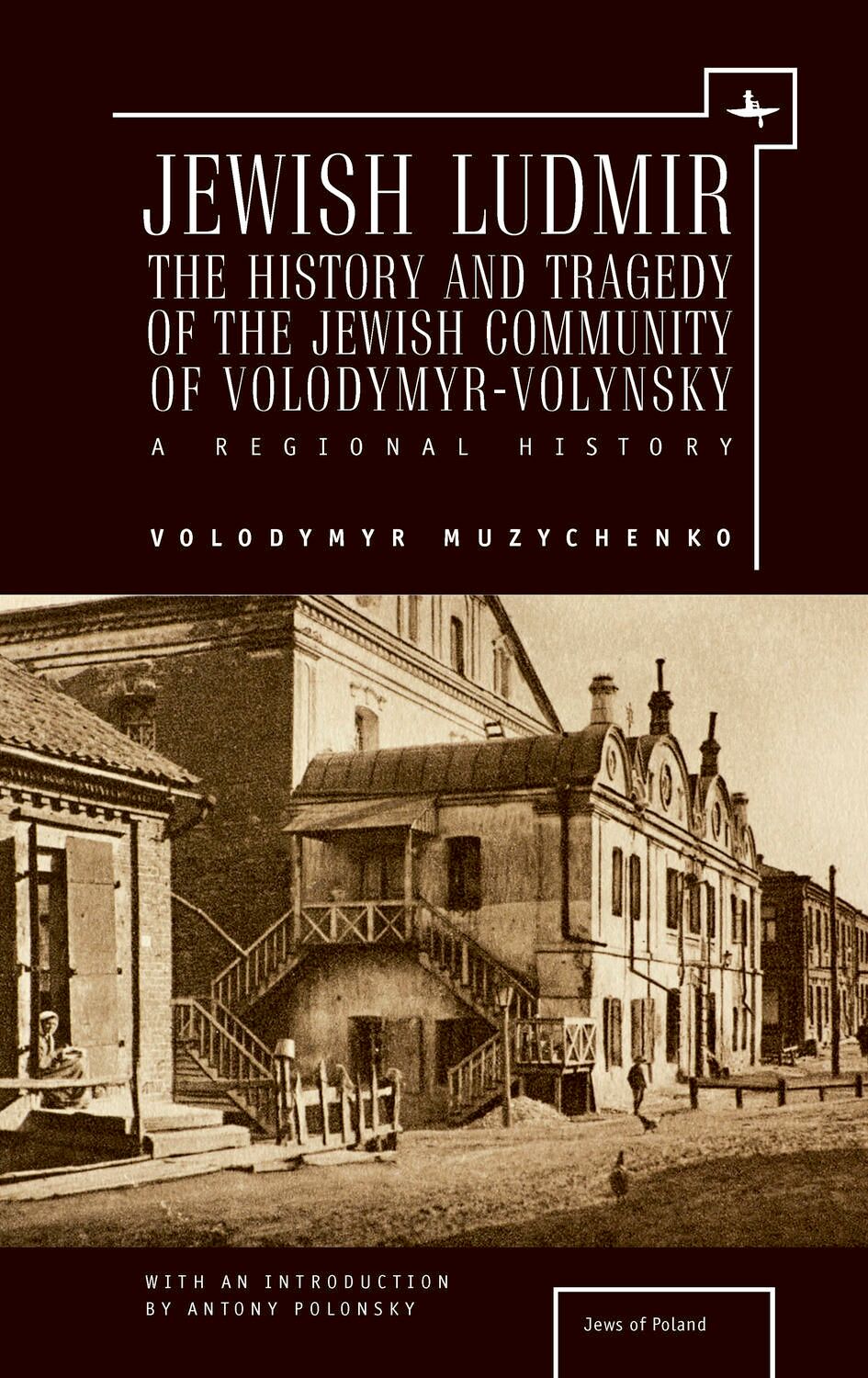
Jewish Ludmir
This volume is a brief history of the Jewish community of Volodymyr-Volynsky, going back to its first historical mentions. It explores Jewish settlement in the city, the kahal, and the role of the community in the Va’ad Arba Aratsot, and profiles several important historical figures, including Shelomoh of Karlin and Khane-Rokhl Werbermacher (the Maiden of Ludmir). It also considers the city’s synagogues and Jewish cemetery, and explores the twentieth-century history of the community, especially during the Holocaust. Drawing on survivor eyewitness testimonies, the author pays tribute to the town’s Righteous among the Nations and describes efforts to preserve the memory of its Jewish community, including the creation of the Piatydni memorial, and lists prominent Jews born in Volodymyr-Volynsky and natives of the city living abroad. This book will be of interest to historians of the Jewish communities and the Holocaust in Ukraine, as well as to the general reader
eBook

The conflict in Ukraine : what everyone needs to know
\"The Conflict in Ukraine: What Everyone Needs to Know explores Ukraine's contemporary conflict and complicated history of ethnic identity, and it does do so by weaving questions of the country's fraught relations with its former imperial master, Russia, throughout the narrative.\" -- Publisher description.
BOOK

Kiev : Jewish metropolis : a history, 1859-1914
Populated by urbane Jewish merchants and professionals as well as new arrivals from the shtetl, imperial Kiev was acclaimed for its opportunities for education, culture, employment, and entrepreneurship but cursed for the often pitiless persecution of its Jews. Kiev, Jewish Metropolis limns the history of Kiev Jewry from the official readmission of Jews to the city in 1859 to the outbreak of World War I. It explores the Jewish community's politics, its leadership struggles, socioeconomic and demographic shifts, religious and cultural sensibilities, and relations with the city's Christian population. Drawing on archival documents, the local press, memoirs, and belles lettres, Natan M. Meir shows Kiev's Jews at work, at leisure, in the synagogue, and engaged in the activities of myriad Jewish organizations and philanthropies.
eBook