
Catalogue Search | MBRL


Are you sure you want to remove the book from the shelf?

{{itemTitle}}
14,852
result(s) for
"Ukrainian"
Sort by:

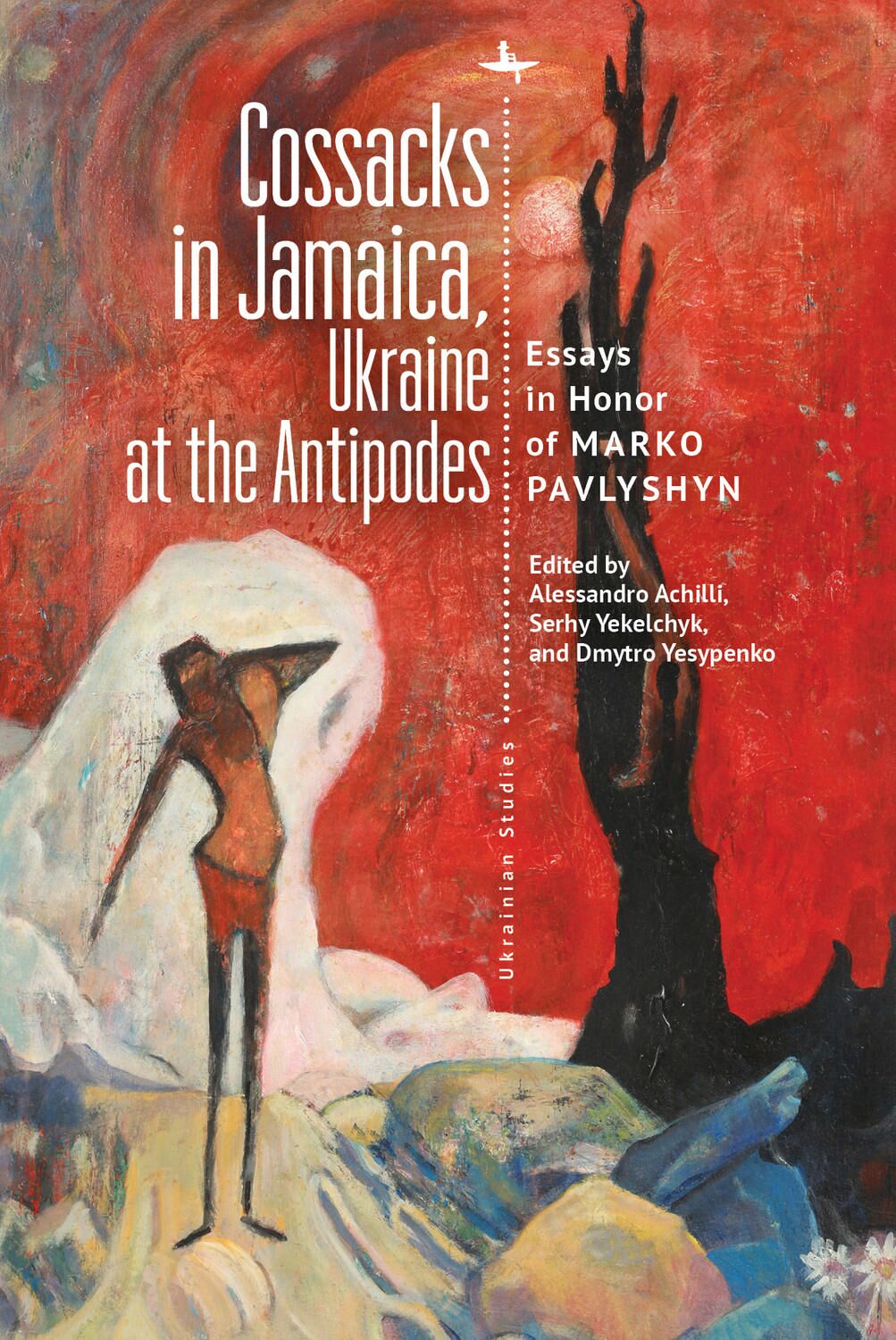
Cossacks in Jamaica, Ukraine at the Antipodes
With these essays, the Ukrainian Studies community worldwide wishes to celebrate Marko Pavlyshyn on his 65th birthday. The many periods and texts analyzed reflect the multifariousness of Marko's scholarship and the interest in literature as an instrument of social communication that he shares with the authors of this book.
eBook

Bare and Impolitic Right
When must a current government attempt to come to terms with the wrongs of governments long past? In A Bare and Impolitic Right Bohdan Kordan and Craig Mahovsky examine the internment of Ukrainian Canadians during the Great War and explore the political, philosophical, and ethical dimensions of redress. Situating the campaign for Ukrainian-Canadian redress within a wider discussion on political leadership and transitional justice, the authors argue that, by reaffirming the values that are central to a rule-based society, symbolic redress might not only play an important role in reconciling the past with present and future generations but also aid the country to reconnect with those foundational traditions that inform Canadian political culture.
eBook


Beau Monde on Empire’s Edge
In Beau Monde on Empire’s Edge , Mayhill C. Fowler tells the story of the rise and fall of a group of men who created culture both Soviet and Ukrainian. This collective biography showcases new aspects of the politics of cultural production in the Soviet Union by focusing on theater and on the multi-ethnic borderlands. Unlike their contemporaries in Moscow or Leningrad, these artists from the regions have been all but forgotten despite the quality of their art. Beau Monde restores the periphery to the center of Soviet culture. Sources in Russian, Ukrainian, Polish, and Yiddish highlight the important multi-ethnic context and the challenges inherent in constructing Ukrainian culture in a place of Ukrainians, Russians, Poles, and Jews. Beau Monde on Empire’s Edge traces the growing overlap between the arts and the state in the early Soviet years, and explains the intertwining of politics and culture in the region today.
eBook


Building Fortress Europe
What happens when a region accustomed to violent shifts in borders is subjected to a new, peaceful partitioning? Has the European Union spent the last decade creating a new Iron Curtain at its fringes?Building Fortress Europe: The Polish-Ukrainian Frontierexamines these questions from the perspective of the EU's new eastern external boundary. Since the Schengen Agreement in 1985, European states have worked together to create a territory free of internal borders and with heavily policed external boundaries. In 2004 those boundaries shifted east as the EU expanded to include eight postsocialist countries-including Poland but excluding neighboring Ukraine. Through an analysis of their shared frontier,Building Fortress Europeprovides an ethnographic examination of the human, social, and political consequences of developing a specialized, targeted, and legally advanced border regime in the enlarged EU. Based on fieldwork conducted with border guards, officials, and migrants shuttling between Poland and Ukraine as well as extensive archival research,Building Fortress Europeshows how people in the two countries are adjusting to living on opposite sides of a new divide. Anthropologist Karolina S. Follis argues that the policing of economic migrants and asylum seekers is caught between the contradictory imperatives of the European Union's border security, economic needs of member states, and their declared commitment to human rights. The ethnography explores the lives of migrants, and their patterns of mobility, as framed by these contradictions. It suggests that only a political effort to address these tensions will lead to the creation of fairer and more humane border policies.
eBook

Treasures of Ukraine : a nation's cultural heritage
A celebration of Ukraine's rich cultural heritage, drawing on over 100 of the country's most important works of art and architectural monuments from prehistory to the present. 'Treasures of Ukraine' chronicles the arts and heritage of Ukraine at a time when the country's people, culture, landmarks and artworks are facing destruction and devastation. Created in partnership with a group of renowned artists, curators and critics, this record of architectural monuments and artworks reaches from pre-history to the present day. It charts the development of ancient cultures from Trypillia and Scythia to early states such as Kyivan Rus and the Cossack Hetmanate, to the most important contemporary paintings and political art being produced today.
BOOK

Literature, Exile, Alterity
This book presents the postwar phenomenon of the New York Group of Ukrainian emigre poets as a case study for exploring cultural and aesthetic ramifications of exile. It focuses on the poets diasporic and transnational connections both with their country of origin and their adopted homelands, underscoring the group's role in the shaping of the cultural and literary image of Ukraine abroad.
eBook