
Catalogue Search | MBRL


Are you sure you want to remove the book from the shelf?

{{itemTitle}}
24
result(s) for
"Ukrainian literature -- 20th century -- History and criticism"
Sort by:

Blood of Others
Blood of Others offers a cultural history of Crimea and
the Black Sea region, one of Europe's most volatile flashpoints, by
chronicling the aftermath of Stalin's 1944 deportation of the
Crimean Tatars in four different literary traditions.
eBook


The post-Chornobyl library : Ukrainian postmodernism of the 1990s
Havingexploded on the margins of Europe, Chornobyl marked the end of the Soviet Unionand tied the era of postmodernism in Western Europe with nuclear consciousness.The Post-Chornobyl Library becomes a metaphor of a new Ukrainian literature of the 1990s,which emerges out of the Chornobyl nuclear trauma.
eBook

Mapping Postcommunist Cultures
In Mapping Postcommunist Cultures Chernetsky argues that Russia and Ukraine exemplify the principal paradigms of post-Soviet cultural development. In Russia this has manifested itself in the subversive dismantling of the totalitarian linguistic regime and the foregrounding of previously marginalized subject positions. In Ukraine, work in these areas shows how the traumas of centuries of colonial oppression are being overcome through the carnivalesque decrowning of ideological dogmas and an affirmation of a new type of community, most recently demonstrated in the peaceful Orange Revolution of 2004. Mapping Postcommunist Cultures also critiques the neglect of the former communist world in current models of cultural globalization.
eBook
Russia and Ukraine
Concepts of civilizational superiority and redemptive assimilation, widely held among nineteenth-century Russian intellectuals, helped to form stereotypes of Ukraine and Ukrainians in travel writings, textbooks, and historical fiction, stereotypes that have been reactivated in ensuing decades. Both Russian and Ukrainian writers have explored the politics of identity in the post-Soviet period, but while the canon of Russian imperial thought is well known, the tradition of resistance B which in the Ukrainian case can be traced as far back as the meeting of the Russian and Ukrainian polities and cultures of the seventeenth century B is much less familiar.
eBook
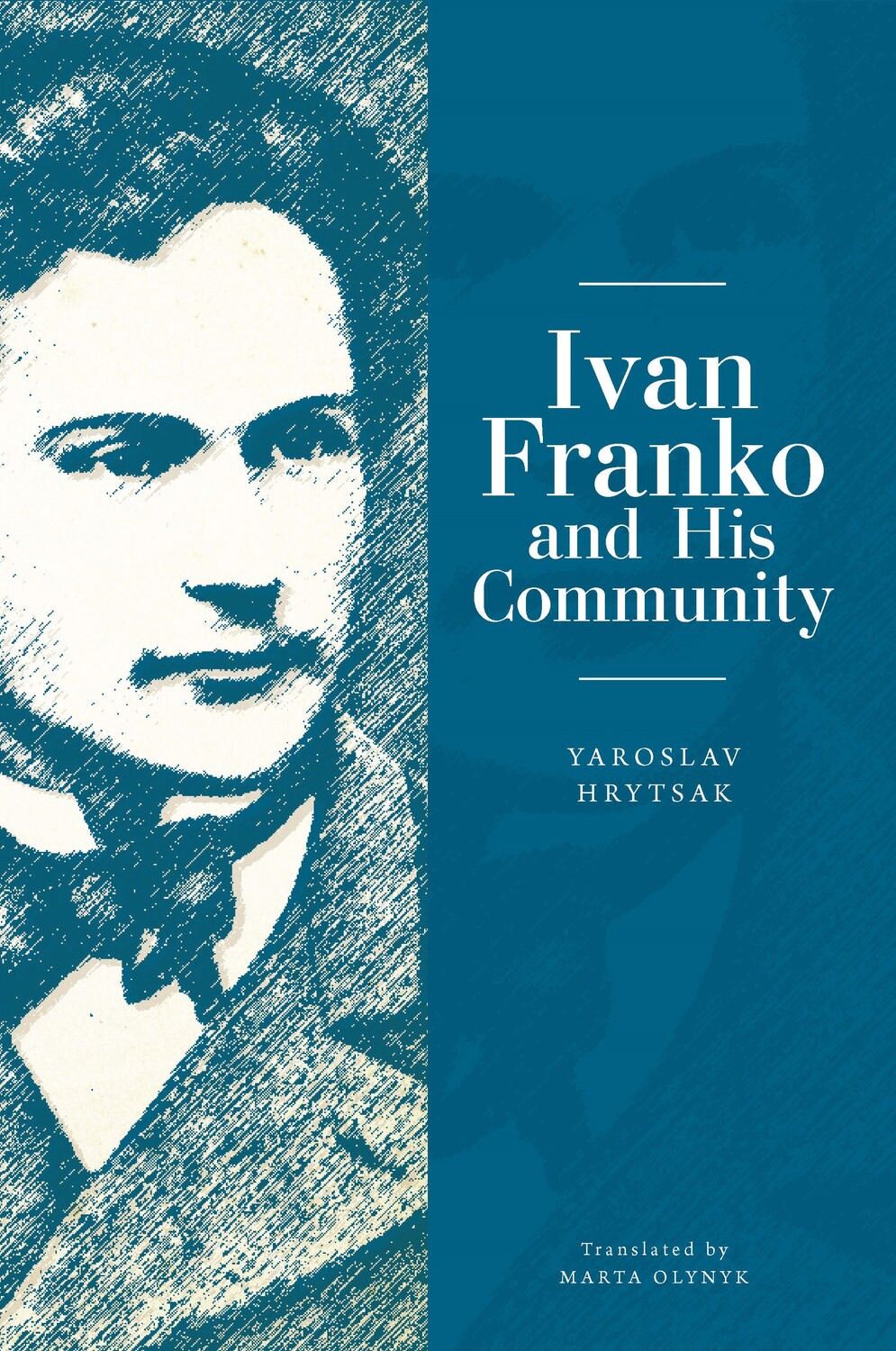
Ivan Franko and His Community
This book brings us to the very core of the debates about nations and nationalism. It presents a microhistory of Ivan Franko (1856-1916), a prolific writer and political activist, who was an indisputable leader in forging a modern Ukrainian identity in the late Habsburg Galicia.
eBook

Shakespeare in the Undiscovered Bourn
Les Kurbas - director, actor, playwright, filmmaker, and translator - was the first artist to introduce Shakespeare to the Ukrainian stage. Creating the foundations of Soviet Ukrainian theatre and cinema, he was also responsible for its avant-garde direction.Shakespeare in the Undiscovered Bournis the first book-length study in English of Kurbas's modernist productions of Shakespeare and the first book on Soviet Shakespeare productions in Ukraine in any language.
Situating Shakespeare within the ideological and cultural debates and conflicts of the early Soviet period, Irena Makaryk traces the trajectory of Shakespeare's and Kurbas's fortunes while also investigating the challenges that modernism posed to early Soviet ideology.
Ukraine's cultural history - still an undiscovered bourn - has frequently been submerged within a homogenized Soviet experience. The fall of the Soviet Union and the consequent opening up of many hitherto inaccessible archives has allowed a new probing of the master narratives created during that regime. Invoking contemporary debates about the cultural uses of Shakespeare (especially issues of canon, classic, and authority),Shakespeare in the Undiscovered Bournexamines the complexities of the Soviet encounter with Shakespeare. It thus makes an important contribution to the studies of theatre, cross-culturalism, modernism, and postcolonialism.
eBook

As the Dust of the Earth
An estimated forty thousand Jews were murdered during the
Russian Civil War between 1918 and 1922. As the Dust of the
Earth examines the Yiddish and Russian literary response to
the violence (pogroms) and the relief effort, exploring both the
poetry of catastrophe and the documentation of catastrophe and
care.
Brilliantly weaving together narrative fiction, poetry, memoirs,
newspaper articles, and documentary, Harriet Murav argues that
poets and pogrom investigators were doing more than recording the
facts of violence and expressing emotions in response to it. They
were interrogating what was taking place through a central concept
familiar from their everyday lifeworld-hefker, or abandonment.
Hefker shaped the documentation of catastrophe by Jewish
investigators at pogrom sites impossibly tasked with producing
comprehensive reports of chaos. Hefker also became a framework for
Yiddish writers to think through such incomprehensible violence by
creating new forms of poetry. Focusing less on the perpetrators and
more on the responses to the pogroms, As the Dust of the
Earth offers a fuller understanding of the seismic effects of
such organized violence and a moving testimony to the resilience of
survivors to process and cope with catastrophe.
eBook

Beau Monde on Empire’s Edge
In Beau Monde on Empire’s Edge , Mayhill C. Fowler tells the story of the rise and fall of a group of men who created culture both Soviet and Ukrainian. This collective biography showcases new aspects of the politics of cultural production in the Soviet Union by focusing on theater and on the multi-ethnic borderlands. Unlike their contemporaries in Moscow or Leningrad, these artists from the regions have been all but forgotten despite the quality of their art. Beau Monde restores the periphery to the center of Soviet culture. Sources in Russian, Ukrainian, Polish, and Yiddish highlight the important multi-ethnic context and the challenges inherent in constructing Ukrainian culture in a place of Ukrainians, Russians, Poles, and Jews. Beau Monde on Empire’s Edge traces the growing overlap between the arts and the state in the early Soviet years, and explains the intertwining of politics and culture in the region today.
eBook