
Catalogue Search | MBRL


Are you sure you want to remove the book from the shelf?

{{itemTitle}}
1,523
result(s) for
"Ulus"
Sort by:
Ordering the World
The Sung Dynasty (960-1278) was a time of vast changes and new challenges in China. The growth of the urban and rural economics, population increase, the emergence of an educated elite, political and intellectual ferment, and threats from hostile neighbors are some of the forces that shaped the age. How did Sung statesmen and thinkers view the relation of state and society and the role of political action in solving society's ills? The essays in Ordering the World explore contemporary ideas underlying policies, programs, and institutions of the period and examine attitudes toward history and sources of authority. Their findings have important implications for our understanding of the neo-Confucian movement in Sung history and of the Sung in the history of Chinese ideas about politics and social action. Contents: Introduction by Conrad Schirokauer and Robert P. Hymes \"Su Hsun's Pragmatic Statecraft,\" by George Hatch \"State Power and Economic Activism during the New Policies, 1068-1085,\" by Paul J. Smith \"Government, Society, and State,\" by Peter K. Bol \"Chu Hsi's Sense of History,\" by Conrad Schirokauer \"Community and Welfare,\" by Richard von Glahn \"Charitable Estates as an Aspect of Statecraft in Southern Sung China,\" by Linda Walton \"Moral Duty and Self-Regulating Process in Southern Sung Views of Famine Relief,\" by Robert P. Hymes \"The Historian as Critic,\" by John W. Chaffee \"Wei Liao-weng's Thwarted Statecraft,\" by James T. C. Liu \"Chen Te-hsiu and Statecraft,\" by Wm. Theodore de Bary This title is part of UC Press's Voices Revived program, which commemorates University of California Press's mission to seek out and cultivate the brightest minds and give them voice, reach, and impact. Drawing on a backlist dating to 1893, Voices Revived makes high-quality, peer-reviewed scholarship accessible once again using print-on-demand technology.
This title was originally published in 1993. Many titles in the Voices Revived program are also newly available as ebooks, offered at a discounted price to support wider access to scholarly work.
eBook

China’s 40 Years of Reform and Development
The year 2018 marks 40 years of reform and development in China (1978–2018). This commemorative book assembles some of the world’s most prominent scholars on the Chinese economy to reflect on what has been achieved as a result of the economic reform programs, and to draw out the key lessons that have been learned by the model of growth and development in China over the preceding four decades. This book explores what has happened in the transformation of the Chinese economy in the past 40 years for China itself, as well as for the rest of the world, and discusses the implications of what will happen next in the context of China’s new reform agenda. Focusing on the long-term development strategy amid various old and new challenges that face the economy, this book sets the scene for what the world can expect in China’s fifth decade of reform and development. A key feature of this book is its comprehensive coverage of the key issues involved in China’s economic reform and development. Included are discussions of China’s 40 years of reform and development in a global perspective; the political economy of economic transformation; the progress of marketisation and changes in market-compatible institutions; the reform program for state-owned enterprises; the financial sector and fiscal system reform, and its foreign exchange system reform; the progress and challenges in economic rebalancing; and the continuing process of China’s global integration. This book further documents and analyses the development experiences including China’s large scale of migration and urbanisation, the demographic structural changes, the private sector development, income distribution, land reform and regional development, agricultural development, and energy and climate change policies.
eBook

Discourse, Politics and Media in Contemporary China
After three and a half decades of economic reforms, radical changes have occurred in all aspects of life in China. In an authoritarian society, these changes are mediated significantly through the power of language, carefully controlled by the political elites. Discourse, as a way of speaking and doing things, has become an indispensable instrument for the authority to manage a fluid, increasingly fragmented, but highly dynamic and yet fragile society. Written by an international team of leading scholars, this volume examines socio-political transformations of contemporary Chinese society through a systematic account, analysis and assessment of its salient discourses and their production, circulation, negotiation, and consequences. In particular, the volume focuses on the interplay of politics and media. The book’s intended readership is academics and students of Chinese studies, language and discourse, and media and communication studies.
eBook

The Threshold
What happens when historiography-the way historical events are committed to writing-shapes historical events as they occur? How do we read biography when it is truly \"life-writing,\" its subjects fully engaged with the historiographical rhetoric that would record their words and deeds?The Threshold, a study of the culture of historiography in early medieval China, explores these questions through the lens of the History of Liu-Song, a dynastic history compiled in 488 and covering the first three-quarters of the fifth century. Rhetoric courses through early medieval historiography: from the way a historian framed history for readers to the political machinations contained within historical narratives, from the active use of rhetorical techniques to the passive effect that embedded discourses exercised on historian, historical actor, and reader alike. Tracing these varied strands of historical argumentation, Zeb Raft shows how history was constructed through rhetorical elements including the narration of officialdom, the anecdote, and, above all, the historical document. The portrait that emerges is of an epideictic historiography where praise was mixed with irony and achievement diluted with ambivalence-and where the most secure positions lay on the threshold of political power and historical interpretation.
eBook
Spain, China, and Japan in Manila, 1571-1644
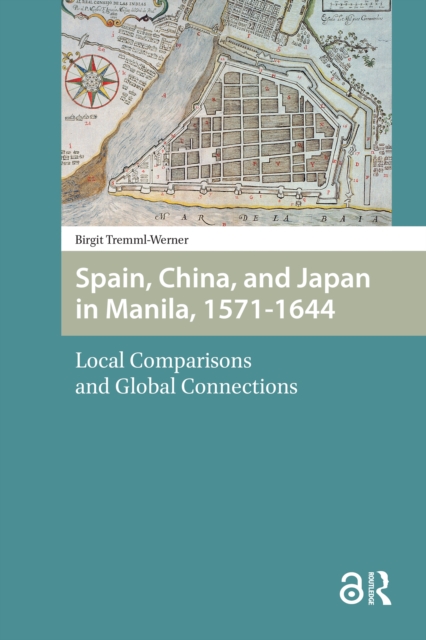
This book offers a new perspective on the connected histories of Spain, China, and Japan as they emerged and developed following Manila’s foundation as the capital of the Spanish Philippines in 1571. Examining a wealth of multilingual primary sources, Birgit Tremml-Werner shows that crosscultural encounters not only shaped Manila’s development as a “Eurasian” port city, but also had profound political, economic, and social ramifications for the three premodern states. Combining a systematic comparison with a focus on specific actors during this period, this book addresses many long-held misconceptions and offers a more balanced and multifaceted view of these nations’ histories.
eBook

Making the Gods Speak
For two millennia, Chinese society has been producing divine revelations on an unparalleled scale, in multifarious genres and formats. This book is the first comprehensive attempt at accounting for the processes of such production. It builds a typology of the various ritual techniques used to make gods present and allow them to speak or write, and it follows the historical development of these types and the revealed teachings they made possible. Within the large array of visionary, mediumistic, and mystical techniques, Vincent Goossaert devotes the bulk of his analysis to spirit-writing, a family of rites that appeared around the eleventh century and gradually came to account for the largest numbers of books and tracts ascribed to the gods. In doing so, he shows that the practice of spirit-writing must be placed within the framework of techniques used by ritual specialists to control human communications with gods and spirits for healing, divining, and self-divinization, among other purposes. Making the Gods Speak thus offers a ritual-centered framework to study revelation in Chinese cultural history and comparatively with the revelatory practices of other religious traditions.
eBook

China's cultural diplomacy in Indonesia : the case of a transnational singing contest
The emphasis on cultural connectivity in China's growing presence and involvement in Southeast Asia highlights the importance China places on people-to-people exchanges as part of its global engagement strategy.
eBook

Managing China-Singapore Relations amid US-China Rivalry
Amid China-US geopolitical competition in the Asia-Pacific, it is imperative for both China and Singapore to adapt and respond to evolving circumstances for mutual benefit.
The enduring trust and solid foundation between China and Singapore in economic and trade cooperation are validated through their active involvement in each other's initiatives. This proved true even when the recent COVID-19 pandemic strained political interactions.
The political-security dimensions of the relationship between China and Singapore are complex and constantly evolving, influenced as they are by factors such as Singapore's military training in Taiwan, the contentious South China Sea disputes, and US foreign policy in the region.
However, Singapore's longstanding hedging strategy between the two superpowers may face increasingly severe tests as China-US rivalry escalates.
If carefully managed, Singapore's successful track record of facilitating dialogue between conflicting parties can continue to make it a valuable player in easing tensions between China and the US.
eBook

Transmedial landscapes and modern Chinese painting
Chinese ink painters of the Republican period (1911–1949) creatively engaged with a range of art forms in addition to ink, such as oil painting, drawing, photography, and woodblock prints. They transformed their medium of choice in innovative ways, reinterpreting both its history and its theoretical foundations. Juliane Noth offers a new understanding of these compelling experiments in Chinese painting by studying them as transmedial practice, at once shaped by and integral to the modern global art world.
Transmedial Landscapes and Modern Chinese Painting shines a spotlight on the mid-1930s, a period of intense productivity in which Chinese artists created an enormous number of artworks and theoretical texts. The book focuses on the works of three seminal artists, Huang Binhong, He Tianjian, and Yu Jianhua, facilitating fresh insights into this formative stage of their careers and into their collaborations in artworks and publications. In a nuanced reading of paintings, photographs, and literary and theoretical texts, Noth shows how artworks and discussions about the future of ink painting were intimately linked to the reshaping of the country through infrastructure development and tourism, thus leading to the creation of a uniquely modern Chinese landscape imagery.
eBook
Schism
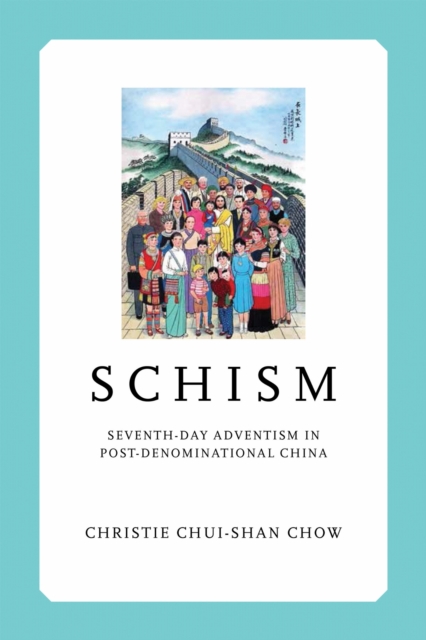
Schism is the first ethnographic and historical
study of Seventh-day Adventism in China.
Scholars have been slow to consider Chinese Protestantism from a
denominational standpoint. In Schism , the first monograph
that documents the life of the Chinese Adventist denomination from
the mid-1970s to the 2010s, Christie Chui-Shan Chow explores how
Chinese Seventh-day Adventists have used schism as a tool to
retain, revive, and recast their unique ecclesial identity in a
religious habitat that resists diversity.
Based on unpublished archival materials, fieldwork, oral
history, and social media research, Chow demonstrates how Chinese
Adventists adhere to their denominational character both by
recasting the theologies and faith practices that they inherited
from American missionaries in the early twentieth century and by
engaging with local politics and culture. This book locates the
Adventist movement in broader Chinese sociopolitical and religious
contexts and explores the multiple agents at work in the movement,
including intrachurch divisions among Adventist believers, growing
encounters between local and overseas Adventists, and the
denomination's ongoing interactions with local Chinese authorities
and other Protestants. The Adventist schisms show that global
Adventist theology and practices continue to inform their
engagement with sociopolitical transformations and changes in China
today.
Schism will compel scholars to reassess the existing
interpretations of the history of Protestant Christianity in China
during the Maoist years and the more recent developments during the
Reform era. It will interest scholars and students of Chinese
history and religion, global Christianity, American religion, and
Seventh-day Adventism.
eBook