
Catalogue Search | MBRL


Are you sure you want to remove the book from the shelf?

{{itemTitle}}
59
result(s) for
"Ulysses Simpson"
Sort by:

Trench Warfare under Grant and Lee
Continuing the study of field fortifications he began inField Armies and Fortifications in the Civil War, Earl J. Hess turns to the 1864 Overland campaign to cover battles from the Wilderness to Cold Harbor. A grueling form of trench warfare became a key feature of tactical operations during this phase of the war in Virginia.Drawing on meticulous research in primary sources and careful examination of trench remnants at the Wilderness, Spotsylvania, North Anna, Cold Harbor, and Bermuda Hundred, Hess describes Union and Confederate earthworks and how Grant and Lee used them in this new era of field entrenchments. According to Hess, the heavy reliance on earthworks by both armies in the Overland campaign was driven by Grant's relentless attacks against Lee, not by the widespread use of rifle muskets, as historians have previously argued. Entrenchments kept the armies within striking distance and compelled soldiers to dig in for protection. Despite suffering massive casualties, Grant seized control of the strategic initiative and retained it for the rest of the war in the eastern theater.Illustrated by rare, historic photographs and new detailed maps of the trench remnants, this book constitutes the second installment of a three-volume study of field fortifications in the eastern campaigns.
eBook

Citizen of a Wider Commonwealth
In 1877 former president Ulysses S. Grant, along with family and friends, embarked on a two-year world tour that took him from Liverpool to Yokohama with stops throughout Europe and Asia. Biographies of Grant deal very briefly, if at all, with this tour and generally treat it as a pleasure trip filled with sightseeing, shopping, wining, and dining. Far from an extended vacation, however, Grant’s travels in fact constituted a diplomatic mission sanctioned by the U.S. government. In this revealing volume, Edwina S. Campbell chronicles Grant’s journey—the first diplomatic mission ever undertaken by a former U.S. president—and demonstrates how it marked a decided turning point in the role of the United States in world affairs.
Traveling commercially and on U.S. Navy warships, Grant visited ports of call throughout the British Empire, Europe, and Asia, including Britain, France, Egypt, the Ottoman Empire, Greece, Italy, the Netherlands, Germany, Scandinavia, Russia, Spain, Portugal, Gibraltar, Ireland, India, Singapore, Hong Kong, China, and Japan. Along the way, he met with monarchs, ministers, and average citizens, creating the model for the summitry and public diplomacy practiced by future American presidents and articulating concepts of national self-determination, international organization, and the peaceful settlement of international disputes decades before Elihu Root’s advocacy of binding international arbitration and Woodrow Wilson’s proposal for the League of Nations.
Campbell reveals Grant to be a skillful envoy who brought to his travels the deep interest in foreign policy issues he had shown during his administration. Grant confirmed the United States’ commitment to Anglo-American cooperation, demonstrated America’s interest in the territorial integrity of China, affirmed American faith in universal (male) suffrage as the basis for governmental legitimacy, and asserted the importance of an international order based on equality and justice for all states and their citizens. Grant’s efforts shaped not only John Hay’s Open Door policy in 1899–1900 but also the broader American approach to twentieth-century international relations. Throughout the trip, Julia Grant proved essential to the success of her husband’s mission, and Campbell tells how the couple impressed people around the world with an enduring image of an American president and first lady.
By illuminating the significance of Grant’s often overlooked postpresidential travels, Citizen of a Wider Commonwealth establishes the eighteenth president as a key diplomat whose work strongly influenced the direction of future U.S. foreign policy and contributes substantially to the study of American international relations.
eBook
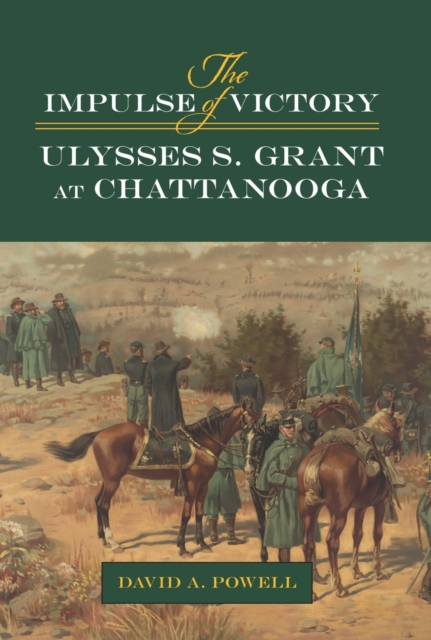
The Impulse of Victory
How Grant secured a Tennessee victory and a promotion Union soldiers in the Army of the Cumberland, who were trapped and facing starvation or surrender in the fall of 1863, saw the arrival of Major General Ulysses S.Grant in Tennessee as an impetus to reverse the tides of war.David A.
eBook

The Decision Was Always My Own
The Vicksburg Campaign, argues Timothy B.Smith, is the showcase of Ulysses S.Grant's military genius.From October 1862 to July 1863, Grant tried repeatedly to capture the Confederate river city.His final, daring move allowed him to land an army in Mississippi and fight his way to the gates of Vicksburg.
eBook

Grant at Vicksburg
On May 22, 1863, after two failed attempts to take the city of Vicksburg by assault, Major General Ulysses S. Grant declared in a letter to the commander of the Union fleet on the Mississippi River that “the nature of the ground about Vicksburg is such that it can only be taken by a siege.” The 47-day siege of Vicksburg orchestrated by Grant resulted in the eventual surrender of the city and fulfilled a major strategic goal for the Union: command of the Mississippi River for the remainder of the war. In this revealing volume, Michael B. Ballard offers the first in-depth exploration of Grant’s thoughts and actions during this critical operation, providing a never-before-seen portrait of the general in the midst of one of his most notable achievements. After an overview of Grant’s early Civil War career from his first battle through the early stages of the attacks on Vicksburg, Ballard describes in detail how Grant conducted the siege, examining his military decisions, placement of troops, strategy and tactics, engineering objectives, and relationships with other officers. Grant’s worried obsession with a perceived danger of a rear attack by Joseph Johnston’s Confederate army, Ballard shows, affected his decision making, and shows how threats of Confederate action occupied more of Grant’s time than did the siege itself. In addition, Ballard soundly dispels a false story about Grant’s alleged drinking binge early in the siege that has been taken as truthful by many historians, examines how racism in Grant’s army impacted the lives of freed black people and slaves in the Vicksburg area, and explores Grant’s strained relationship with John McClernand, a politically appointed general from Illinois. The book concludes with the surrender of Vicksburg on July 4, 1863, the expulsion of Johnston and his army from the region, and demonstrates the impact of the siege on the outcome on the short and long-terms of Grant’s military career. By analyzing Grant’s personality during the siege and how he dealt with myriad issues as both a general and an administrator, Grant at Vicksburg offers a revealing rendering of the legendary general.
eBook


Confederate Bushwhacker
Confederate Bushwhacker is a microbiography set in the most important and pivotal year in the life of its subject. In 1885, Mark Twain was at the peak of his career as an author and a businessman, as his own publishing firm brought out not only the U.S. edition of Adventures of Huckleberry Finn but also the triumphantly successful Personal Memoirs of U. S. Grant. Twenty years after the end of the Civil War, Twain finally tells the story of his past as a deserter from the losing side, while simultaneously befriending and publishing the general from the winning side. Coincidentally, the year also marks the beginning of Twain's descent into misfortune, his transformation from a humorist into a pessimist and determinist. Interwoven throughout this portrait are the headlines and crises of 1885-black lynchings, Indian uprisings, anti-Chinese violence, labor unrest, and the death of Grant. The year was at once Twain's annus mirabilis and the year of his undoing. The meticulous treatment of this single year by the esteemed biographer Jerome Loving enables him to look backward and forward to capture both Twain and the country at large in a time of crisis and transformation.
eBook
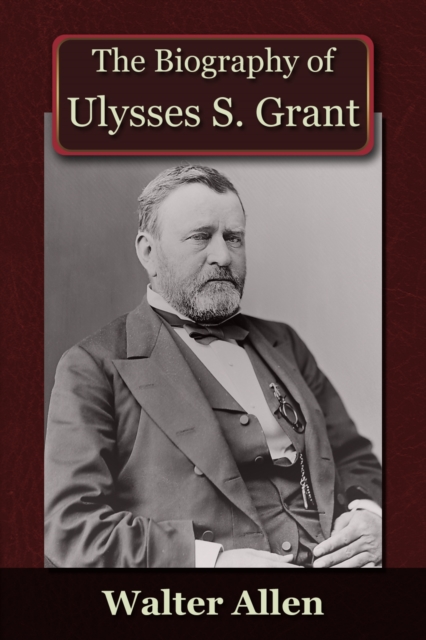
The Biography of Ulysses S Grant
This excellent biography by Walter Allen charts the war-hero turned president Ulysses S. Grant's life. From his youngest years through to his term as one of the most fondly remembered presidents of the United States of America, Grant's life is a fascnating one. This excellent eBook edition of this highly-rated title has been specially formatted for today's e-readers by Andrews UK.
eBook
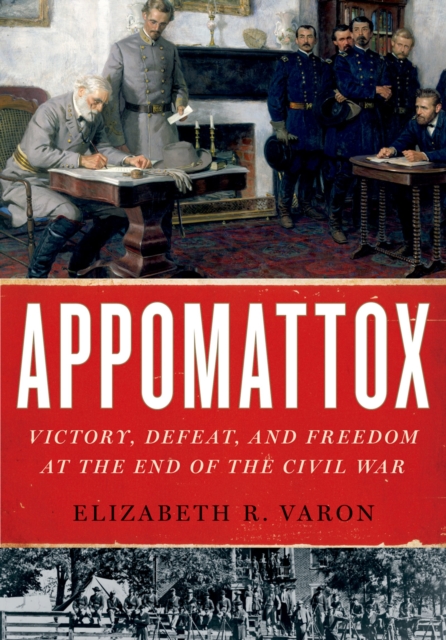
Appomattox : victory, defeat, and freedom at the end of the Civil War
General Robert E. Lee's surrender of the Army of Northern Virginia to General Ulysses S. Grant's Army of the Potomac might look serene in the amber-tinted popular images of two gentlemen sharing cigars, but that image conceals seething debate over precisely what the surrender meant and what kind of United States would emerge from war. Painting a portrait of this event between the triumphalist version of 1865 as a moment of strength and healing and a more persuasive but still incomplete portrait of the postwar painted by David Blight in 'Race and Reunion', Varon's work seeks to examine the surrender at Appomattox with an eye toward narrating the events of April 1865, and exploring the immediate reactions, North and South, to the surrender.
eBook