
Catalogue Search | MBRL


Are you sure you want to remove the book from the shelf?

{{itemTitle}}
6,520
result(s) for
"Unemployment Developing countries."
Sort by:

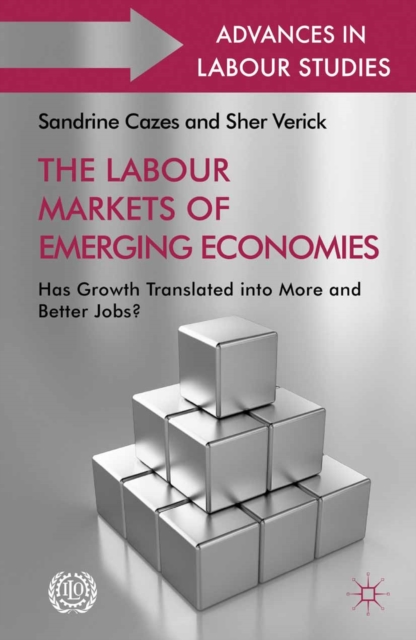
Labour Markets of Emerging Economies
This volume focuses on the labour market situation, trends and regulations in emerging economies, devoting attention to how they have dealt with both short-term issues, namely the global financial crisis, and longer-term structural challenges - as well as the gaps that still remain.
eBook

Economics of employment and unemployment
Intro -- Economics of Employment and Unemployment -- Contents -- Preface -- Poverty, Deprivation and Social Exclusion: The Unemployed and the Working Poor -- Abstract -- Introduction -- Labour Market and New Poverty -- Data -- A Note on Methodology -- Marginalization on the Labour Market, Deprivation and Social Exclusion -- Measures of Social Policy -- Conclusions -- References -- Acknowledgements -- Evidence on the Relationship Between Unemployment and Health -- Abstract -- Introduction -- Theoretical Background -- Review Studies -- Cross-Sectional and Longitudinal Studies -- Adaptation to Unemployment -- Explanatory Variables -- References -- Spanish Unemployment and the Ladder Effect -- Abstract -- Introduction -- A Model for the Ladder Effect -- Data and Calibration -- Analysis of Results -- Conclusion -- References -- Appendix A -- Juvenile Delinquency and Its Forensic Considerations -- Abstract -- Introduction -- Sociological Theories -- Psychobiological Theories -- Psychiatric Theories -- Public Health, Medicine and Psychology -- Delinquency and Conduct Disorder -- Need to Understand Adolescence -- Understanding Crime -- Evolution of Juvenile Justice System -- An Overview of the Incidence of Juvenile Delinquency -- Prevention -- References -- Wage and Employment in a Finance-Lead Economy -- Abstract -- Introduction -- Post-Keynesian Models of Income Distribution and Financialization -- Financialization and Employment: A Model -- Conclusion -- References -- Annexes -- Employment, Occupational Disparities, and Wages in India: A Decomposition Analysis -- Abstract -- Introduction -- Wage Inequality - A Brief Review -- Database and Methodology -- Methodology -- Wage Differentials: Magnitudes - Patterns - Trends -- Occupational Disparity -- Earning Difference Due to Occupational Disparity -- Wage Gaps.
eBook

Trade and employment in the global crisis
Intro -- Contents -- List of tables, figures and boxes -- TABLES -- Table 2.1 OLS regression results for crisis impact versus exposure to potential transmission channels -- Table 2.2 World merchandise exports and imports by region, 2008-09 -- Table 2.3 World manufacturing exports by quarter, 2008-09 Q3 -- Table 2.4 GDP and employment growth by region, 2009 versus 2007 -- Table 2.5 Unemployment by region, 2009 versus 2007 -- Table 2.6 Labour force participation by region, 2009 versus 2007 -- Table 3.1 Major economic indicators for countries covered by ILO crisis studies -- Table 3.2 Selected labour market statistics (pre-crisis) for countries covered by ILO crisis studies -- Table 3.3 Ukraine: Sectoral impact of the crisis on the labour market -- Table 3.4 India: Change in employment in selected sectors, April 2008 to June 2009 -- Table 3.5 Brazil: Trade shock as used in the model -- Table 3.6 Brazil: Changes in factor incomes -- Table 3.7 Brazil: Factor payments by aggregate factors -- Table 3.8 Egypt: Foreign direct investment flows, 2004-09 -- Table 3.9 Egypt: Exports by commodity group, 2008-09 (US million) -- Table 3.10 Egypt: Estimated impact of the global economic crisis onlabour demand by sector -- Table 3.11 Egypt: Labour force, employment and unemployment, 2007-09 -- Table 4.1 Share of trade covered by new import-restricting measures of G20 members (percentages) -- Table 4.2 Examples of infrastructure programmes contained in stimulus packages -- FIGURES -- Figure 2.1 Real and nominal world merchandise exports by quarter, 2008-09 Q3 (Q1 2008=100) -- Figure 2.2 World market price indices for selected food items, 2005-09 (2000 M1 = 100) -- Figure 2.3 World market price indices for selected commodities, 2005-09 (2000 M1 = 100) -- Figure 2.4 Average exchange rate fluctuation by income group,2007-09 (percentages).
eBook

Global Outsourcing and Offshoring
Companies are increasingly asking which of their value chain activities are best performed within their own company and which may be outsourced. In addition, they are also considering which pieces of their value chain may be better performed abroad. These interrelated decisions concerning outsourcing and offshoring have not only changed entire industries, they have also transformed the lives of people across the world. Hundreds of millions of jobs in emerging nations have been the direct result of outsourcing and offshoring decisions. At the same time, many people in the developed world have lost their jobs because a company has been able to find a cheaper alternative. Featuring contributions from scholars in eleven different countries, this book was the first to examine the theory and practice of outsourcing and offshoring simultaneously. It includes studies of a variety of different industries, including pharmaceuticals, automobiles, medical records, appliances, human resource management and telecommunications.
eBook

Social protection and labor at the World Bank, 2000-2008
Social Protection & Labor at the World Bank, 2000-2008 presents a progress review of the sector strategy by the World Bank, published in early 2001. The strategy proposed a new conceptual frameworkSocial Risk Managementto review and reform existing interventions and propose new ones that better assist vulnerable people in addressing the many risks to which they are exposed.
eBook

Labour Markets of Emerging Economies
This volume focuses on the labour market situation, trends and regulations in emerging economies, devoting attention to how they have dealt with both short-term issues, namely the global financial crisis, and longer-term structural challenges - as well as the gaps that still remain.
Book


Global Monitoring Report, 2009: A Development Emergency
A Development Emergency: the title of this year's Global Monitoring Report, the sixth in an annual series, could not be more apt. The global economic crisis, the most severe since the Great Depression, is rapidly turning into a human and development crisis. No region is immune. The poor countries are especially vulnerable, as they have the least cushion to withstand events. The crisis, coming on the heels of the food and fuel crises, poses serious threats to their hard-won gains in boosting economic growth and reducing poverty. It is pushing millions back into poverty and putting at risk the very survival of many. The prospect of reaching the Millennium Development Goals (MDGs) by 2015, already a cause for serious concern, now looks even more distant. A global crisis must be met with a global response. The crisis began in the financial markets of developed countries, so the first order of business must be to stabilize these markets and counter the recession that the financial turmoil has triggered. At the same time, strong and urgent actions are needed to counter the impact of the crisis on developing countries and help them restore strong growth while protecting the poor. Global Monitoring Report 2009, prepared jointly by the staff of the World Bank and the International Monetary Fund, provides a development perspective on the global economic crisis. It assesses the impact on developing countries, their growth, poverty reduction, and other MDGs. And it sets out priorities for policy response, both by developing countries themselves and by the international community. This report also focuses on the ways in which the private sector can be better mobilized in support of development goals, especially in the aftermath of the crisis.
eBook