
Catalogue Search | MBRL


Are you sure you want to remove the book from the shelf?

{{itemTitle}}
10
result(s) for
"United Arab Emirates Economic conditions 21st century."
Sort by:

Western privilege : work, intimacy, and postcolonial hierarchies in Dubai
Nearly 90 percent of residents in Dubai are foreigners with no Emirati nationality. As in many global cities, those who hold Western passports share specific advantages: prestigious careers, high salaries, and comfortable homes and lifestyles. With this book, Amélie Le Renard explores how race, gender and class backgrounds shape experiences of privilege, and investigates the processes that lead to the formation of Westerners as a social group.
Westernness is more than a passport; it is also an identity that requires emotional and bodily labor. And as they work, hook up, parent, and hire domestic help, Westerners chase Dubai's promise of socioeconomic elevation for the few. Through an ethnography informed by postcolonial and feminist theory, Le Renard reveals the diverse experiences and trajectories of white and non-white, male and female Westerners to understand the shifting and contingent nature of Westernness—and also its deep connection to whiteness and heteronormativity. Western Privilege offers a singular look at the lived reality of structural racism in cities of the global South.
eBook

Comparing Life Expectancy Determinants between Saudi Arabia and United Arab Emirates from 1980–2020
Despite marked advancements, life expectancy (LE) growth in Saudi Arabia and the United Arab Emirates (UAE) has remained stagnant compared to other developed nations. This study aims to investigate the significant correlation between macroeconomic (ME), sociodemographic (SD), and health status and resources (HSR) factors and LE to formulate an explanatory model for Saudi Arabia and the UAE—a previously unexplored area. Utilizing an ecological, retrospective, time-series study design, we delved into secondary data on SD, ME, and HSR factors and LE of the populations of the UAE and Saudi Arabia spanning three decades (1980–2020). We employed partial least squares–structural equation modeling for statistical analysis. Our analysis revealed significant direct impacts of HSR factors on LE for Saudi Arabia (β = 0.958, p < 0.001) and the UAE (β = 0.716, p < 0.001). Furthermore, we discerned a notable indirect influence of ME factors on LE, mediated through SD and HSR factors for Saudi Arabia (β = 0.507, p < 0.001) and the UAE (β = 0.509, p < 0.001), along with a considerable indirect effect of SD factors on LE through HSR (Saudi: β = 0.529, p < 0.001; UAE: β = 0.711, p < 0.001). This study underscores the mediating role of a nexus of ME–SD–HSR factors on LE in Saudi Arabia and the UAE. Consequently, these findings signal an imperative need for holistic policy interventions addressing ME, SD, and HSR factors, aiming to alter health behaviors and improve LE projections for Saudi Arabia and the UAE in the long run.
Journal Article
Regional economic outlook
This issue discusses economic developments in the Middle East, North Africa, Afghanistan, and Pakistan (MENAP), which continue to reflect the diversity of conditions prevailing across the region. Most high-income oil exporters, primarily in the GCC, continue to record steady growth and solid economic and financial fundamentals, albeit with medium-term challenges that need to be addressed. In contrast, other countries-Iraq, Libya, and Syria-are mired in conflicts with not only humanitarian but also economic consequences. And yet other countries, mostly oil importers, are making continued but uneven progress in advancing their economic agendas, often in tandem with political transitions and amidst difficult social conditions. In most of these countries, without extensive economic and structural reforms, economic prospects for the medium term remain insufficient to reduce high unemployment and improve living standards.
eBook

After the sheikhs : the coming collapse of the Gulf monarchies
Noted Gulf expert Christopher Davidson contends that the collapse of these kings, emirs, and sultans is going to happen, and was always going to.
eBook
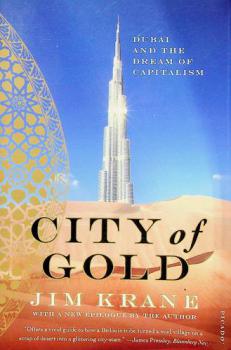
City of gold : Dubai and the dream of capitalism
From the Publisher: The city of Dubai, one of the seven United Arab Emirates, is everything the Arab world isn't: a freewheeling capitalist oasis where the market rules and history is swept aside. Until the credit crunch knocked it flat, Dubai was the fastest-growing city in the world, with a roaring economy that outpaced China's while luring more tourists than all of India. It's one of the world's safest places, a stone's throw from its most dangerous. In City of Gold, Jim Krane, who reported for the AP from Dubai, brings us a boots-on-the-ground look at this fascinating place by walking its streets, talking to its business titans, its prostitutes, and the hard-bitten men who built its fanciful skyline. He delves into the city's history, paints an intimate portrait of the ruling Maktoum family, and ponders where the city is headed. Dubai literally came out of nowhere. It was a poor and dusty village in the 1960s. Now it's been transformed into the quintessential metropolis of the future through the vision of clever sheikhs, Western capitalists, and a river of investor money that poured in from around the globe. What has emerged is a tolerant and cosmopolitan city awash in architectural landmarks, luxury resorts, and Disneyfied kitsch. It's at once home to America's most prestigious companies and universities and a magnet for the Middle East's intelligentsia. Dubai's dream of capitalism has also created a deeply stratified city that is one of the world's worst polluters. Wild growth has clogged its streets and left its citizens a tiny minority in a sea of foreigners. Jim Krane considers all of this and casts a critical eye on the toll that the global economic downturn has taken on a place that many tout as a blueprint for a more stable Middle East. While many think Dubai's glory days have passed, insiders like Jim Krane who got to know the city and its creators firsthand realize there's much more to come in the City of Gold, a place that, in just a few years, has made itself known to nearly every person on earth.
Book
