
Catalogue Search | MBRL


Are you sure you want to remove the book from the shelf?

{{itemTitle}}
727
result(s) for
"United States - Antiquities"
Sort by:

The archaeology of American cities
American cities have been built, altered, redeveloped, destroyed, reimagined, and rebuilt for nearly 300 years in order to accommodate growing and shrinking populations and their needs. Urban archaeology is a unique subfield with its own peculiar challenges and approaches to fieldwork. Understanding the social forces that influenced the development of American cities requires more than digging; it calls for the ability to extrapolate from limited data, an awareness of the dynamics that drive urban development, and theories that can build bridges to connect the two. At the forefront of this exciting field of research, Nan Rothschild and Diana Wall are well suited to introduce this fascinating topic to a broad readership. Following a brief introduction, the authors offer specific case studies of work undertaken in New York, Philadelphia, Tucson, West Oakland, and many other cities. Ideal for undergraduates, The Archaeology of American Cities utilizes the material culture of the past to highlight recurring themes that reflect distinctive characteristics of urban life in the United States.
Book
Ancient America
Presenting \"the real deal\" of American antiquity—as opposed to the hyped fare of many cable TV shows—Kenneth Feder invites readers to explore the stunning technological, architectural, engineering, and artistic achievements of America's first peoples.
Part travel guide, part friendly reference, Ancient America showcases fifty iconic and publicly-accessible sites located across the contiguous United States—including monumental pyramids of earth, \"castles\" ensconced in cliff niches, and vast rock art galleries. Among the places profiled are four World Heritage Sites (Chaco Canyon, NM; Mesa Verde, CO; Cahokia, IL; Poverty Point, LA); numerous Historic Landmarks and National Monuments (including Crystal River, FL; Town Creek Mound, NC; Casa Grande, AZ; and Hovenweep, UT); and stunningly diverse sites ranging from Serpent Mound (OH) and Horsethief Lake (WA) to Canyon de Chelly (AZ) and Nine Mile Canyon (UT).
In addition to practical visitor information, Feder tells the fascinating stories of each site as revealed by archaeological research. Introductory chapters delve into the deep past of Native America; historical and cultural details as well as original photography round out the site entries. Readers will be inspired to visit these remarkable places where the past continues to resonate in the present.
eBook


Decolonizing Indigenous Histories
Decolonizing Indigenous Historiesmakes a vital contribution to the decolonization of archaeology by recasting colonialism within long-term indigenous histories. Showcasing case studies from Africa, Australia, Mesoamerica, and North and South America, this edited volume highlights the work of archaeologists who study indigenous peoples and histories at multiple scales.The contributors explore how the inclusion of indigenous histories, and collaboration with contemporary communities and scholars across the subfields of anthropology, can reframe archaeologies of colonialism. The cross-cultural case studies employ a broad range of methodological strategies-archaeology, ethnohistory, archival research, oral histories, and descendant perspectives-to better appreciate processes of colonialism. The authors argue that these more complicated histories of colonialism contribute not only to understandings of past contexts but also to contemporary social justice projects.In each chapter, authors move beyond an academic artifice of \"prehistoric\" and \"colonial\" and instead focus on longer sequences of indigenous histories to better understand colonial contexts. Throughout, each author explores and clarifies the complexities of indigenous daily practices that shape, and are shaped by, long-term indigenous and local histories by employing an array of theoretical tools, including theories of practice, agency, materiality, and temporality.Included are larger integrative chapters by Kent Lightfoot and Patricia Rubertone, foremost North American colonialism scholars who argue that an expanded global perspective is essential to understanding processes of indigenous-colonial interactions and transitions.
eBook

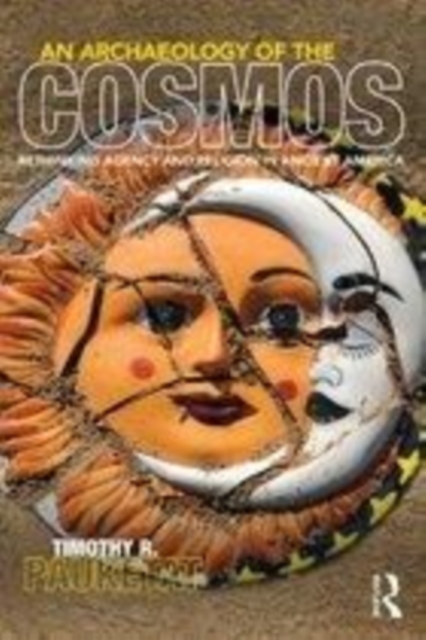
An Archaeology Of the Cosmos
An Archaeology of the Cosmos seeks answers to two fundamental questions of humanity and human history. The first question concerns that which some use as a defining element of humanity: religious beliefs. Why do so many people believe in supreme beings and holy spirits? The second question concerns changes in those beliefs. What causes beliefs to change?
Using archaeological evidence gathered from ancient America, especially case material from the Great Plains and the pre-Columbian American Indian city of Cahokia, Timothy Pauketat explores the logical consequences of these two fundamental questions. Religious beliefs are not more resilient than other aspects of culture and society, and people are not the only causes of historical change.
An Archaeology of the Cosmos examines the intimate association of agency and religion by studying how relationships between people, places, and things were bundled together and positioned in ways that constituted the fields of human experience. This rethinking theories of agency and religion provides readers with challenging and thought provoking conclusions that will lead them to reassess the way they approach the past.
eBook

This Contested Land
One woman's enlightening trek through the natural
histories, cultural stories, and present perils of thirteen
national monuments, from Maine to Hawaii
This land is your land . When it comes to national
monuments, the sentiment could hardly be more fraught. Gold Butte
in Nevada, Organ Mountains-Desert Peaks in New Mexico, Katahdin
Woods and Waters in Maine, Cascade-Siskiyou in Oregon and
California: these are among the thirteen natural sites McKenzie
Long visits in This Contested Land , an eye-opening
exploration of the stories these national monuments tell, the
passions they stir, and the controversies surrounding them
today.
Starting amid the fragrant sagebrush and red dirt of Bears Ears
National Monument on the eve of the Trump Administration's decision
to reduce the site by 85 percent, Long climbs sandstone cliffs, is
awed by Ancestral Pueblo cliff dwellings and is intrigued by
4,000-year-old petroglyphs. She hikes through remote pink canyons
recently removed from the boundary of Grand Staircase-Escalante,
skis to a backcountry hut in Maine to view a truly dark night sky,
snorkels in warm Hawaiian waters to plumb the meaning of marine
preserves, volunteers near the most contaminated nuclear site in
the United States, and witnesses firsthand the diverse forms of
devotion evoked by the Rio Grande. In essays both contemplative and
resonant, This Contested Land confronts an unjust past and
imagines a collaborative future that bears witness to these
regions' enduring Indigenous connections.
From hazardous climate change realities to volatile tensions
between economic development and environmental conservation,
practical and philosophical issues arise as Long seeks the
complicated and often overlooked-or suppressed-stories of these
incomparable places. Her journey, mindfully undertaken and movingly
described, emphasizes in clear and urgent terms the unique
significance of, and grave threats to, these contested lands.
eBook

Archaeological oddities : a field guide to forty claims of lost civilizations, ancient visitors, and other strange sites in North America
\"This book is an offbeat field guide for sites in North America that reflect the rejection of the facts of prehistory and history. Though fake, the forty sites Feder highlights are fascinating and fun places to visit. Feder provides an entertaining summary of those forty sites along with the practical information you'll need to visit them\"--Provided by publisher.
Book

Archaeological Theory and the Politics of Cultural Heritage
This controversial book is a survey of how relationships between indigenous peoples and the archaeological establishment have got into difficulty, and a crucial pointer to how to move forward from this point.
With lucid appraisals of key debates such as NAGPRA, Kennewick and the repatriation of Tasmanian artefacts, Laurajane Smith dissects the nature and consequences of this clash of cultures.
Smith explores how indigenous communities in the USA and Australia have confronted the pre-eminence of archaeological theory and discourse in the way the material remains of their past are cared for and controlled, and how this has challenged traditional archaeological thought and practice.
Essential reading for all those concerned with developing a just and equal dialogue between the two parties, and the role of archaeology in the research and management of their heritage.
1. Introduction 2 . The Cultural Politics of Identity: Defining the Problem 3. Archaeological Theory and the 'Politics' of the Past 4. Archaeology and the Context of Governance: Expertise and the State 5. Archaeological Stewardship: The Rise of Cultural Resource Management and the 'Scientific Professional' arcHaeologist 6. Significance Concepts and the Embedding of Processual Discourse in Cultural Resource Management 7. The Role of Legislation in the Governance of Material Culture in America and Australia 8. NAGPRA and Kennewick: Contesting Archaeological Govrnance in America 9. The 'Death of Archaeology': Contesting Archaeological Covernance in Australia 10. Conclusion
Laurajane Smith is Lecturer in cultural heritage studies and archaeology at the University of York, UK. She previously taught Indigenous Studies at the University of New South Wales, Sydney and worked as a cultural heritage consultant for many years. Her research interests include heritage and the construction and negotiation of cultural and social identities, and public policy and heritage management, archaeological theory and politics, feminist archaeology.
'Essential reading ... Well-written [and] easy to follow ... a useful companion volume.' - Rodney Harrison, The Australian National University
'Laurajane Smith has produced a significant work that will hopefully stimulate archaeological departments in South African universities to pay more attention to educating future CRM practitioners. This book is compulsory reading for CRM practitioners, archaeology students and their professors alike.' – South African Archaeological Bulletin
eBook