
Catalogue Search | MBRL


Are you sure you want to remove the book from the shelf?

{{itemTitle}}
1,708
result(s) for
"United States -- Foreign economic relations -- Latin America"
Sort by:

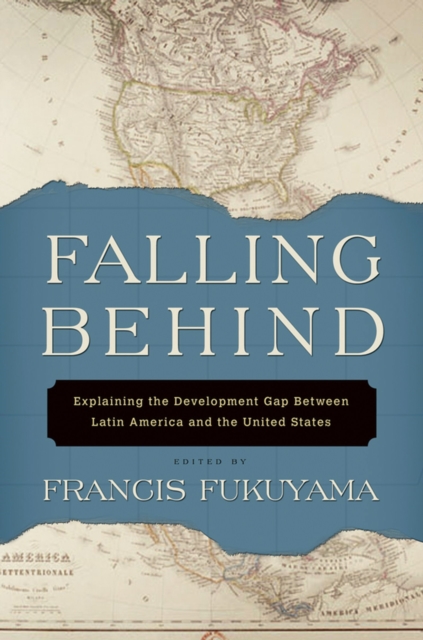
Falling Behind
In 1700, Latin America and British North America were roughly equal in economic terms. Yet over the next three centuries, the United States gradually pulled away, and today the gap is huge. In Falling Behind, acclaimed author Francis Fukuyama gathers together some of the world's leading scholars on the subject to explain the nature of the gap and how it came to be. Tracing the histories of development over the past four hundred years and focusing in particular on the policies of the last fifty years, the contributors conclude that while many factors are important, economic policies and political systems are at the root of the divide.
eBook

US hegemony and the Americas : power and economic statecraft in international relations
\"In this book, Arturo Santa-Cruz advances an understanding of power as a social relationship and applies it consistently to the economic realm in United States relations with other countries of the Western Hemisphere. Following the academic and popular debate on the ebb and flow of US hegemony, this work centers the analysis in a critical case for the exercise of US power through its economic statecraft: the Americas-its historical zone of influence. The rationale for the regional focus is methodological: if it can be shown that Washington's sway has decreased in the area since the early 1970s, when the discussion about this matter started, it can be safely assumed that the same has occurred in other latitudes. The analysis focuses on three regions: North America, Central America and South America. Since each region contains countries that have at times maintained very different relationships with the United States, the findings contribute to a better understanding of the practice of US power in the sub-region in question, adding greater variability to the overall results. US Hegemony and the Americas: Power and Economic Statecraft in International Relations is an invaluable resource for students and scholars interested in Latin American History and Politics, North American Regional Integration, International Relations, Economic Statecraft, Political Economy and Comparative Politics\"-- Provided by publisher.
Book

The New Development Politics
James Petras addresses problems of far-reaching human significance. His essays cover a very wide range of topics, among them significant aspects of the economic life of the rich societies that are commonly overlooked; critical analysis of theoretical work and the general role of intellectuals; and close description of ongoing popular struggles, based on his direct experience and intimate knowledge. Particularly valuable, and rare, are his insights into the role of the peasantry in the emerging world system - and furthermore, into how organization and activism of peasant movements interacts with other popular forces that are of great importance and should be much better known and understood.
Noam Chomsky, Institute Professor; Professor of Linguistics, Linguistic Theory, Syntax, Semantics, Philosophy of Language, MIT Linguistics
eBook


The US and Latin America
The US in the 1950s and 1960s wanted to prevent a new communist regime in the Western hemisphere at any cost. Under President Eisenhower the US pursued a policy of support for dictators, the economic shoring up of regimes that impoverished their own people and sanctioned direct interventions such as the overthrow of the Guatemalan government in 1954. When John F. Kennedy came to power, he promised a reset of relations and set about pouring aid into Latin America. Yet in 1961 Kennedy also attempted to intervene in Central American domestic politics with the Bay of Pigs operation. How far was each of the approaches pursued by the two administrations responsible for increasing tensions and encouraging radicalism on the continent? In answering this question Bevan Sewell shows how Eisenhower's strategic stance on the Cold War became increasingly detrimental to Latin America over time, and shows how similar policies were continued by the Kennedy administration. The US and Latin America provides a new lens through which to assess US policy towards Latin America at an important time in inter-American relations.
eBook

Falling behind : explaining the development gap between Latin America and the United States
In 1700, Latin America and British North America were roughly equal in economic terms. Yet over the next three centuries, the United States gradually pulled away, and today the gap is huge. Why did this happen? Was it culture? Geography? Economic policies? Natural resources? Differences in political development? The question has occupied policymakers and scholars for decades, and the debate remains intense. In Falling Behind, Francis Fukuyama, acclaimed author of The End of History and America at the Crossroads, gathers together some of the world's leading scholars on the subject to explain th
Book

Contesting Trade in Central America
Through detailed case studies on Costa Rica, El Salvador, and Nicaragua, Spalding examines the debate surrounding the adoption of CAFTA alongside the simultaneous changes to the economic and political landscape of Central America at the turn of this century.
eBook
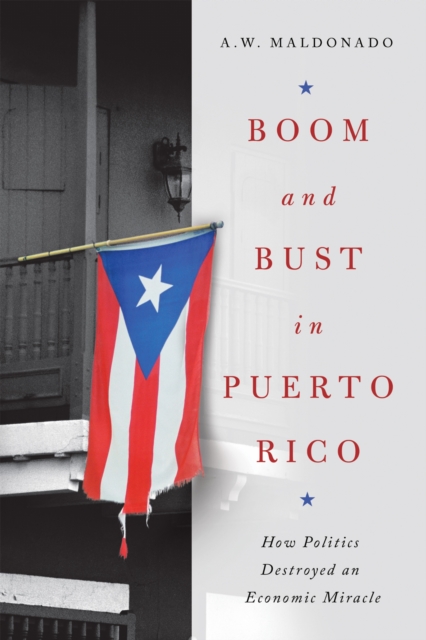
Boom and Bust in Puerto Rico
Who is to blame for the economic and political crisis in
Puerto Rico-the United States or Puerto Rico? This book provides a
fascinating historical perspective on the problem and an
unequivocal answer on who is to blame.
In this engaging and approachable book, journalist A. W.
Maldonado charts the rise and fall of the Puerto Rican economy and
explains how a litany of bad political and fiscal policy decisions
in Washington and Puerto Rico destroyed an economic miracle.
Under Operation Bootstrap in the 1950s and '60s, the rapid
transformation and industrialization of the Puerto Rican economy
was considered a \"wonder of human history,\" a far cry from the
economic \"death spiral\" the island's governor described in 2015.
Boom and Bust in Puerto Rico is the story of how the
demise of an obscure tax policy that encouraged investment and
economic growth led to escalating budget deficits and the
government's shocking default of its $70 billion debt. Maldonado
also discusses the extent of the devastation from Hurricane Maria
in 2017, the massive street protests during 2019, and the
catastrophic earthquakes in January 2020.
After illuminating the century of misunderstanding between
Puerto Rico and the United States-the root cause of the economic
crisis and the island's gridlocked debates about its political
status-Maldonado concludes with projections about the future of the
relationship. He argues that, in the end, the economic, fiscal, and
political crises are the result of the breakdown and failure of
Puerto Rican self-government. Boom and Bust in Puerto Rico
is written for a wide audience, including students, economists,
politicians, and general readers, all of whom will find it
interesting and thought provoking.
eBook

Latin American Migrations to the U.S. Heartland
Responding to inaccuracies concerning Latino immigrants in the United States as well as an anti-immigrant strain in the American psyche, this collection of essays examines the movement of the Latin American labor force to the central states of Oklahoma, Kansas, Nebraska, Arkansas, Missouri, and Iowa. Contributors look at the outside factors that affect migration including corporate agriculture, technology, globalization, and government, as well as factors that have attracted Latin Americans to the Heartland including religion, strong family values, hard work, farming, and cowboy culture. Several essays also point to hostile neoliberal policy reforms that have made it difficult for Latino Americans to find social and economic stability. The varied essays in Latin American Migrations to the U.S. Heartland seek to reveal the many ways in which identities, economies, and geographies are changing as Latin Americans adjust to their new homes, jobs, and communities. Contributors are Linda Allegro, Tisa M. Anders, Scott Carter, Caitlin Didier, Miranda Cady Hallett, Edmund Hamann, Albert Iaroi, Errol D. Jones, Jane Juffer, Laszlo J. Kulcsar, Janelle Reeves, Jennifer F. Reynolds, Sandi Smith-Nonini, and Andrew Grant Wood.
eBook