
Catalogue Search | MBRL


Are you sure you want to remove the book from the shelf?

{{itemTitle}}
2,481
result(s) for
"United States -- Foreign relations -- Latin America"
Sort by:


Allende’s Chile and the Inter-American Cold War
Fidel Castro described Salvador Allende's democratic election as president of Chile in 1970 as the most important revolutionary triumph in Latin America after the Cuban revolution. Yet celebrations were short lived. In Washington, the Nixon administration vowed to destroy Allende's left-wing government while Chilean opposition forces mobilized against him. The result was a battle for Chile that ended in 1973 with a right-wing military coup and a brutal dictatorship lasting nearly twenty years.Tanya Harmer argues that this battle was part of a dynamic inter-American Cold War struggle to determine Latin America's future, shaped more by the contest between Cuba, Chile, the United States, and Brazil than by a conflict between Moscow and Washington. Drawing on firsthand interviews and recently declassified documents from archives in North America, Europe, and South America--including Chile's Foreign Ministry Archive--Harmer provides the most comprehensive account to date of Cuban involvement in Latin America in the early 1970s, Chilean foreign relations during Allende's presidency, Brazil's support for counterrevolution in the Southern Cone, and the Nixon administration's Latin American policies. The Cold War in the Americas, Harmer reveals, is best understood as a multidimensional struggle, involving peoples and ideas from across the hemisphere.
eBook


Right-wing politics in the new Latin America
The focus for students of Latin America in the past decade has been on the political forces of the left and the so-called 'pink tide' presidencies attempting to bring about social and economic change in the region.However, there has been far less attention paid to the rightwing political forces resisting such change.
eBook

The last years of the Monroe doctrine, 1945-1993
\"This epilogue to well-known history of Monroe Doctrine is a provocative interpretation of how US presidents resolved policy contradiction of accepting Soviet presence in the Caribbean while reaffirming tenets of Monroe Doctrine\"--Handbook of Latin American Studies, v. 57. http://www.loc.gov/hlas/
Book

The US and Latin America
The US in the 1950s and 1960s wanted to prevent a new communist regime in the Western hemisphere at any cost. Under President Eisenhower the US pursued a policy of support for dictators, the economic shoring up of regimes that impoverished their own people and sanctioned direct interventions such as the overthrow of the Guatemalan government in 1954. When John F. Kennedy came to power, he promised a reset of relations and set about pouring aid into Latin America. Yet in 1961 Kennedy also attempted to intervene in Central American domestic politics with the Bay of Pigs operation. How far was each of the approaches pursued by the two administrations responsible for increasing tensions and encouraging radicalism on the continent? In answering this question Bevan Sewell shows how Eisenhower's strategic stance on the Cold War became increasingly detrimental to Latin America over time, and shows how similar policies were continued by the Kennedy administration. The US and Latin America provides a new lens through which to assess US policy towards Latin America at an important time in inter-American relations.
eBook


The Obama doctrine in the Americas
This volume examines the foreign policy transition from George W.Bush to Barack H.Obama in relation to the countries of the Americas.In this work, contributors consider the major defining features of their respective policies in dealing with security-related issues.
eBook

A short history of U.S. interventions in Latin America and the Caribbean
\"Presents a concise account of the full sweep of U.S. military invasions and interventions in Central America, South America, and the Caribbean from 1800 up to the present day. For each era, author looks at five elements: causes, consequences, contestation, collaboration, and context to shed light on the economic, military, political, and cultural issues that have shaped U.S.-Latin America relations.\"--Page 4 of cover.
Book
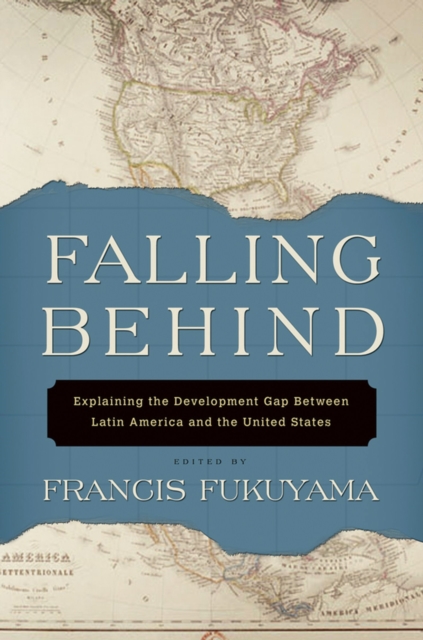
Falling Behind
In 1700, Latin America and British North America were roughly equal in economic terms. Yet over the next three centuries, the United States gradually pulled away, and today the gap is huge. In Falling Behind, acclaimed author Francis Fukuyama gathers together some of the world's leading scholars on the subject to explain the nature of the gap and how it came to be. Tracing the histories of development over the past four hundred years and focusing in particular on the policies of the last fifty years, the contributors conclude that while many factors are important, economic policies and political systems are at the root of the divide.
eBook