
Catalogue Search | MBRL


Are you sure you want to remove the book from the shelf?

{{itemTitle}}
227
result(s) for
"United States Foreign economic relations European Union countries."
Sort by:

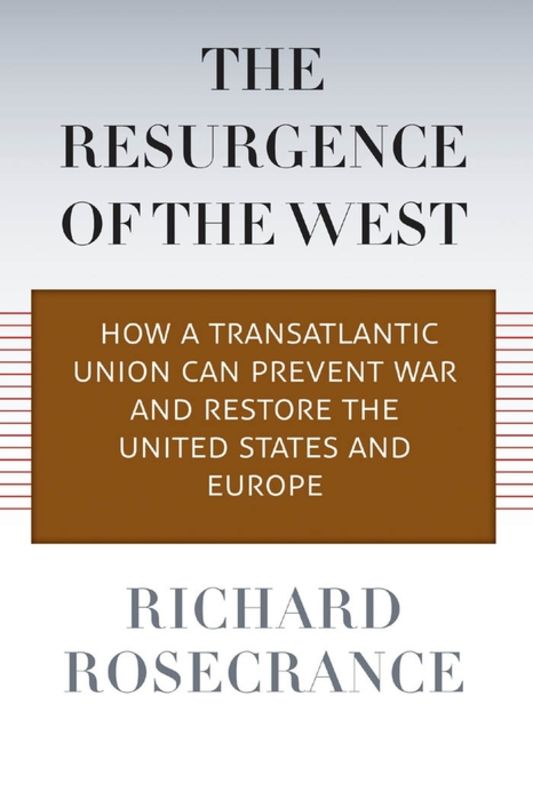
The Resurgence of the West
After two centuries of ascent, the United States finds itself in economic decline. Some advise America to cure its woes alone. But the road to isolation leads inevitably to the end of U.S. leadership in the international system, warns Richard Rosecrance in this bold and novel book. Instead, Rosecrance calls for the United States to join forces with the European Union and create a transatlantic economic union. Such a U.S.-Europe community would unblock arteries of trade and investment, rejuvenate the West, and enable Western countries to deal with East Asian challenges from a position of unity and economic strength.Exploring the possibilities for such a merger, the author writes, \"The European Union offers a means of creating larger units without recourse to force. A connection between Europe and North America could eventually grow into an agglomeration of states, drawing China and the East into a new network of countries. In this way East will eventually join the West.\" Through this great merger the author offers a positive vision of the future in which members of a tightly knit Western alliance regain economic health and attract Eastern nations to join a new and worldwide international order.
eBook

Managing security threats along the EU's eastern flanks
\"The book addresses security threats and challenges to the European Union emanating from its eastern neighbourhood. The volume includes the expertise of policy and scholarly contributors coming from North America, Russia and Central Asia, and from across the EU. Themes and issues include the EU's capacities and actorness, support from the United States, challenges from Russia, and a range of case studies including Ukraine, other post-Soviet conflicts, the Kurdish question, Central Asia, and terrorism and counter-terrorism. Authors identify current threats and place these challenges into necessary historical context. They offer long-term recommendations for actionable goals to achieve greater stability in this complex and volatile region\"--Back cover.
Book
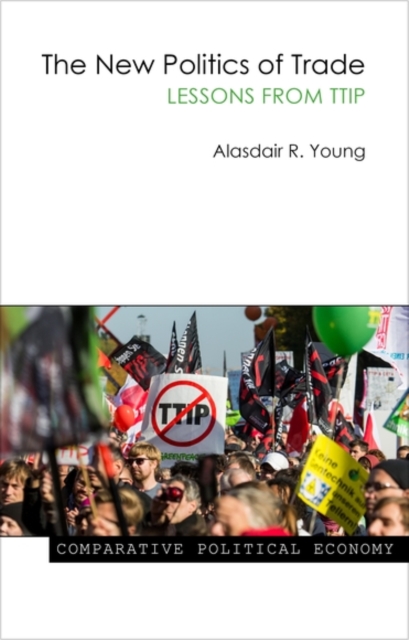
The New Politics of Trade
The negotiation of international trade agreements has become the issue of the moment. With Brexit, a change in administration in the United States, a fragile economic recovery in the Eurozone and China facing a slowdown in its growth, nothing is more critical to the future global economy than the terms of trade between its largest economic blocs. The Transatlantic Trade and Investment Partnership (TTIP) is Europe's most controversial trade agreement ever. Aimed at reducing regulatory barriers between the United States and the EU, it was expected to be fairly straightforward given strong business support on both sides of the Atlantic. It has not been so. The negotiations have dragged on far longer than anticipated and now look set to fail altogether. Yet the process of its negotiation, the terms of the potential agreement and its sticking points provide valuable lessons for policy-makers and academics tasked to bring future trade deals and arrangements to successful conclusions. Alasdair Young offers a penetrating analysis of the complexities of the TTIP negotiations and explores why they have proved so difficult to conclude, what motivates the different parties concerned and what implications there are for politics and policy. Young throws light on the limits of the transatlantic cooperation and the processes of globalization and teases out the implications for the UK in its post-Brexit trade negotiations and for other nations now facing a more protectionist stance from the United States.
eBook


Transatlantic Economic Challenges in an ERA of Growing Multipolarity
Cover -- Contents -- Preface -- Introduction -- I. 2010 Policy Conference, Washington, DC -- Ch 1. Postcrisis EU Governance -- Ch 2. From Convoy to Parting Ways?: Postcrisis Divergence Between European and US Macroeconomic Policies -- Economic Developments -- Monetary Policy -- Fiscal Policy -- Events, Politics, Doctrines, or Institutions? Summary of Findings -- How Transatlantic Divergence Matters -- References -- Ch 3. US Climate Change Policy: Implementing the Copenhagen Accord and Beyond -- Copenhagen Pledges and Abatement Costs -- Prospects for Action in the United States -- Implications for US-EU Cooperation -- Appendix 3A US Regional Climate Initiatives -- Regional Greenhouse Gas Initiative -- Western Climate Initiative -- Midwestern Greenhouse Gas Reduction Accord -- References -- Ch 4. EU Climate Change Policy: Can It Mobilize Innovations for Clean Energy Technologies? -- EU Climate Change Policy Beyond 20 Percent -- Assessing the Current Performance of Private Green Innovations -- Government Intervention for Green Innovations -- A New Momentum for Europe in Clean Energy Technologies? -- Toward a Global Clean Energy Technology Market -- References -- Ch 5. The Transatlantic Relationship in an Era of Growing Economic Multipolarity -- Achievements So Far -- Addressing \"Too Big to Fail\" -- Conclusion -- Ch 6. Too Big to Fail: The Transatlantic Debate -- Historical Background, Before and During the Crisis -- Structural Differences Between the United States and European Union -- The \"Bigness\" Debate: Size, Interconnectedness, and Systemic Importance -- The \"Failability\" Debate: Allowing Banks to Go Under? -- Concluding Remarks -- References -- Ch 7. Reform of the GlobalFinancial Architecture -- Global Financial Systemic Issues Revealed by the Crisis -- The IMF and FSB Today -- Implications for the Global Financial Architecture.
Book


Systemic implications of transatlantic regulatory cooperation and competition
Regulations and enforcement decisions that at first appear to have only a domestic impact can have substantial spillover effects on other nations' economies. Experience has shown time and again that there is no reason to expect that these effects are confined to jurisdictions at the same level of development. Governments on both sides of the Atlantic recognize this, yet their responses in many policy areas are not aligned — sometimes deliberately so. This creates a complex regulatory landscape that appears to be the product of both cooperation and competition, and which can only be fully understood by looking through a number of disciplinary lenses.
eBook