
Catalogue Search | MBRL


Are you sure you want to remove the book from the shelf?

{{itemTitle}}
59
result(s) for
"United States Foreign relations 1933-1945 Public opinion."
Sort by:

Know your enemy : the American debate on Nazism, 1933-1945
\"This book analyzes the intellectual side of the American war effort against Nazi Germany. It shows how conflicting interpretations of \"the German problem\" shaped American warfare and postwar planning. The story of how Americans understood National Socialism in the 1930s and 1940s provides a counter-example to the usual tale of enemy images. The level of German popular support for the Nazi regime, the nature of Nazi war aims, and the postwar prospects of German democratization stood at the center of public and governmental debates. American public perceptions of the Third Reich - based in part on ethnic identification with the Germans - were often forgiving but also ill-informed. This conflicted with the Roosevelt administration's need to create a compelling enemy image. The tension between popular and expert views generated complex and fruitful discussions among America's political and cultural elites and produced insightful, yet contradictory interpretations of Nazism\"--Provided by publisher.
BOOK

Against Immediate Evil
In Against Immediate Evil, Andrew Johnstone tells the story of how internationalist Americans worked between 1938 and 1941 to convince the U.S. government and the American public of the need to stem the rising global tide of fascist aggression. As war approached, the internationalist movement attempted to arouse the nation in order to defeat noninterventionism at home and fascism overseas. Johnstone's examination of this movement undermines the common belief that the Japanese attack on Pearl Harbor wrenched an isolationist United States into global armed conflict and the struggle for international power.Johnstone focuses on three organizations—the American Committee for Non-Participation in Japanese Aggression, the Committee to Defend America by Aiding the Allies, and Fight For Freedom—that actively promoted a more global role for the United States based on a conception of the \"four freedoms\" later made famous by FDR. The desire to be free from fear was seen in concerns regarding America's immediate national security. The desire to be free from want was expressed in anxieties over the nation's future economic prosperity. The need for freedom of speech was represented in concerns over the potential loss of political freedoms. Finally, the need for freedom of worship was seen in the emphasis on religious freedoms and broader fears about the future of Western civilization. These groups and their supporters among the public and within the government characterized the growing global conflict as one between two distinct worlds and in doing so, set the tone of American foreign policy for decades to come.
eBook

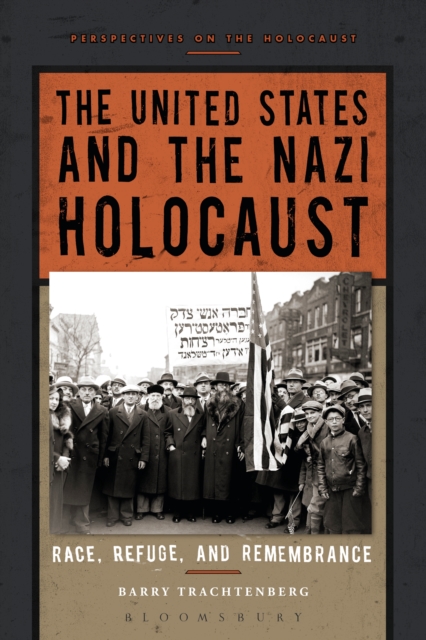
The United States and the Nazi Holocaust
The United States and the Nazi Holocaust is an invaluable synthesis of United States policies and attitudes towards the Nazi persecution of European Jewry from 1933 right up to the modern day. The book, which includes 20 illustrations, weaves together a vast body of scholarly literature to bring students of the Holocaust a balanced, readable overview of this complex and often controversial topic. It demonstrates that the United States’ response to the rise of Nazism, the refugee crisis it provoked, the Holocaust itself, and its aftermath were–and remain to this day–intricately linked to the ever-shifting racial, economic, and social status of American Jewry. Using a broad chronological framework, Barry Trachtenberg navigates us through the major themes and events of this period. He discusses the complicated history of the Roosevelt administration's response to the worsening situation of European Jewry in the context of the ambiguous racial status of Jews in Depression and World War II-era America. He examines the post-war decades in America, and discusses, over a series of chapters, how the Holocaust, like American Jewry itself, came to move from the margins to the very center of American awareness. The United States and the Nazi Holocaust considers the reception of Holocaust survivors, post-war trials, film, memoirs, memorials, and the growing field of Holocaust Studies. The reactions of the United States government, the general public, and the Jewish communities of America are all accounted for in this integrated, detailed survey.
eBook


Waking to danger : Americans and Nazi Germany, 1933-1941
This intriguing study is the first comprehensive survey of American public opinion about Nazi Germany in the prewar years. The 1930s were years when Americans struggled to define their country's role in a dangerous world. Opinions were deeply divided and passionately held. Waking to Danger: Americans and Nazi Germany, 1933-1941 traces the evolution of American public opinion about Germany as it spiraled from ignorance and isolationism to a sense of danger and interventionism. This brief, but broad survey fills a gap in the historical literature by bringing together, for the first time, the reactions toward Nazi Germany of a variety of groups—peace advocates, Jews, fascists, communists, churches, the business community, and the military—that have hitherto only been treated separately in monographic literature. The result is a picture of evolving national public opinion that will be a walk down memory lane for the members of The Greatest Generation, while offering those who did not live through these turbulent years a fresh understanding of the era.
eBook

Cautious Crusade
America’s struggle against Nazism is one of the few aspects of World War II that has escaped controversy. Historians agree that it was a widely popular war, different from the subsequent conflicts in Korea and Vietnam because of the absence of partisan sniping, ebbing morale, or calls for a negotiated peace. In this provocative book, Steven Casey challenges conventional wisdom about America’s participation in World War II. Drawing on the numerous opinion polls and surveys conducted by the U.S. government, he traces the development of elite and mass attitudes toward Germany, from the early days of the war up to its conclusion. Casey persuasively argues that the president and the public rarely saw eye to eye on the nature of the enemy, the threat it posed, or the best methods for countering it. He describes the extensive propaganda campaign that Roosevelt designed to build support for the war effort, and shows that Roosevelt had to take public opinion into account when formulating a host of policies, from the Allied bombing campaign to the Morgenthau plan to pastoralize the Third Reich. By examining the previously unrecognized relationship between public opinion and policy making during World War II, Casey’s groundbreaking book sheds new light on a crucial era in American history.
eBook

The Good Fight Continues
Written with passion and intelligence, the letters of the
Abraham Lincoln Brigade in World War II express the raw idealism of
anti-fascist soldiers who experienced the war in boot camps,
cockpits, and foxholes, but never lost sight of the great global
issues at stake. When the United States entered World War II on
December 7, 1941, only one group of American soldiers had already
confronted the fascist enemy on the battlefield: the U.S. veterans
of the Lincoln Brigade, a volunteer army of about 2,800 men and
women who had enlisted to defend the Spanish Republic from military
rebels during the Spanish Civil War (1936-1939). They fought on the
losing side. After Pearl Harbor, Lincoln Brigade veterans
enthusiastically joined the U.S. Army, welcoming this second chance
to fight against fascism. However, the Lincoln recruits soon
encountered suspicious military leaders who questioned their
patriotism and denied them promotions and overseas assignments,
foreshadowing the political persecution of the postwar Red Scare.
African American veterans who fought in fully integrated units in
Spain, faced second-class treatment in America's Jim Crow army.
Nevertheless, the Lincolns served with distinction in every theater
of the war and won a disproportionate number of medals for courage,
dedication, and sacrifice. The 154 letters in this volume, selected
from thousands held in the Abraham Lincoln Brigade Archives at
NYU's Tamiment Library, provide a new and unique perspective on
aspects of World War II.
eBook

The Good Fight Continues
Written with passion and intelligence, the letters of the Abraham Lincoln Brigade in World War II express the raw idealism of anti-fascist soldiers who experienced the war in boot camps, cockpits, and foxholes, but never lost sight of the great global issues at stake. When the United States entered World War II on December 7, 1941, only one group of American soldiers had already confronted the fascist enemy on the battlefield: the U.S. veterans of the Lincoln Brigade, a volunteer army of about 2,800 men and women who had enlisted to defend the Spanish Republic from military rebels during the Spanish Civil War (1936-1939). They fought on the losing side. After Pearl Harbor, Lincoln Brigade veterans enthusiastically joined the U.S. Army, welcoming this second chance to fight against fascism. However, the Lincoln recruits soon encountered suspicious military leaders who questioned their patriotism and denied them promotions and overseas assignments, foreshadowing the political persecution of the postwar Red Scare. African American veterans who fought in fully integrated units in Spain, faced second-class treatment in America's Jim Crow army. Nevertheless, the Lincolns served with distinction in every theater of the war and won a disproportionate number of medals for courage, dedication, and sacrifice. The 154 letters in this volume, selected from thousands held in the Abraham Lincoln Brigade Archives at NYU’s Tamiment Library, provide a new and unique perspective on aspects of World War II.
eBook