
Catalogue Search | MBRL


Are you sure you want to remove the book from the shelf?

{{itemTitle}}
33
result(s) for
"United States History Civil War, 1861-1865 Health aspects."
Sort by:


Intensely human : the health of the Black soldier in the American Civil War
Black soldiers in the American Civil War were far more likely to die of disease than were white soldiers. In Intensely Human, historian Margaret Humphreys explores why this uneven mortality occurred and how it was interpreted at the time. In doing so, she uncovers the perspectives of mid-nineteenth-century physicians and others who were eager to implicate the so-called innate inferiority of the black body.
In the archival collections of the U.S. Sanitary Commission, Humphreys found evidence that the high death rate among black soldiers resulted from malnourishment, inadequate shelter and clothing, inferior medical attention, and assignments to hazardous environments.
While some observant physicians of the day attributed the black soldiers' high mortality rate to these circumstances, few medical professionals—on either side of the conflict—were prepared to challenge the biological evidence of white superiority. Humphreys shows how, despite sympathetic and responsible physicians' efforts to expose the truth, the stereotype of black biological inferiority prevailed during the war and after.
eBook

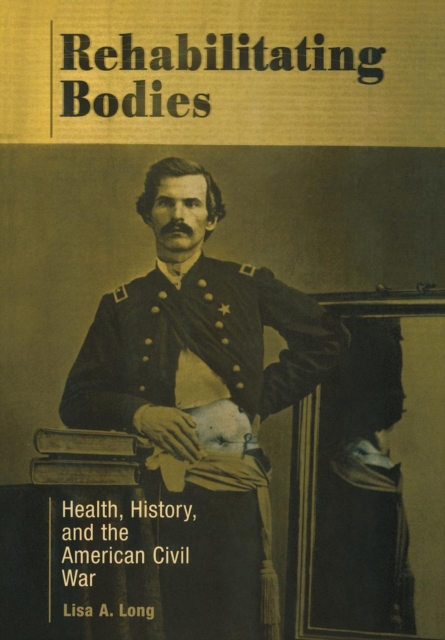
Rehabilitating bodies : health, history, and the American Civil War
The American Civil War is one of the most documented, romanticized, and perennially reenacted events in American history. In Rehabilitating Bodies: Health, History, and the American Civil War, Lisa A. Long charts how its extreme carnage dictated the Civil War's development into a lasting trope that expresses not only altered social, economic, and national relationships but also an emergent self-consciousness. Looking to a wide range of literary, medical, and historical texts, she explores how they insist on the intimate relationship between the war and a variety of invisible wounds, illnesses, and infirmities that beset Americans throughout the late nineteenth and early twentieth centuries and plague us still today.Long shows how efforts to narrate credibly the many and sometimes illusory sensations elicited by the Civil War led writers to the modern discourses of health and history, which are premised on the existence of a corporeal and often critical reality that practitioners cannot know fully yet believe in nevertheless. Professional thinkers and doers both literally and figuratively sought to rehabilitate-to reclothe, normalize, and stabilize-Civil War bodies and the stories that accounted for them.Taking a fresh look at the work of canonical war writers such as Louisa May Alcott and Stephen Crane while examining anew public records, journalism, and medical writing, Long brings the study of the Civil War into conversation with recent critical work on bodily ontology and epistemology and theories of narrative and history.
eBook


Life and Limb
The contemporary perspectives – fiction, first-hand accounts, reportage and photographs - found in the pages of this collection give a unique insight into the experiences and suffering of those affected by the American Civil War. The essays and recollections detail some of the earliest attempts by medical professionals to understand and help the wounded, and look at how writers and poets were influenced by their own involvement as nurses, combatants and observers. So alongside the medical observations of figures such as Silas Weir Mitchell and William Keen, you’ll find memoirs of writers including Louisa May Alcott, Ambrose Bierce and Walt Whitman. By presenting the wide range of frequently traumatic experiences by writers, medical staff, and of course the often ignored common foot soldiers on both sides, this volume will complement the older emphasis on military history and will appeal to readers of the evolution of medicine, of the literature the time, of social anthropology, and of the whole complex issue of how the war was represented and debated from many different perspectives. While a century and a half of developments in medicine, social care and science mean that the level of support and technology available to amputees is now incomparable to that in the mid-nineteenth century, the insights into the lives and thoughts of those devastated by psychological traumas, complex emotions and difficulties in adjusting to life after limb loss remain just as relevant today. Phenomena explored in the book, such as ‘Phantom Limb Syndrome’, continue to be the subject of medical and academic research in the twenty-first century.
eBook

A Historical Review of Military Medical Strategies for Fighting Infectious Diseases: From Battlefields to Global Health
The environmental conditions generated by war and characterized by poverty, undernutrition, stress, difficult access to safe water and food as well as lack of environmental and personal hygiene favor the spread of many infectious diseases. Epidemic typhus, plague, malaria, cholera, typhoid fever, hepatitis, tetanus, and smallpox have nearly constantly accompanied wars, frequently deeply conditioning the outcome of battles/wars more than weapons and military strategy. At the end of the nineteenth century, with the birth of bacteriology, military medical researchers in Germany, the United Kingdom, and France were active in discovering the etiological agents of some diseases and in developing preventive vaccines. Emil von Behring, Ronald Ross and Charles Laveran, who were or served as military physicians, won the first, the second, and the seventh Nobel Prize for Physiology or Medicine for discovering passive anti-diphtheria/tetanus immunotherapy and for identifying mosquito Anopheline as a malaria vector and plasmodium as its etiological agent, respectively. Meanwhile, Major Walter Reed in the United States of America discovered the mosquito vector of yellow fever, thus paving the way for its prevention by vector control. In this work, the military relevance of some vaccine-preventable and non-vaccine-preventable infectious diseases, as well as of biological weapons, and the military contributions to their control will be described. Currently, the civil–military medical collaboration is getting closer and becoming interdependent, from research and development for the prevention of infectious diseases to disasters and emergencies management, as recently demonstrated in Ebola and Zika outbreaks and the COVID-19 pandemic, even with the high biocontainment aeromedical evacuation, in a sort of global health diplomacy.
Journal Article

The Wounded River
The Wounded River takes the reader back more than 130 years to reveal a marvelous, first-hand account of nineteenth-century warfare. In the process, the work cuts the legends and mythology that have come to frame and define accounts of America's bloodiest war. Of equal significance, Peter Josyph's editorial work on this superb collection of letters from the Western Americana Division of Yale University's Beinecke Rare Book and Manuscripts Library enhances and clarifies Lauderdale's experinces as a surgeon aboard the U.S. Army hospital ship D. A. January.
The reader looks on while Lauderdale, a New York civilian contract surgeon, operates on hundreds of Confederate and Union wounded. The young doctor's clear writing style and his great compassion for these unfortunate men whose bodies were ripped apart by bullets, shell fragments, and bayonets permits us to catch a disturbiing glimpse of what modern warfare does to humanity. Finally, we learn of Lauderdale's motives for volunteering, his impressions of the \"hospital ship\" D. A. January, Confederate morale, the Abolitionist cause, and black slavery. The Wounded River is a must read for anyone interested in the real American Civil War.
eBook

Between Flesh and Steel
Over the last five centuries, the development of modern weapons and warfare has created an entirely new set of challenges for practitioners in the field of military medicine. Between Flesh and Steel traces the historical development of military medicine from the Middle Ages to modern times. Military historian Richard A. Gabriel focuses on three key elements: the modifications in warfare and weapons whose increased killing power radically changed the medical challenges that battle surgeons faced in dealing with casualties, advancements in medical techniques that increased the effectiveness of military medical care, and changes that finally brought about the establishment of military medical care system in modern times. Others topics include the rise of the military surgeon, the invention of anesthesia, and the emergence of such critical disciplines as military psychiatry and bacteriology. The approach is chronological—century by century and war by war, including Iraq and Afghanistan—and cross-cultural in that it examines developments in all of the major armies of the West: British, French, Russian, German, and American. Between Flesh and Steel is the most comprehensive book on the market about the evolution of modern military medicine.
eBook