
Catalogue Search | MBRL


Are you sure you want to remove the book from the shelf?

{{itemTitle}}
187
result(s) for
"United States History Civil War, 1861-1865 Personal narratives."
Sort by:


Refugitta of Richmond
In the expansive canon of Civil War memoirs, relatively few accounts from women exist. Among the most engaging and informative of these rare female perspectives is Constance Cary Harrison's Recollections Grave and Gay, a lively, first-person account of the collapse of the Confederacy by the wife of President Jefferson Davis's private secretary. Although equal in literary merit to the well-known and widely available diaries of Mary Boykin Chesnut and Eliza Frances Andrews, Harrison's memoir failed to remain in print after its original publication in 1916 and, as a result, has been lost to all but the most diligent researcher. In Refugitta of Richmond, Nathaniel Cheairs Hughes Jr. and S. Kittrell Rushing resurrect Harrison's work, reintroducing an especially insightful perspective on the Southern high command, the home front, and the Confederate elite. Born into an old, aristocratic Virginia family in 1843, Constance Cary fled with her family from their estate near Alexandria, Virginia, to Richmond in 1862. There, the nineteen-year-old met Burton Norvell Harrison, a young math professor from the University of Mississippi who had come to the Confederate capital to work for Davis. The pair soon became engaged and joined the inner circle of military, political, and social leaders at the Confederate White House. Under the pen name \"Refugitta,\" Constance also wrote newspaper columns about the war and became a respected member of Richmond's literary community. Fifty years later, Constance used her wartime diaries and letters to pen her recollections of her years in Richmond and of the confusing months immediately after the war. She offers lucid, insightful, and detailed observations of the Confederate home front even as she reflects on the racial and class biases characteristic of her time and station. With an informative introduction and thorough annotations by Hughes and Rushing, Refugitta of Richmond provides a highly readable, often amusing, occasionally troubling insider's look at the Confederate nerve center and its ultimate demise. Nathaniel Cheairs Hughes Jr. is the author or editor of twenty books relating to the American Civil War, including The Life and Wars of Gideon J. Pillow; Brigadier General Tyree H. Bell, C.S.A.: Forrest's Fighting Lieutenant; and Yale's Confederates. S. Kittrell Rushing, Frank McDonald Professor of History at the University of Tennessee at Chattanooga, is the editor of Eliza Frances Andrews's A Family Secret and Journal of a Georgia Woman, 1870-1872. Rushing also edited and annotated Judge Garnett Andrews's Reminiscences of an Old Georgia Lawyer.
eBook

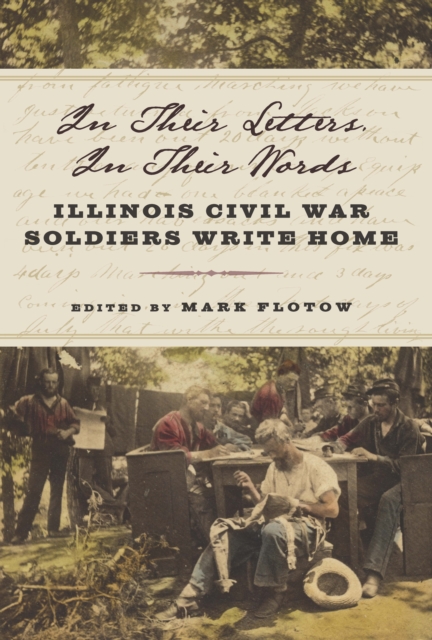
In Their Letters, in Their Words
WINNER, Russell P.Strange Memorial Book of the Year Award from the Illinois State Historical Society, 2020!A vital lifeline to home during the Civil War, the letters of soldiers to their families and friends remain a treasure for those seeking to connect with and understand the most turbulent period of American history.
eBook

The Civil War : the first year told by those who lived it
\" ... Drawn from letters, diaries, speeches, articles, poems, songs, military reports, legal opinions, and memoirs, 'The Civil War: The First Year' brings together over 120 pieces by more than sixty participants to create a unique firsthand narrative of this great historical crisis ...\"--Dust jacket flap.
Book

The War for the Common Soldier
How did Civil War soldiers endure the brutal and unpredictable existence of army life during the conflict? This question is at the heart of Peter S. Carmichael's sweeping new study of men at war. Based on close examination of the letters and records left behind by individual soldiers from both the North and the South, Carmichael explores the totality of the Civil War experience--the marching, the fighting, the boredom, the idealism, the exhaustion, the punishments, and the frustrations of being away from families who often faced their own dire circumstances. Carmichael focuses not onwhatsoldiers thought but ratherhowthey thought. In doing so, he reveals how, to the shock of most men, well-established notions of duty or disobedience, morality or immorality, loyalty or disloyalty, and bravery or cowardice were blurred by war.Digging deeply into his soldiers' writing, Carmichael resists the idea that there was \"a common soldier\" but looks into their own words to find common threads in soldiers' experiences and ways of understanding what was happening around them. In the end, he argues that a pragmatic philosophy of soldiering emerged, guiding members of the rank and file as they struggled to live with the contradictory elements of their violent and volatile world. Soldiering in the Civil War, as Carmichael argues, was never a state of being but a process of becoming.
eBook

The Civil War : the final year told by those who lived it
\" ... [Draws from] letters, diary entries, speeches, articles, messages and poems to provide an incomparable literary portrait of a nation at war with itself, while illuminating the military and political events that brought the Union to final victory and slavery and secession to their ultimate destruction ...\"--Dust jacket flap.
Book

Memoirs of the Civil War
Contains much valuable information and engaging narrative
passages
Memoirs of the Civil War , though relatively little known
because of its rarity in the original edition, contains much
valuable information and engaging narrative passages. A Virginian
whose Confederate career included service in an infantry regiment
early in the war, Chamberlaine’s most important military
service was as a staff officer attached to Brigadier General
Reuben Lindsay Walker, who commanded the Third Corps artillery in
the Army of Northern Virginia. Includes excellent material on the
duties of staff officers, operation of Confederate conscription,
and the role of artillery in Lee’s campaigns. He is
especially eloquent and revealing about a number of famous
battles: the Seven Days; Antietam, where Chamberlaine
distinguished himself and was wounded; and the Wilderness, where
he had a memorable encounter with Lee.
eBook

In their letters, in their words : Illinois Civil War soldiers write home
\"This book examines 165 Illinois Civil War soldiers' and sailors' military lives. Letter writers lived in Illinois at the time of their enlistment, hailed from counties throughout the state, served in different branches of the military at different ranks, fought in a wide array of military campaigns, and represented the gamut of experiences and outcomes\"-- Provided by publisher.
Book

The Last Battleground
To understand the long march of events in North Carolina from secession to surrender is to understand the entire Civil War--a personal war waged by Confederates and Unionists, free blacks and the enslaved, farm women and plantation belles, Cherokees and mountaineers, conscripts and volunteers, gentleman officers and poor privates. In the state's complex loyalties, its sprawling and diverse geography, and its dual role as a home front and a battlefield, North Carolina embodies the essence of the whole epic struggle in all its terrible glory.
Philip Gerard presents this dramatic convergence of events through the stories of the individuals who endured them--reporting the war as if it were happening in the present rather than with settled hindsight--to capture the dreadful suspense of lives caught up in a conflict whose ending had not yet been written. As Gerard reveals, whatever the grand political causes for war, whatever great battles decided its outcome, and however abstract it might seem to readers a century and a half later, the war was always personal.
eBook