
Catalogue Search | MBRL


Are you sure you want to remove the book from the shelf?

{{itemTitle}}
17
result(s) for
"United States History Revolution, 1775-1783 British forces."
Sort by:

The men who lost America : British leadership, the American Revolution, and the fate of the empire
\"The loss of America was a stunning and unexpected defeat for the powerful British Empire. Common wisdom has held that incompetent military commanders and political leaders in Britain must have been to blame, but were they? This intriguing book makes a different argument. Weaving together the personal stories of ten prominent men who directed the British dimension of the war, historian Andrew O'Shaughnessy dispels the incompetence myth and uncovers the real reasons that rebellious colonials were able to achieve their surprising victory. In interlinked biographical chapters, the author follows the course of the war from the perspectives of King George III, Prime Minister Lord North, military leaders including General Burgoyne, the Earl of Sandwich, and others who, for the most part, led ably and even brilliantly. Victories were frequent, and in fact the British conquered every American city at some stage of the Revolutionary War. Yet roiling political complexities at home, combined with the fervency of the fighting Americans, proved fatal to the British war effort. The book concludes with a penetrating assessment of the years after Yorktown, when the British achieved victories against the French and Spanish, thereby keeping intact what remained of the British Empire\"-- Provided by publisher.
Book

The men who lost America : British leadership, the American Revolution, and the fate of the empire
A unique account of the American Revolution, told from the perspective of the leaders who conducted the British war effort.
eBook

Books and the British Army in the Age of the American Revolution
Historians have long understood that books were important to the British army in defining the duties of its officers, regulating tactics, developing the art of war, and recording the history of campaigns and commanders. Now, in this groundbreaking analysis, Ira D. Gruber identifies which among over nine hundred books on war were considered most important by British officers and how those books might have affected the army from one era to another. By examining the preferences of some forty-two officers who served between the War of the Spanish Succession and the French Revolution, Gruber shows that by the middle of the eighteenth century British officers were discriminating in their choices of books on war and, further, that their emerging preference for Continental books affected their understanding of warfare and their conduct of operations in the American Revolution. In their increasing enthusiasm for books on war, Gruber concludes, British officers were laying the foundation for the nineteenth-century professionalization of their nation's officer corps. Gruber's analysis is enhanced with detailed and comprehensive bibliographies and tables.
eBook

Soldiers for Sale
All historians specializing in the American Revolution and its battles.Potential Customers:People interested in knowing more about the \"Hessians,\" why they were recruited (sometimes kidnapped), where they came from and how they ended up in North America.Geneologists, because of the vast work on German names that have been anglicized and gallicized in North America.
eBook
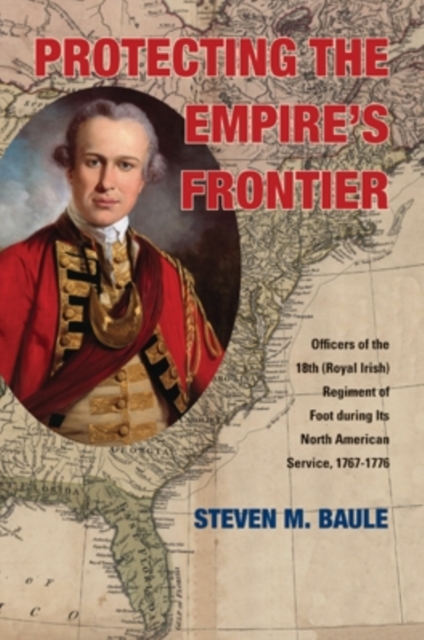
Protecting the Empire's Frontier
Protecting the Empire's Frontiertells stories of the roughly eighty officers who served in the 18th (Royal Irish) Regiment of Foot, which served British interests in America during the crucial period from 1767 through 1776. The Royal Irish was one of the most wide-ranging regiments in America, with companies serving on the Illinois frontier, at Fort Pitt, and in Boston, New York, and Philadelphia, with some companies taken as far afield as Florida, Spanish Louisiana, and present-day Maine. When the regiment was returned to England in 1776, some of the officers remained in America on staff assignments. Others joined provincial regiments, and a few joined the American revolutionary army, taking up arms against their king and former colleagues.Using a wide range of archival resources previously untapped by scholars, the text goes beyond just these officers' service in the regiment and tells the story of the men who included governors, a college president, land speculators, physicians, and officers in many other British regular and provincial regiments. Included in these ranks were an Irishman who would serve in the U.S. Congress and as an American general at Yorktown; a landed aristocrat who represented Bath as a member of Parliament; and a naval surgeon on the ship transporting Benjamin Franklin to France. This is the history of the American Revolutionary period from a most gripping and everyday perspective.An epilogue covers the Royal Irish's history after returning to England and its part in defending against both the Franco-Spanish invasion attempt and the Gordon Rioters. With an essay on sources and a complete bibliography, this is a treat for professional and amateur historians alike.
eBook

Three Peoples, One King
Three Peoples, One King explores the contributions and conjoined fates of Loyalists, Indians, and slaves who stood with the British Empire in the Deep South colonies during the American Revolution. Challenging the traditional view that British efforts to regain control of the southern colonies were undermined by a lack of local support, Jim Piecuch demonstrates the breadth of loyal assistance provided by these three groups in South Carolina, Georgia, and East and West Florida. Piecuch attributes the ultimate failure of the Crown's southern campaign to the ruthless program of violent suppression of Loyalist forces carried out by the revolutionaries and Britain's inability to capitalize fully on the support available. In the process of revisiting some cherished opinions respecting the Revolution, Piecuch provides a compelling alternative to long-held notions of heroism and villainy in America's war for independence. Covering the period from 1775 to 1782, Piecuch systematically surveys the roles of these three groups—Loyalists, Indians, and slaves—across the southernmost colonies to illustrate the investments each had in allying with the British, their interconnected efforts on behalf of their king, and the high price they paid for their loyalty during and after the war. In honing his focus on the Deep South, where British forces struggled to maintain control as their hold on the northern colonies waned and where some of the war's fiercest combat took place, Piecuch offers a sustained interpretation of the war from the British perspective. Although other studies have assessed the stance of white Loyalist militias and the efforts of revolutionaries to woo them or defeat them, Piecuch's is the first to offer a synthetic approach to all three Loyalist populations—white, black, and Native American—in the South during this era. He subjects each of the groups to intensive investigation, making new discoveries in the histories of escaped or liberated slaves, of still-powerful Indian tribes, and of the bitter legacies of white loyalism. He then employs an integrated approach that advances understanding of Britain's long hold on the South and the hardships experienced by those groups who were in varying degrees abandoned by the Crown in defeat. Aided by thirty-four illustrations and maps, Piecuch's pathbreaking study will appeal to scholars and students of American history as well as Revolutionary War enthusiasts open to hearing an opposing perspective.
eBook
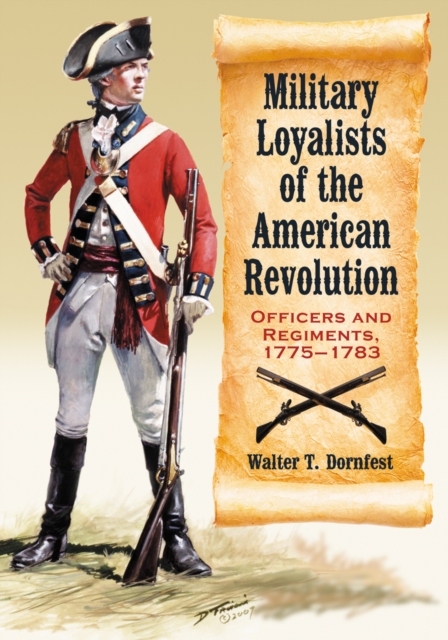
Military Loyalists of the American Revolution
This book focuses not only on those officers residing within the borders of the 13 rebellious American colonies, but also on those of the Canadian command and the officers serving in the Caribbean Basin.
eBook

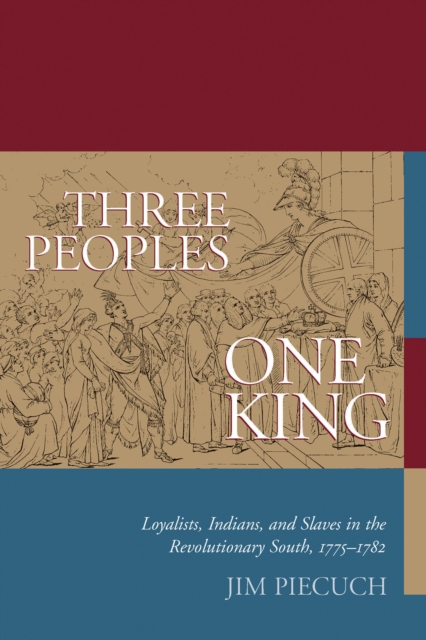
Three peoples, one king : loyalists, Indians, and slaves in the revolutionary South, 1775-1782
Aided by thirty-four illustrations and maps, Piecuch's pathbreaking study will appeal to scholars and students of American history as well as Revolutionary War enthusiasts open to hearing an opposing perspective.
eBook

Almost a miracle : the American victory in the War of Independence
In this gripping chronicle of America's struggle for independence, award-winning historian John Ferling transports readers to the grim realities of that war, capturing an eight-year conflict filled with heroism, suffering, cowardice, betrayal, and fierce dedication. As Ferling demonstrates, it was a war that America came much closer to losing than is now usually remembered. General George Washington put it best when he said that the American victory was \"little short of a standing miracle.\" Almost a Miracle offers an illuminating portrait of America's triumph, offering vivid descriptions of all the major engagements, from the first shots fired on Lexington Green to the surrender of General Cornwallis at Yorktown, revealing how these battles often hinged on intangibles such as leadership under fire, heroism, good fortune, blunders, tenacity, and surprise. The author paints sharp-eyed portraits of the key figures in the war, including General Washington and other American officers and civilian leaders. Some do not always measure up to their iconic reputations, including Washington himself. Others, such as the quirky, acerbic Charles Lee, are seen in a much better light than usual. The book also examines the many faceless men who soldiered, often for years on end, braving untold dangers and enduring abounding miseries. The author explains why they served and sacrificed, and sees them as the forgotten heroes who won American independence. Ferling's narrative is also filled with compassion for the men who comprised the British army and who, like their American counterparts, struggled and died at an astonishing rate in this harsh war. Nor does Ferling ignore the naval war, describing dangerous patrols and grand and dazzling naval actions. Finally, Almost a Miracle takes readers inside the legislative chambers and plush offices of diplomats to reveal countless decisions that altered the course of this war. The story that unfolds is at times a tale of folly, at times one of appalling misinformation and confusion, and now and then one of insightful and dauntless statesmanship.
eBook