
Catalogue Search | MBRL


Are you sure you want to remove the book from the shelf?

{{itemTitle}}
16
result(s) for
"United States Politics and government 1789-1797."
Sort by:


Founding finance : how debt, speculation, foreclosures, protests, and crackdowns made us a nation
Recent movements such as the Tea Party and anti-tax “constitutional conservatism” lay claim to the finance and taxation ideas of America’s founders, but how much do we really know about the dramatic clashes over finance and economics that marked the founding of America? Dissenting from both right-wing claims and certain liberal preconceptions, Founding Finance brings to life the violent conflicts over economics, class, and finance that played directly, and in many ways ironically, into the hardball politics of forming the nation and ratifying the Constitution—conflicts that still continue to affect our politics, legislation, and debate today. Mixing lively narrative with fresh views of America’s founders, William Hogeland offers a new perspective on America’s economic infancy: foreclosure crises that make our current one look mild; investment bubbles in land and securities that drove rich men to high-risk borrowing and mad displays of ostentation before dropping them into debtors’ prisons; depressions longer and deeper than the great one of the twentieth century; crony mercantilism, war profiteering, and government corruption that undermine any nostalgia for a virtuous early republic; and predatory lending of scarce cash at exorbitant, unregulated rates, which forced people into bankruptcy, landlessness, and working in the factories and on the commercial farms of their creditors. This story exposes and corrects a perpetual historical denial—by movements across the political spectrum—of America’s all-important founding economic clashes, a denial that weakens and cheapens public discourse on American finance just when we need it most.
eBook

Making the presidency : John Adams and the precedents that forged the republic
\"After George Washington retired, many Americans genuinely wondered if the presidency would work, and the nation would survive. John Adams stepped into the role, knowing it would be nearly impossible. The task required all his diplomatic experience, independence, fierce stubbornness, intelligence, and the unflagging support of his brilliant wife, Abigail. In four years, he secured valuable peace in the face of opposition from his closest advisors and allies in the Federalist Party. He defended the presidency against threats both foreign and domestic. He established critical precedents for executive power. When he left office, the nation was stronger than it had been four years earlier. George Washington created the presidency; John Adams defined it. John Adams's presidency was bookended by the first two peaceful transfers of power at a time when coups, dictatorships, violence, monarchies, and anarchy were the norm. Adams understood that the norms and customs that served as the scaffolding for democratic institutions required repetition over decades to build permanence. The American people had to be taught to cherish democratic elections and the people transfer of power. Yet, he is rarely credited with these monumental achievements. The time is ripe for reconsideration of Adams's contributions. Before January 6, 2021, many Americans and scholars took the peaceful transfer of power for granted, John Adams did not\"-- Provided by publisher.
BOOK

\Mr. President\
In this startling, action-filled drama, award-winning author Harlow Giles Unger reveals one of the most significant yet least known chapters in American history: how George Washington converted his ceremonial post as president into the most powerful office on earth.
eBook

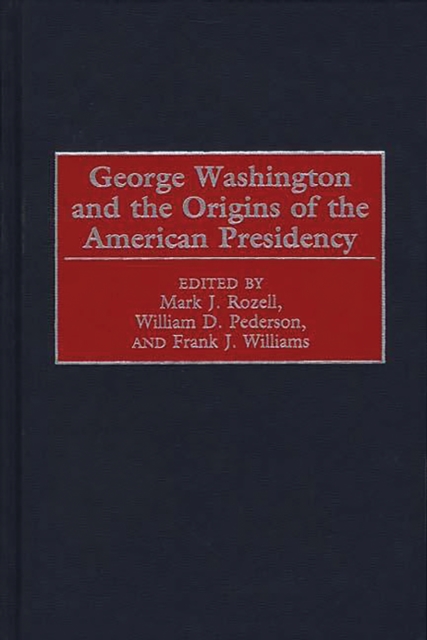
George Washington and the Origins of the American Presidency
This essay collection is a retrospective analysis of the Washington administration's importance to the understanding of the modern presidency. Contemporary presidential scholarship gives little attention to the enormous impact that Washington's actions had on establishing the presidency. Most contemporary literature starts with 1933 and, although FDR's impact on the development of the modern institution of the presidency is undeniable, Washington's actions in office also established standards for practices that continue to this day. This analysis of the Washington presidency begins with an examination of Washington's leadership and its relevance to the modern presidency. The second group of essays looks at different aspects of presidential powers and the precedents established by the Washington administration. The third section examines Washington's press coverage, looking at the origins of Washington's image and the various myths in the press as well as the president's difficult relations with his contemporary press. A thoughtful and important corrective that will be of interest to scholars, students, and researchers involved with the American presidency and its history.
eBook

George Washington : the wonder of the age
\"As editor of the award-winning Library of America collection of George Washington's writings and a curator of the great man's original papers, John Rhodehamel has established himself as an authority of our nation's preeminent founding father. Rhodehamel examines George Washington as a public figure, arguing that the man--who first achieved fame in his early twenties--is inextricably bound to his mythic status. Solidly grounded in Washington's papers and exemplary in its brevity, this approachable biography is a superb introduction to the leader whose name has become synonymous with America\"--Google Books.
Book

For Fear of an Elective King
In the spring of 1789, within weeks of the establishment of the new federal government based on the U.S. Constitution, the Senate and House of Representatives fell into dispute regarding how to address the president. Congress, the press, and individuals debated more than a dozen titles, many of which had royal associations and some of which were clearly monarchical.For Fear of an Elective Kingis Kathleen Bartoloni-Tuazon's rich account of the title controversy and its meanings.
The short, intense legislative phase and the prolonged, equally intense public phase animated and shaped the new nation's broadening political community. Rather than simply reflecting an obsession with etiquette, the question challenged Americans to find an acceptable balance between power and the people's sovereignty while assuring the country's place in the Atlantic world. Bartoloni-Tuazon argues that the resolution of the controversy in favor of the modest title of \"President\" established the importance of recognition of the people's views by the president and evidence of modesty in the presidency, an approach to leadership that fledged the presidency's power by not flaunting it.
How the country titled the president reflected the views of everyday people, as well as the recognition by social and political elites of the irony that authority rested with acquiescence to egalitarian principles. The controversy's outcome affirmed the republican character of the country's new president and government, even as the conflict was the opening volley in increasingly partisan struggles over executive power. As such, the dispute is as relevant today as in 1789.
eBook


The First Inauguration
\"Among the vicissitudes incident to life, no event could have
filled me with greater anxieties than that of which the
notification was transmitted by your order, and received on the
fourteenth day of the present month.\"
With these words to the assembled members of the Senate and
House of Representatives on April 30, 1789, George Washington
inaugurated the American experiment. It was a momentous occasion
and an immensely important moment for the nation. Never before had
a people dared to invent a system of government quite like the one
that Washington was preparing to lead, and the tensions between
hope and skepticism ran high.
In this book, distinguished scholar of early America Stephen
Howard Browne chronicles the efforts of the first president of the
United States of America to unite the nation through ceremony,
celebrations, and oratory. The story follows Washington on his
journey from Mount Vernon to the site of the inauguration in
Manhattan, recounting the festivities-speeches, parades, dances,
music, food, and flag-waving-that greeted the president-elect along
the way. Considering the persuasive power of this procession,
Browne captures in detail the pageantry, anxiety, and spirit of the
nation to arrive at a more nuanced and richly textured perspective
on what it took to launch the modern republican state.
Compellingly written and artfully argued, The First
Inauguration tells the story of the early republic-and of a
president who, by his words and comportment, provides a model of
leadership and democratic governance for today.
eBook