
Catalogue Search | MBRL


Are you sure you want to remove the book from the shelf?

{{itemTitle}}
53
result(s) for
"United States Race relations Juvenile literature."
Sort by:

The sum of us : how racism hurts everyone : adapted for young readers
\"This book, edited for young readers, is a call to action. McGhee examines how damaging racism is not only to people of color but also to white people. She offers hope and real solutions so that we can all prosper. An expert in economic policy, Heath McGhee draws lessons from her work running a think tank and her travels around the country talking to everyday Americans who are coming together to fight for a more just and inclusive society. The people she meets prove how much the stories we tell ourselves about race and belonging influence the policies that determine our shared economic future.\"-- Front jacket flap.
Book

Race, place, and suburban policing
While considerable attention has been given to encounters between black citizens and police in urban communities, there have been limited analyses of such encounters in suburban settings. Race, Place, and Suburban Policing tells the full story of social injustice, racialized policing, nationally profiled shootings, and the ambiguousness of black life in a suburban context. Through compelling interviews, participant observation, and field notes from a marginalized black enclave located in a predominately white suburb, Andrea S. Boyles examines a fraught police-citizen interface, where blacks are segregated and yet forced to negotiate overlapping spaces with their more affluent white counterparts.
eBook

A different mirror for young people : a history of multicultural America
Focusing on a variety of groups-Jews, Chinese, Japanese, Africans, Irish, Mexicans, Afghans, Vietnamese, and more-this volume tells America's story through the millions of people who came here seeking the opportunity.
Book

Cannibal Democracy
Zita Nunes argues that the prevailing narratives of identity formation throughout the Americas share a dependence on metaphors of incorporation and, often, of cannibalism. The construction of a national and racial identity through a process of assimilation, Nunes asserts, presupposes a remainder, a residue. Cannibal Democracy explores what is left behind in the formation of identities and addresses the limits of the contemporary discourse of democracy.
eBook

Let's talk about race
The author introduces the concept of race as only one component in an individual's or nation's \"story.\"
Book

PROTOCOL: The effects of resettlement/re‐entry services on crime and violence in children and youth: A systematic review
This is the protocol for a Campbell systematic review. The goal of the study is to examine the impacts of aftercare/resettlement interventions on youth with respect to criminogenic outcomes, and to examine factors related to intervention success. Specific objectives are as follows: (1) What is the impact of aftercare/resettlement interventions on youth with respect to outcomes of crime and violence? (2) How is the treatment effect of aftercare/resettlement interventions on crime and violence outcomes moderated by factors such as participant (e.g., age, race, ethnicity, sex, offender type), treatment (e.g., intensity and quality of implementation), methodological (e.g., measurement of crime, study design, timing of follow‐up measures), and study characteristics (e.g., date of publication, peer‐reviewed status)? (3) Are some types of aftercare/resettlement interventions more effective than others? (4) What are the barriers and facilitators to effective implementation of aftercare/resettlement interventions? (5) What are the mechanisms (theory of change) underlying aftercare/resettlement interventions? (6) What does the available research suggest regarding the cost of aftercare/resettlement interventions?
Journal Article

Civil rights
The Civil Rights Movement was an organized protest by Black Americans against their government and the refusal to obey unjust laws during the 1950s, 60s, and 70s. This book details the evidence in the decades before the movement that led up to the protests: black Americans were denied the right to vote, work, and become citizens.
Book
Why is America different?
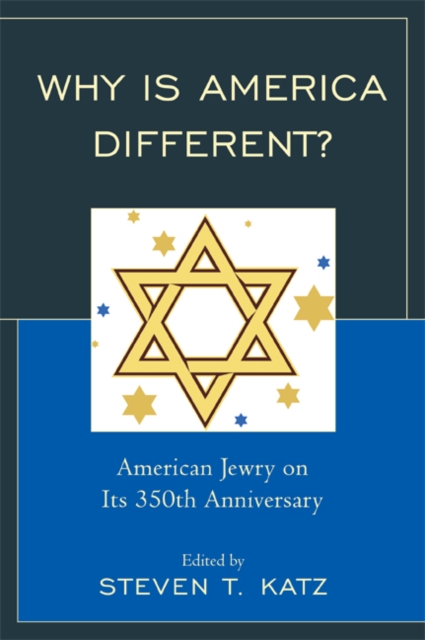
Does the American Jewish experience represent a singular communal circumstance, or does it repeat, with obvious and unavoidable variation, the older European pattern of Jewish existence? In 2004, on the occasion of the 350th anniversary of the establishment of the American Jewish community, this question seemed well worth revisiting. To explore it more fully, the Elie Wiesel Center for Judaic Studies at Boston University brought together a distinguished group of expert scholars on the main areas of American Jewish life, stretching from the colonial Jewish experience to the image of Jews in contemporary films. The present volume represents the fruit of this collective reflection and interrogation.
eBook


Stokely
Stokely Carmichael, the charismatic and controversial black activist, stepped onto the pages of history when he called for Black Power\" during a speech one humid Mississippi night in 1966. Carmichael's life changed that day, and so did America's struggle for civil rights. Black Power\" became the slogan of an era, provoking a national reckoning on race and democracy.In Stokely, preeminent civil rights scholar Peniel E. Joseph presents a groundbreaking biography of Carmichael, arguing that the young firebrand's evolution from nonviolent activist to Black Power revolutionary reflected the trajectory of a generation radicalized by the violence and unrest of the late 1960s. Fed up with the slow progress of the civil rights movement, Carmichael urged blacks to turn the rhetoric of freedom into a reality, inspiring countless African Americans to demand immediate political self-determination. A nuanced and authoritative portrait, Stokely captures the life of the man whose uncompromising vision reshaped the struggle for African American equality.
eBook