
Catalogue Search | MBRL


Are you sure you want to remove the book from the shelf?

{{itemTitle}}
8
result(s) for
"United States Social life and customs 20th century Pictorial works."
Sort by:


Big Thicket People
Living off the land—hunting, fishing, and farming, along with a range of specialized crafts that provided barter or cash income—was a way of life that persisted well into the twentieth century in the Big Thicket of southeast Texas. Before this way of life ended with World War II, professional photographer Larry Jene Fisher spent a decade between the 1930s and 1940s photographing Big Thicket people living and working in the old ways. His photographs, the only known collection on this subject, constitute an irreplaceable record of lifeways that first took root in the southeastern woodlands of the colonial United States and eventually spread all across the Southern frontier. Big Thicket People presents Fisher's photographs in suites that document a wide slice of Big Thicket life-people, dogs, camps, deer hunts, farming, syrup mills, rooter hogs and stock raising, railroad tie making, barrel stave making, chimney building, peckerwood sawmills, logging, turpentining, town life, church services and picnics, funerals and golden weddings, and dances and other amusements. Accompanying each suite of images is a cultural essay by Thad Sitton, who also introduces the book with a historical overview of life in the Big Thicket. C. E. Hunt provides an informative biography of Larry Jene Fisher.
eBook


To The City
In the 1930s and 1940s, as the United States moved from a rural to an urban nation, the pull of the city was irrepressible. It was so strong that even a photographic mission designed to record the essence of rural America could not help but capture the energy of urbanization too.To the Cityshowcases over 100 photographs from the Farm Security Administration (FSA) project along with extracts from the Works Progress Administration (WPA) guidebooks and oral histories, to convey the detail and dimensions of that transformation.
This artfully grouped collection of photographs includes magnificent images by notable photographers Dorothea Lange, Walker Evans and Gordon Parks, among many others. Foulkes organizes this history of Americana into five themes: Intersection; Traffic; High Life and Low Life; The City in the Country; and Citizens to illuminate the changes in habits, landscapes, and aspirations that the march to cities encompassed.
As the rural past holds symbolic sway and the suburb presents demographic force, the urban portion of our history-why and how cities have been a destination for hope-recedes from view.To the Cityis a thoughtful, engaging reminder.
eBook

For a love of his people : the photography of Horace Poolaw
\"Horace Poolaw (Kiowa, 1906-84) was born during a time of great change for his American Indian people as they balanced age-old traditions with the influences of mainstream America. A rare American Indian photographer who documented Indian subjects, Poolaw began making a visual history in the mid-1920s and continued for the next fifty years. [This book] is based on the Poolaw Photography Project, a research initiative established by Poolaw's daughter Linda in 1989 at Stanford University and carried on by Native scholars Nancy Marie Mithlo (Chiricahua Apache) and Tom Jones (Ho-Chunk) of the University of Wisconsin-Madison\"-- Provided by publisher.
Book
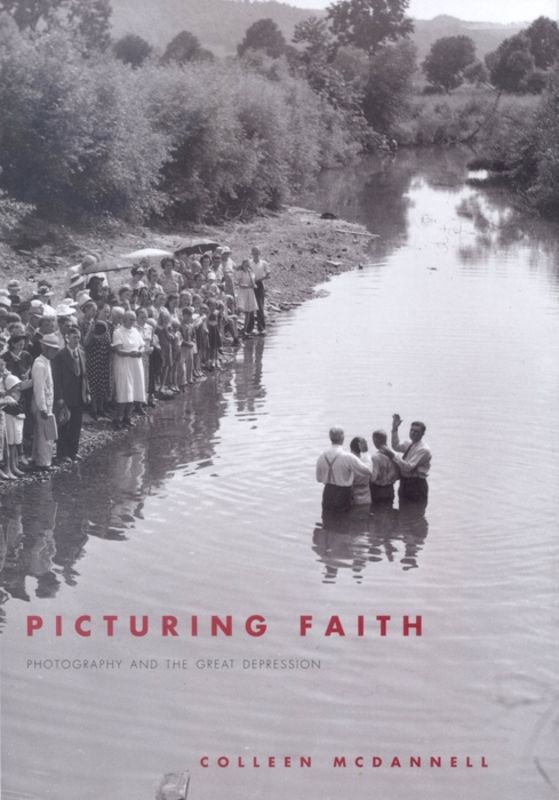
Picturing Faith
In the midst of the Great Depression, the American government initiated one of the most ambitious national photographic projects ever undertaken. Such photographers as Dorothea Lange, Walker Evans, and Gordon Parks-all then virtually unknown-were commissioned to chronicle in pictures the economic struggle and social dislocation of the Depression era. They explored every facet of rural life in an effort to document the troubles, as well as the spirit, of the nation.
Fanning out across the country, these photographers captured a nation alive with religious faith-from Dust Bowl migrants singing hymns to orthodox Jews praying in rural Connecticut. InPicturing Faith,the preeminent historian of religion Colleen McDannell recounts the history of this extraordinary project, telling the stories of the men and women who participated in it and exploring these little-known images of America.
Lavishly illustrated,Picturing Faithteases out the various and conflicting ways that these photographers portrayed American religion and enhances our understanding of how religion was practiced during this critical period of American history.
eBook
Robert frank’s the americans
In the mid-50s, Robert Frank embarked on a ten-thousand-mile road trip across post-war America, capturing thousands of photographs that resulted in The Americans, which represents a seminal moment in both photography and in America's emerging understanding of itself. Jonathan Day revisits this work and contributes a thoughtful critical commentary.
eBook
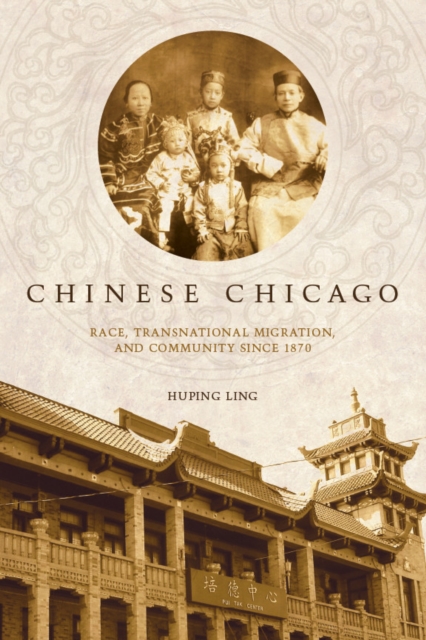
Chinese Chicago : race, transnational migration, and community since 1870
Numerous studies have documented the transnational experiences and local activities of Chinese immigrants in California and New York in the late nineteenth and early twentieth centuries. Less is known about the vibrant Chinese American community that developed at the same time in Chicago. In this sweeping account, Huping Ling offers the first comprehensive history of Chinese in Chicago, beginning with the arrival of the pioneering Moy brothers in the 1870s and continuing to the present.
Ling focuses on how race, transnational migration, and community have defined Chinese in Chicago. Drawing upon archival documents in English and Chinese, she charts how Chinese made a place for themselves among the multiethnic neighborhoods of Chicago, cultivating friendships with local authorities and consciously avoiding racial conflicts. Ling takes readers through the decades, exploring evolving family structures and relationships, the development of community organizations, and the operation of transnational businesses. She pays particular attention to the influential role of Chinese in Chicago's academic and intellectual communities and to the complex and conflicting relationships among today's more dispersed Chinese Americans in Chicago.
eBook