
Catalogue Search | MBRL


Are you sure you want to remove the book from the shelf?

{{itemTitle}}
9
result(s) for
"United States-Social conditions-1980-2020"
Sort by:
Maximum Vantage
A veteran journalist speaks truth to power on issues that matter to the nation Florida Book Awards, Silver Medal for Florida Nonfiction In this collection of columns spanning the years 2000-2019, veteran journalist Bill Maxwell tackles important issues faced by Florida and broader American society that remain as relevant as ever. Demonstrating the courage to take on controversy and the signature pithy style that have won him a nationwide readership, Maxwell offers his opinion on a wide variety of questions with a focus on race, agricultural labor, education, and the environment. Maxwell writes from the vantage point of a Florida native who grew up as a migrant farmworker at the end of the Jim Crow era; a Black man who participated in the civil rights movement to help make the state more equitable; a college professor who lectured about the harms of racial discrimination; and an environmentalist who has lived in the Everglades as artist-in-residence. Grounding his social criticism in firsthand knowledge of the contradictions of life in the American South, Maxwell uses reason and research to highlight uncomfortable realities and injustices that persist in the twenty-first century. Believing that informed citizens will make decisions that positively impact society, Maxwell prompts readers to examine their own perspectives, question their assumptions, and come to a deeper understanding of their state and nation. Publication of this work made possible by a Sustaining the Humanities through the American Rescue Plan grant from the National Endowment for the Humanities.
eBook

Embodying American Slavery in Contemporary Culture
This study explores contemporary novels, films, performances, and reenactments that depict American slavery and its traumatic effects by invoking a time-travel paradigm to produce a representational strategy of \"bodily epistemology.\" Disrupting the prevailing view of traumatic knowledge that claims that traumatic events are irretrievable and accessible only through oblique reference, these novels and films circumvent the notion of indirect reference by depicting a replaying of the past, forcing present-day protagonists to witness and participate in traumatic histories that for them are neither dead nor past. Further, live performances and reenactments of slavery also rely on the time-travel motif (and the requisite suspension of disbelief) as a strategy to confront contemporary audiences with such spectacles as slave ship captivity, slave auctions, or a slave's decision to escape to freedom._x000B__x000B_As Lisa Woolfork cogently reveals, these cultural expressions indicate a concern that the traumatic meanings and consequences of American slavery have been lost to those living in the twentieth and twenty-first centuries. Woolfork analyzes how these works deploy a representational strategy that challenges the divide between past and present, imparting to their re-creations of American slavery a physical and emotional energy to counter America's apathetic or amnesiac attitude about the trauma of the slave past.
eBook

Emerging Intersections
The United States is known as a \"melting pot\" yet this mix tends to be volatile and contributes to a long history of oppression, racism, and bigotry.
Emerging Intersections, an anthology of ten previously unpublished essays, looks at the problems of inequality and oppression from new angles and promotes intersectionality as an interpretive tool that can be utilized to better understand the ways in which race, class, gender, ethnicity, and other dimensions of difference shape our lives today. The book showcases innovative contributions that expand our understanding of how inequality affects people of color, demonstrates the ways public policies reinforce existing systems of inequality, and shows how research and teaching using an intersectional perspective compels scholars to become agents of change within institutions. By offering practical applications for using intersectional knowledge, Emerging Intersections will help bring us one step closer to achieving positive institutional change and social justice.
eBook
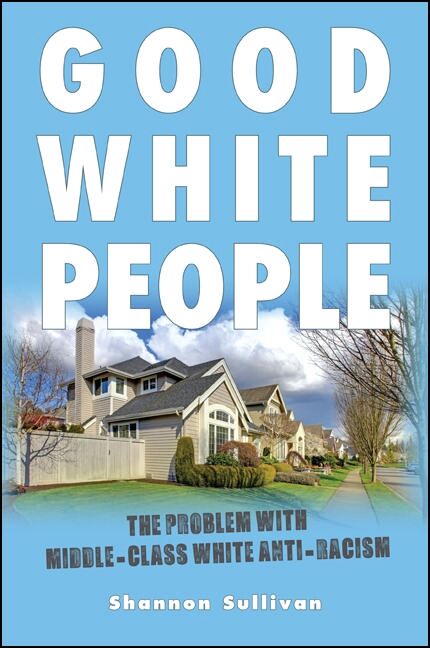
Good White People
Winner of the 2016 Society of Professors of Education
Outstanding Book Award presented by the Society of Professors of
Education 2014 CHOICE Outstanding
Academic Title Building on her book Revealing
Whiteness , Shannon Sullivan identifies a constellation of
attitudes common among well-meaning white liberals that she sums up
as \"white middle-class goodness,\" an orientation she critiques for
being more concerned with establishing anti-racist bona fides than
with confronting systematic racism and privilege. Sullivan
untangles the complex relationships between class and race in
contemporary white identity and outlines four ways this orientation
is expressed, each serving to establish one's lack of racism: the
denigration of lower-class white people as responsible for ongoing
white racism, the demonization of antebellum slaveholders, an
emphasis on colorblindness-especially in the context of white
childrearing-and the cultivation of attitudes of white guilt,
shame, and betrayal. To move beyond these distancing strategies,
Sullivan argues, white people need a new ethos that acknowledges
and transforms their whiteness in the pursuit of racial justice
rather than seeking a self-righteous distance from it.
eBook

Age of Fracture
Rodgers presents the first broadly gauged history of the ideas and arguments that profoundly reshaped America in the last quarter of the twentieth century. From the ways in which Ronald Reagan changed the formulas of the Cold War presidency to the era’s intense debates over gender, race, economics, and history, it maps the dynamics through which mid-twentieth-century ideas of structure fell apart between the mid 1970s and the end of the century. Where conventional histories of modern America have focused on specific decades, the book traces the larger transformations in social ideas and visions that reshaped the era from the early 1970s through the end of the century.
eBook

The Fractious Nation?
What are we to make of the speed with which the new climate of national solidarity emerged after September 11? Does it not look strange against a backdrop of the much-touted divisiveness of American life? In truth,The Fractious Nation?makes clear, the contrast of the time of divisiveness before and the time of unity that followed is much too stark, indeed. Less than a year before two planes slammed into the World Trade Center, the 2000 presidential election produced not just the starkly blue and red electoral map but also the two tribal Americas those totemic colors emblazoned. And from the cultural wars to immigration restriction, from the Christian right to political correctness, recent decades have witnessed much hand-wringing on the left and the right about the fragmentation of American life.The Fractious Nation?enlists the critical intelligence of fourteen distinguished contributors who illuminate the schisms in American life and the often volatile debates they have inspired in the realms of culture, ethnic and racial pluralism, and political life. The collective wisdom ofThe Fractious Nation?suggests a counterview to all the overheated rhetoric. The authors warn against fixating on flamboyant incidents of racial conflict when black-and-white values overlap considerably. On a range of cultural issues, the gap between our citizens has closed as well. And even as the rivalry between liberalism and conservatism transmutes into new forms, the political center remains vital and democratic. We are tied together not just by shared values but by institutions-the Constitution, the culture of consumption, the etiquette of ethnic respect. In private life and public affairs, our nation has expanded the meaning of democratic citizenship. Still, there's no room for self-congratulations here. Tendencies toward preoccupation with private life encourage indifference to the suffering of the less privileged. This is also one of the main failings of the narrative of fragmentation: In its focus on matters of shared values, it too distracts from issues of poverty and inequality that also fragment the human spirit.Contributors:Richard Bernstein, John J. DiIulio Jr., Paul DiMaggio, E.J. Dionne, Jr., Kevin Gaines, Jennifer Hochschild, Douglas S. Massey, Martha Minow, Cecilia Muñoz, Jonathan Rieder, Theda Skocpol, Paul Starr, Mary C. Waters, Jack Wertheimer
eBook

Beggars and Thieves
As the incidence of violent crime rises in the United States, so does the public demand for a solution. But what will work? Mark S. Fleisher has spent years among inmates in jails and prisons and on the streets with thieves, gang members, addicts, and life-long criminals in Seattle and other cities across the country. In
Beggars and Thieves , he writes about how and why they become and remain offenders, and about the actual role of jails and prisons in efforts to deter crime and rehabilitate criminals. Fleisher shows, with wrenching firsthand accounts, that parents who are addicts, abusers, and criminals beget irreversibly damaged children who become addicts, abusers, and criminals. Further, Fleisher contends that many well-intentioned educational and vocational training programs are wasted because they are offered too late to help. And, he provides sobering evidence that many youthful and adult offenders find themselves better off in prison—with work to do, medical care, a clean place to sleep, regular meals, and stable social ties—than they are in America’s cities. Fleisher calls for anti-crime policies that are bold, practical, and absolutely imperative. He prescribes life terms for violent offenders, but in prisons structured as work communities, where privileges are earned through work in expanded, productive industries that reduce the financial burden of incarceration on the public. But most important, he argues that the only way to prevent street crime, cut prison growth, and reduce the waste of money and human lives is to permanently remove brutalized children from criminal, addicted, and violent parents.
eBook

The schoolhome : rethinking schools for changing families
Drawing selectively from reform movements of the past and relating them to the unique needs of today's parents and children, Jane Martin presents a philosophy of education that is responsive to America's changed and changing realities.
eBook
The World Sixties Made
How can we make sense of the fact that after decades of right-wing political mobilizing the major social changes wrought by the Sixties are more than ever part of American life?The World the Sixties Made,the first academic collection to treat the last quarter of the twentieth century as a distinct period of U.S. history, rebuts popular accounts that emphasize a conservative ascendancy. The essays in this volume survey a vast historical terrain to tease out the meaning of the not-so-long ago. They trace the ways in which recent U.S. culture and politics continue to be shaped by the legacy of the New Left's social movements, from feminism to gay liberation to black power. Together these essays demonstrate that the America that emerged in the 1970s was a nation profoundly, even radically democratized.
eBook