
Catalogue Search | MBRL


Are you sure you want to remove the book from the shelf?

{{itemTitle}}
17
result(s) for
"United States. Army African American troops History 20th century."
Sort by:

Freedom struggles : African Americans and World War I
For many of the 200,000 African American soldiers sent to Europe with the American Expeditionary Forces in WWI, encounters with French civilians and colonial African troops led them to imagine a world beyond Jim Crow. This work explores how WWI mobilized a generation.
Book

An Army Afire
By the late 1960s, what had been widely heralded as the best qualified, best-trained army in US history was descending into crisis as the Vietnam War raged without end. Morale was tanking. AWOL rates were rising. And in August 1968, a group of Black soldiers seized control of the infamous Long Binh Jail, burned buildings, and beat a white inmate to death with a shovel. The days of \"same mud, same blood\" were over, and a new generation of Black GIs had decisively rejected the slights and institutional racism their forefathers had endured. As Black and white soldiers fought in barracks and bars, with violence spilling into surrounding towns within the US and in West Germany, Vietnam, South Korea, and Japan, army leaders grew convinced that the growing racial crisis undermined the army's ability to defend the nation. Acclaimed military historian Beth Bailey shows how the US Army tried to solve that racial crisis (in army terms, \"the problem of race\"). Army leaders were surprisingly creative in confronting demands for racial justice, even willing to challenge fundamental army principles of discipline, order, hierarchy, and authority. Bailey traces a frustrating yet fascinating story, as a massive, conservative institution came to terms with demands for change.
eBook

Harlem Hellfighters : African-American heroes of World War I
\"When World War I began, it seems unlikely that a unit such as the Harlem Hellfighters would ever be formed. Given the nickname by their German foes who admired their bravery, the Harlem Hellfighters were members of an all-black regiment. Learn more about the key roles these brave men played in critical battles and how they helped secure an Allied victory\"--Back cover.
Book
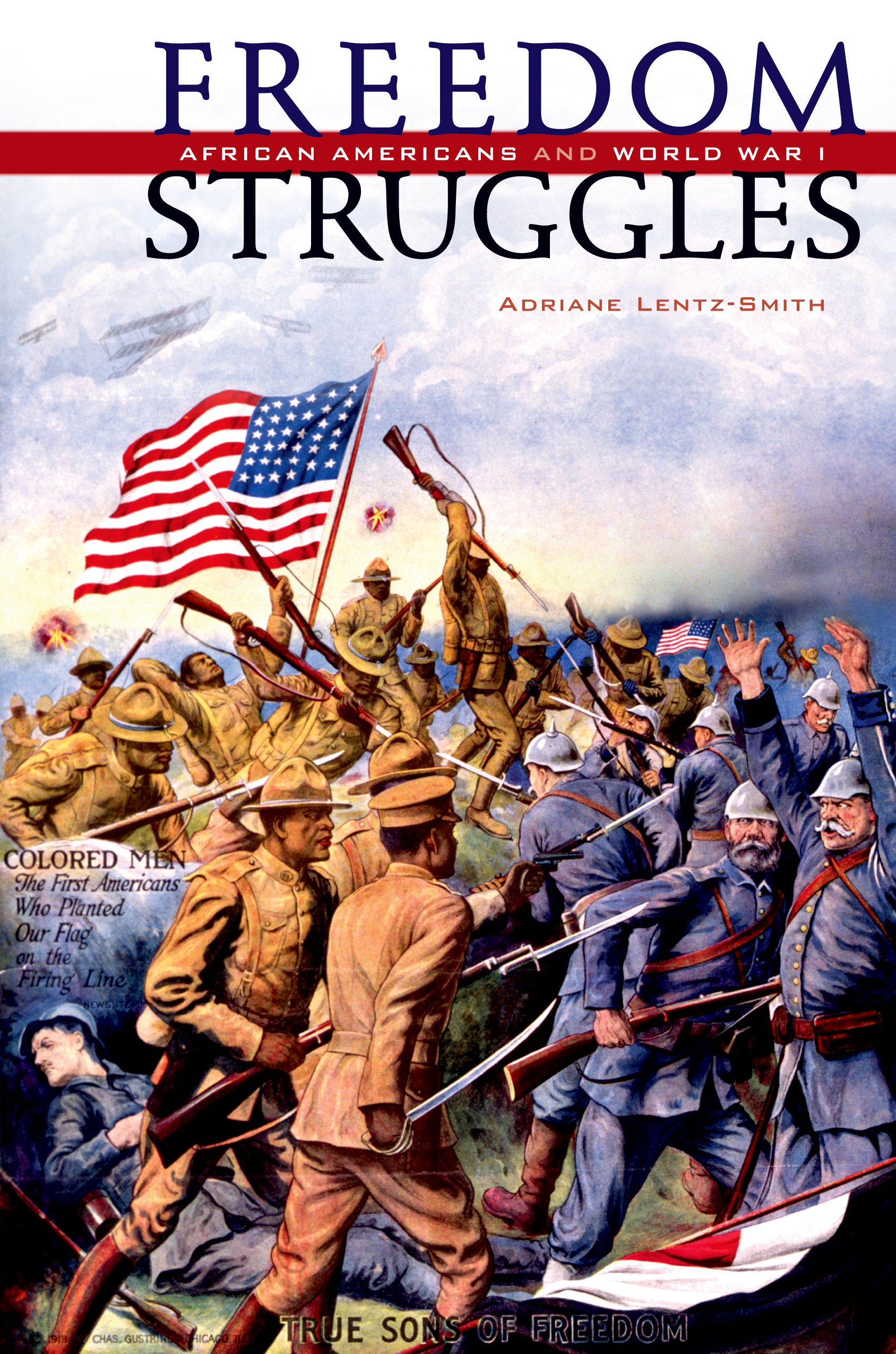
Freedom struggles : African Americans and World War I
For many of the 200,000 black soldiers sent to Europe with the American Expeditionary Forces in World War I, encounters with French civilians and colonial African troops led them to imagine a world beyond Jim Crow. They returned home to join activists working to make that world real. In narrating the efforts of African American soldiers and activists to gain full citizenship rights as recompense for military service, Adriane Lentz-Smith illuminates how World War I mobilized a generation. Black and white soldiers clashed as much with one another as they did with external enemies. Race wars within the military and riots across the United States demonstrated the lengths to which white Americans would go to protect a carefully constructed caste system. Inspired by Woodrow Wilson's rhetoric of self-determination but battered by the harsh realities of segregation, African Americans fought their own \"war for democracy,\" from the rebellions of black draftees in French and American ports to the mutiny of Army Regulars in Houston, and from the lonely stances of stubborn individuals to organized national campaigns. African Americans abroad and at home reworked notions of nation and belonging, empire and diaspora, manhood and citizenship. By war's end, they ceased trying to earn equal rights and resolved to demand them. This beautifully written book reclaims World War I as a critical moment in the freedom struggle and places African Americans at the crossroads of social, military, and international history.
eBook

Brotherhood in combat : how African Americans found equality in Korea and Vietnam
\"Explores integration in the military and society during the wars in Korea and Vietnam by incorporating military, diplomatic, social, race and ethnic topics, specifically addressing how racial tension during this period was present in rear units, and for the most part, nonexistent in front line units.\"--Provided by publisher.
Book

A more unbending battle : the harlem hellfighters' struggle for freedom in WWI and equality at home
The untold story of the Harlem Hellfighters, the all-black WWI regiment from Harlem whoagainst all oddsbecame one of the most feared and decorated units of the war.
eBook

Harlem hellfighters
Harlem Hellfighters were African American soldiers who fought for the United States during World War I.
Book
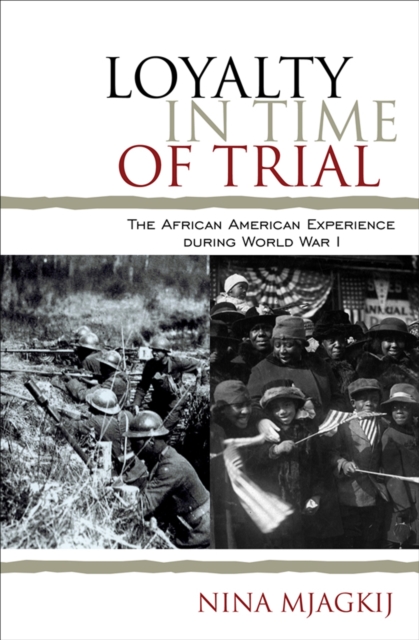
Loyalty in Time of Trial
In one of the few book-length treatments of the subject, Nina Mjagkij conveys the full range of the African American experience during the \"Great War.” Prior to World War I, most African Americans did not challenge the racial status quo. But nearly 370,000 black soldiers served in the military during the war, and some 400,000 black civilians migrated from the rural South to the urban North for defense jobs. Following the war, emboldened by their military service and their support of the war on the home front, African Americans were determined to fight for equality. These two factors forced America to confront the impact of segregation and racism.
eBook

Buffalo Soldiers in the West
In the decades following the Civil War, scores of African Americans served in the U.S. Army in the West. The Plains Indians dubbed them buffalo soldiers, and their record in the infantry and cavalry, a record full of dignity and pride, provides one of the most fascinating chapters in the history of the era.
This anthology focuses on the careers and accomplishments of black soldiers, the lives they developed for themselves, their relationships to their officers (most of whom were white), their specialized roles (such as that of the Black Seminoles), and the discrimination they faced from the very whites they were trying to protect. In short, this volume offers important insights into the social, cultural, and communal lives of the buffalo soldiers.
The selections are written by prominent scholars who have delved into the history of black soldiers in the West. Previously published in scattered journals, the articles are gathered here for the first time in a single volume, providing a rich and accessible resource for students, scholars, and interested general readers. Additionally, the readings in this volume serve in some ways as commentaries on each other, offering in this collected format a cumulative mosaic that was only fragmentary before.
Volume editors Glasrud and Searles provide introductions to the volume and to each of its four parts, surveying recent scholarship and offering an interpretive framework. The bibliography that closes the book will also commend itself as a valuable tool for further research.
eBook

Brothers to the Buffalo Soldiers : perspectives on the African American militia and volunteers, 1865-1917
During the late nineteenth and early twentieth centuries, African American men were seldom permitted to join the United States armed forces. There had been times in early U.S. history when black and white men fought alongside one another; it was not uncommon for integrated units to take to battle in the Revolutionary War. But by the War of 1812, the United States had come to maintain what one writer called \"a whitewashed army.\" Yet despite that opposition, during the early 1800s, militia units made up of free black soldiers came together to aid the official military troops in combat. Many black Americans continued to serve in times of military need. Nearly 180,000 African Americans served in units of the U.S. Colored Troops during the Civil War, and others, from states such as Massachusetts, Rhode Island, Missouri, and Kansas, participated in state militias organized to protect local populations from threats of Confederate invasion. As such, the Civil War was a turning point in the acceptance of black soldiers for national defense. By 1900, twenty-two states and the District of Columbia had accepted black men into some form of military service, usually as state militiamen—brothers to the \"buffalo soldiers\" of the regular army regiments, but American military men regardless. Little has been published about them, but Brothers to the Buffalo Soldiers: Perspectives on the African American Militia and Volunteers, 1865–1919, offers insights into the varied experiences of black militia units in the post–Civil War period. The book includes eleven articles that focus either on \"Black Participation in the Militia\" or \"Black Volunteer Units in the War with Spain.\" The articles, collected and introduced by author and scholar Bruce A. Glasrud, provide an overview of the history of early black citizen-soldiers and offer criticism from prominent academics interested in that experience. Brothers to the Buffalo Soldiers discusses a previously little-known aspect of the black military experience in U.S. history, while deliberating on the discrimination these men faced both within and outside the military. Chosen on the bases of scholarship, balance, and readability, these articles provide a rare composite picture of the black military man's life during this period. Brothers to the Buffalo Soldiers offers both a valuable introductory text for students of military studies and a solid source of material for African American historians.
eBook