
Catalogue Search | MBRL


Are you sure you want to remove the book from the shelf?

{{itemTitle}}
669
result(s) for
"United States. Selective Service System."
Sort by:

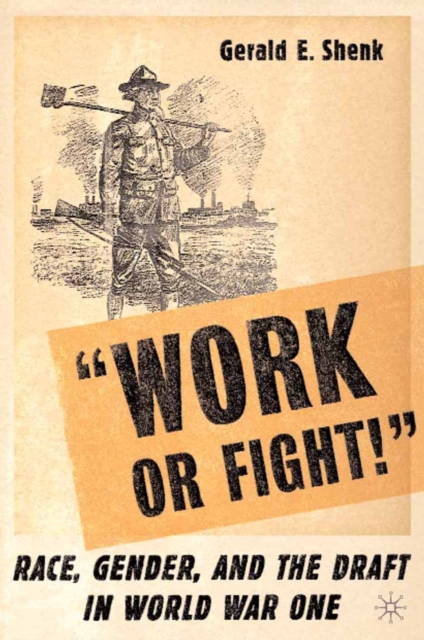
\Work or fight!\ : race, gender, and the draft in World War One
During World War I the U.S. demanded that all able-bodied men work or fight. White men who were husbands and fathers, owned property or worked at approved jobs had the benefits of citizenship without fighting. Others were often barred from achieving these benefits. This book tells the stories of those affected by the Selective Service System.
eBook
Draft Reform and the Elimination of Draft Calls
Presents plan for reducing draft calls to zero, and outlines draft reforms which restrict or eliminate various types of deferments
Government Document
Standby Draft
Provides guidelines for continuing draft lottery and local draft board structures through 1973, and operation of standby draft structures for 1974 and beyond
Government Document
NSAM No. 363, Dated August 8, 1967, Interagency Advisory Committee on Essential Activities and Critical Occupations
Interagency Advisory Committee is urged to complete review of lists of essential activities and critical occupations that enable individuals to obtain a draft deferment
Government Document
Interagency Advisory Committee on Essential Activities and Critical Occupations
Interagency advisory committee will review list of essential activities and critical occupations that enable individuals to obtain draft deferment
Government Document
The U.S. Response to Afghanistan Includes Copy of President's State of the Union Address, 1/23/80
U.S. Selective Service System will be reactivated and Regulation of the activities of Intelligence agencies will be relaxed ; Carter Administration (20 January 1977-20 January 1981) has increased Military budgets and strengthened [Military capability; Rapid deployment forces; North Atlantic Treaty Organization; U.S. Navy] ; Jimmy Carter states that Aggression against the nations of the Persian Gulf would be seen as a Military threat to vital United States interests and would be repelled by Military actions if necessary ; Jimmy Carter tells the U.S. Congress that National security is endangered by the [Soviet Union Invasion of Afghanistan (December 1979); Iran Hostage Crisis (4 November 1979-20 January 1981)] and by U.S. dependence on Oil from the [Middle East; Persian Gulf]
Government Document

Using machine learning to develop a clinical prediction model for SSRI-associated bleeding: a feasibility study
Introduction
Adverse drug events (ADEs) are associated with poor outcomes and increased costs but may be prevented with prediction tools. With the National Institute of Health
All of Us (AoU)
database, we employed machine learning (ML) to predict selective serotonin reuptake inhibitor (SSRI)-associated bleeding.
Methods
The
AoU
program, beginning in 05/2018, continues to recruit ≥ 18 years old individuals across the United States. Participants completed surveys and consented to contribute electronic health record (EHR) for research. Using the EHR, we determined participants who were exposed to SSRIs (citalopram, escitalopram, fluoxetine, fluvoxamine, paroxetine, sertraline, vortioxetine). Features (
n
= 88) were selected with clinicians’ input and comprised sociodemographic, lifestyle, comorbidities, and medication use information. We identified bleeding events with validated EHR algorithms and applied logistic regression, decision tree, random forest, and extreme gradient boost to predict bleeding during SSRI exposure. We assessed model performance with area under the receiver operating characteristic curve statistic (AUC) and defined clinically significant features as resulting in > 0.01 decline in AUC after removal from the model, in three of four ML models.
Results
There were 10,362 participants exposed to SSRIs, with 9.6% experiencing a bleeding event during SSRI exposure. For each SSRI, performance across all four ML models was relatively consistent. AUCs from the best models ranged 0.632–0.698. Clinically significant features included health literacy for escitalopram, and bleeding history and socioeconomic status for all SSRIs.
Conclusions
We demonstrated feasibility of predicting ADEs using ML. Incorporating genomic features and drug interactions with deep learning models may improve ADE prediction.
Journal Article

Framing the moron
Many people are shocked upon discovering that tens of thousands of innocent persons in the United States were involuntarily sterilized, forced into institutions, and otherwise maltreated within the course of the eugenic movement (1900–30). Such social control efforts are easier to understand when we consider the variety of dehumanizing and fear-inducing rhetoric propagandists invoke to frame their potential victims. This book details the major rhetorical themes employed within the context of eugenic propaganda, drawing largely on original sources of the period. Early in the twentieth century the term “moron” was developed to describe the primary targets of eugenic control. This book demonstrates how the image of moronity in the United States was shaped by eugenicists. This book will be of interest not only to disability and eugenic scholars and historians, but to anyone who wants to explore the means by which pejorative metaphors are used to support social control efforts against vulnerable community groups.
eBook

Organic and conventional farmers differ in their perspectives on cover crop use and breeding
Cover crops play an important role in agricultural sustainability. Unlike commodity cash crops, however, there has been relatively little cover crop breeding research and development. We conducted an online survey to evaluate: (a) the perspectives of organic and conventional farmers in the USA who use cover crops and (b) the specific cover crop traits that are important to farmers. We recruited participants from both organic and conventional agriculture networks and 69% of respondents reported that they farmed organic land. In addition to demographic data and information on management practices, we quantified farmer perspectives on four winter annual cover crops: (1) Austrian winter pea, (2) crimson clover, (3) hairy vetch and (4) cereal rye. Overall, respondents represented a wide range of states, farm sizes, plant hardiness zones and cash crops produced. Of the 417 full responses received, 87% of respondents reported that they used cover crops. The maximum amount farmers were willing to spend on cover crop seed varied by farmer type: 1% of conventional farmers versus 19% of organic farmers were willing to spend over US$185 ha−1 (US$75 acre−1). Organic and conventional farmers differed in terms of the reasons why they grew cover crops, with organic farmers placing greater value on the ecosystem services from cover crops. More organic (63%) than conventional (51%) farmers agreed that participatory breeding was important for cover crop variety development (P = 0.047). Both groups shared strong support for cover crop research and considered many of the same traits to be important for breeding. For the legume cover crops, nitrogen fixation was considered the most important trait, whereas winter hardiness, early vigor, biomass production and weed suppression were the most important traits for cereal rye. Our results illustrate common interests as well as differences in the perspectives between organic and conventional farmers on cover crops and can be used to inform nascent cover crop breeding efforts.
Journal Article