
Catalogue Search | MBRL


Are you sure you want to remove the book from the shelf?

{{itemTitle}}
12
result(s) for
"Universities and colleges Canada Sociological aspects."
Sort by:

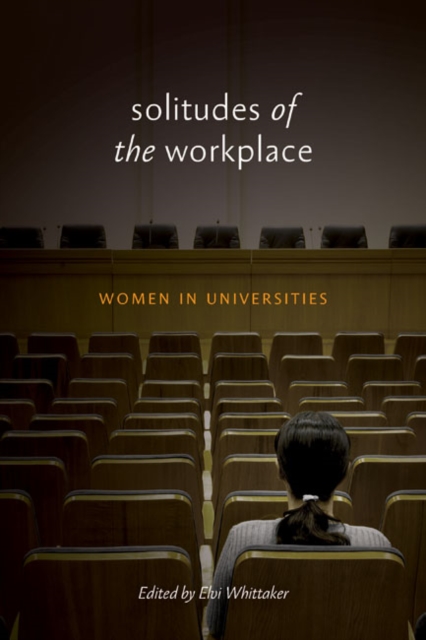
Solitudes of the Workplace
Solitudes of the Workplace focuses on experiences of marginalization, uncertainty and segregation created by the hierarchical structures of categories in universities and by gendered identities. Studying a wider range of women’s roles in universities than prior research, the experiences of support staff, senior administrators, researchers, non-academic administrators, and contract teachers are added to those of faculty and students. The essays show how attempts to introduce new knowledge are manoeuvered and the resistance this process can encounter, as well as the ways in which institutional policies can blur and change identities. Addressing longstanding issues such as the entanglement of gender and the assessment of merit, attention is also given to how new identities are claimed and successfully projected. Essays presenting workers' points of view reveal the confusion that occurs when official policy and everyday knowledge conflict, when processes like tenure and other status changes create troublesome realities, and when it becomes routine to experience status denigration. Within the social order of the university and its existing boundaries, gender issues of past decades sometimes surface, but all too often remain an unspoken presence. Solitudes of the Workplace is a revealing look at the isolating experiences and inequities inherent in these institutional environments.
eBook

Faculty members’ use of artificial intelligence to grade student papers: a case of implications
This paper presents the case of an adjunct university professor to illustrate the dilemma of using artificial intelligence (AI) technology to grade student papers. The hypothetical case discusses the benefits of using a commercial AI service to grade student papers—including discretion, convenience, pedagogical merits of consistent feedback for students, and advances made in the field that yield high-quality work—all of which are achieved quickly. Arguments against using AI to grade student papers involve cost, privacy, legality, and ethics. The paper discusses career implications for faculty members in both situations and concludes with implications for researchers within the discourse on academic integrity.
Journal Article

“Building the New Jerusalem in Canada's Green and Pleasant Land”: The Social Gospel and the Roots of English-Language Academic Sociology in Canada, 1889-1921
According to the conventional account of the history of English-Canadian sociology, the discipline was established in the 1920s at McGill, followed by developments at Dalhousie, Toronto and elsewhere. I dispute this account by documenting the substantial institutional footprint of so-called “social gospel” sociology in Canada's Protestant universities and religious colleges, 1889-1921: courses taught; faculty appointments made; programs established. Between 1889 and 1921, 28 men, many of them clerics, taught sociology for two years or more in one of Canada's English-language universities or Protestant denominational colleges. By 1921, 11 institutions offered sociology courses, 7 institutions had made a dedicated faculty appointment in sociology, and 8 institutions offered a program in sociology. In most cases, their teaching reflected the political – but not theological – principles of the social gospel. I argue that these men are the true pioneers of Canadian sociology and that we should rewrite the first chapter of Canadian sociology to give them their due.
Journal Article

Les comportements sexuels et le harcèlement sexuel en milieu postsecondaire dans l'Ouest canadien
Risky sexual behaviour associated with sexually transmitted infections (STI) and sexual harassment are important topics in university environments and public health. This article compares these behaviours between student cohorts in 2005 and 2012 from a Western Canadian university. The sexual habits of young adults with multiple partners are also examined.
Researchers conducted a comparative study of sexual behaviour among approximately 400 students per cohort. Estimates of prevalence and adjusted odds for age group and sex were used to analyze associations between the two cohorts and their sexual behaviours.
Trends in sexual behaviour of young adults are maintained with respect to the proportion of those who are sexually active and their number of partners. A reduction in sexual harassment is observed, especially towards women. The condom remains the most frequently used method of contraception, but its use is erratic, particularly among respondents with multiple sexual partners. Drinking and the use of drugs predisposes to unplanned sexual relations and to non-use of means to prevent STIs and pregnancy, particularly among respondents with multiple sexual partners.
The postsecondary student population should be informed of the risks associated with multiple sexual partners and alcohol and drug consumption leading to unplanned sexual acts. A sexual harassment policy contributes to reduction of incidents of harassment within a postsecondary institution.
Journal Article
Canada's Impossible Science: Historical and Institutional Origins of the Coming Crisis in Anglo-Canadian Sociology
Anglo-Canadian sociology is in a period of intense internal debate and generational transition, with signs of an institutional crisis on the horizon. This essay provides a reflexive sociological account of Anglo-Canadian sociology that stresses its potential for developing a unique, multi-method, theoretically diverse and critical sociological imagination. In the effort to stimulate further research and informed debate, historical and institutional explanations of English Canadian sociology's potential organizational crisis are outlined. Drawing on the sociology of education, historical-comparative sociology, organizational analysis, political sociology, the history of Anglo-Canadian sociology and the sociology of knowledge/intellectuals, three broad explanations are stressed. Sociology in English Canada runs the risk of becoming an \"impossible science\" because of the relatively flat nature of Canadian institutions of higher learning, the discipline's historical and contemporary colonial relationship with England and the starting point of the discipline in the social turmoil of the 1960s in a small social democratic oriented nation. Suggestions are made for an open and honest dialogue on the discipline's future among generations of Canadian sociologists. /// La sociologie canadienne anglaise vit une période de débat interne intense et de transition de génération, et des signes de crise institutionnelle se manifestent à l'horizon. Cet article se veut un relevé sociologique autoréférentiel de la sociologie canadienne anglaise mettant l'emphase sur son potentiel de développer une imagination sociologique critique et théoriquement variée, unique et à plusieurs méthodes. Afin de stimuler d'autres recherches et débats éclairés et des explications historiques et institutionnelles sur la crise organisationnelle potentielle de la sociologie canadienne anglaise y sont énoncés. Trois grandes explications y sont données en faisant appel à la sociologie de l'éducation, la sociologie historique comparative, l'analyse organisationnelle, la sociologie politique, l'histoire de la sociologie canadienne anglaise et la sociologie du savoir et des intellectuels, Au Canada anglais, la sociologie coure le risque de devenir « une science impossible » en raison de la nature relativement monotone des établissements d'enseignement supérieurs canadiens, de la relation coloniale historique et contemporaine de cette discipline avec l'Angleterre et du point de départ de cette discipline dans l'agitation sociale des années soixante dans une petite nation d'orientation social-démocrate. On y suggère un dialogue ouvert et honnête sur l'avenir de la discipline parmi des générations de sociologues canadiens.
Journal Article

Revisiting Trust in Symbolic Interaction: Presentations of Trust Development in University Administration
Trust development has been studied from many sociological perspectives. Despite its early ventures, a perspective that lags in its attendance to trust is symbolic interaction. Using data drawn from twenty four semi-structured interviews with Canadian university administrators (UAs), this paper revisits a Goffman-influenced conceptualization proposed by Henslin (1968) to frame the analysis of four trust development tactics: being visible, expressing sincerity and personalization, showing the face and establishing routine activity. Resistance encountered during trust development is also discussed. Findings are compared with previous studies of trust in professional, leadership and everyday life settings. The implications of this paper for future symbolic interactionist forays into the areas of trust and administration are also discussed.
Journal Article
The \Second Shift\ of Canadian Sociology: Setting Sociological Standards in a Global Era
A second, and related interdisciplinary tradition with great relevance to sociology is ecological political economy, or political ecology. Put simply, the political ecology tradition questions the anthropocentric character of traditional sociology, debunking the analytic assumption that social phenomena can be understood separate and apart from the natural world. Despite this ecosociological critique, and despite the growing public awareness of human society's inevitable environmental embeddedness, mainstream North American sociology has remained largely unaffected by key ideas of environmental sociology. Buttel writes, \"environmental sociology...has made very little difference in terms of fundamentally redirecting sociology. I see no more of an ecological perspective...within the core of the discipline today than there was a quarter century ago\" (Buttel 2001:50). The top 90 journals in Alien's ranking (2003) do not include any of the major political ecology journals like Organization and Environment, Capitalism, Nature, Socialism, or Agriculture and Human Values, with the partial exception of Rural Sociology which ranks #84. Environmental sociology is severely under-represented in mainstream sociology journals, and the problem is more pronounced in high-status sociology journals (Krogman 1996).13 Murphy's critique of \"sociology as if nature did not matter\" provocatively argues that the discipline's increasingly narrow focus leads sociologists away from pressing environmental problems that \"[disrupt] the equilibrium constructed by nature and [unleash] nature's dynamic reaction, which in turn threatens human constructions\" (1995:693-4, 699-700).14 While there are multiple strategies to increase sociology's public and institutional relevance,15 a focus on critical ecological and social problems seems like a logical place to start (see [Feagin, Joe] 1999). Multiple environmental disasters and crises around the globe are directly linked to our unwillingness to acknowledge humanity's inevitable embeddedness in, and dependence on natural systems (Murphy 1995: 693; see also Johnston, Gismondi and Goodman, forthcoming). The institutional situation for sociology in Canada is a serious matter, according to [Neil McLaughlin], raising the possibility that the \"discipline could lose viability as an organizational form\" (2005:5). In a worst case scenario, Canadian sociology risks becoming locked into a '\"service department' role with permanently low intellectual standing\", while the intellectual space previously occupied by sociology would be overtaken by \"cultural studies and various applied programs (gerontology, criminology, labour studies, health studies, communications studies).\" (2005:6). Although Canadian sociology has long been identified as in a state of \"crisis\" ([Cheal, David] 1990; Prus 1990; [Bernd Baldus] 1990b:474), McLaughlin identifies important contemporary obstacles that cannot be easily dismissed, especially when considered alongside the neoliberal pressures in the university system (Curtis and Weir 2002). While not all sociologists feel a profound kinship with their discipline, low status for sociology at the institutional level means fewer resources for research, a more challenging job in the classroom, and a more uncertain future for our undergraduate and graduate students. In addition, the low status nature of sociology suffers from an \"interaction effect,\" combining low disciplinary status with the lower status awarded to Canadian universities and Canada more generally.5 Individual sociologists have different ways of dealing with Canadian sociology ' s status deficiency, employing strategies which range from seeking recognition in high status US venues, to skillfully presenting Canadian data in a way that is interesting and 'relevant' for American audiences, to labeling themselves political-economists rather than sociologists. These strategies are understandable, but they share the same 'missing the forest for the trees' approach we find frustrating in undergraduate classes. To build sociology's intellectual credibility, the lens must shift from micro-individual to collective-structural, making it important to collectively engage with McLaughlin's work, rather than dismissing the obstacles he identifies as something to be individually overcome with savvy career tactics.
Journal Article
Changes in Identity Attitudes as Reflections of Social and Cultural Change
An established tradition in sociological research, trend analysis is exemplified by studies relating change in social attitudes to change in the behaviour of collectivities or to the social structural location of respondents. Employing data from Canadian research in affect control theory (a mathematical formalization of classic identity theories in sociological social psychology), the study reported in this paper is the first to connect changes in attitudes for social identities to social and cultural change. The data on identity attitudes consist of mean EPA (evaluation, potency, and activity) semantic differential ratings of 102 social identities spanning a broad range of social institutions. The samples are derived from 1981 and 1995 cohorts of a medium size Ontario University. While the regression of 1995 on 1981 mean EPA values reveals that collective attitudes for social identities are quite stable over time, the residual variance is sufficiently large to suggest that important changes in identity attitudes have taken place. We identity these changes and interpret them in terms of social and cultural change in Canadian society between our two surveys. For example, we connect the loss of status and power of religious identities to the decline of organized religion in the lives of young Canadians, the decrease in the stigmatizing of homosexual identities to an increase in tolerance for alternative sexual orientations and lifestyles, and the general loss of status and agency of political identities to an increase in the disenchantment of Canadians with the integrity and effectiveness of the political system. /// Une tradition établie dans la recherche sociologique, l'analyse de tendances (\"trend analysis\"), est illustrée par les recherches liant les changements d'attitudes sociales aux changements de comportement collectif ou à la position des répondants dans la structure sociale. Utilisant les données d'une recherche Canadienne portant sur la \"affect control theory\" (une formalisation mathématique des théories d'identités dans la psychologie sociale sociologique), l'étude présentée dans cet exposé est le premier à lier les changements en attitude d'identités sociales aux changements sociaux et culturels. Les données sur les attitudes d'identités consistent en un indice différentiel sémantique moyen de EPA (\"Evaluation, Potency, and Activity\") établi sur 102 identités sociales couvrant un grand nombre d'institutions sociales. Les échantillons sont extraits de cohortes d'une université Ontarienne de taille moyenne en l'année 1981 et l'année 1995. Bien que la régression des valeurs moyennes de EPA en 1995 comparativement à 1981 nous révèle que les attitudes collectives pour les identités sociales sont stables à long terme, la variance résiduelle est suffisamment élevée pour nous indiquer que des changements importants en attitude d'identités ont eu lieu. Nous identifions et interprétons ces changements en terme de changements sociaux et culturels dans la société canadienne entre nos deux sondages. Par exemple, nous lions la perte de statut et de pouvoir d'identités religieuses au déclin de la religion dans la vie des jeunes gens Canadiens; le déclin de la stigmatisation de l'identité homosexuelle à l'augmentation de la tolérance pour une orientation sexuelle alternative et aux modes de vie; et la perte générale de statut et de pouvoir des identités politiques à l'augmentation du désenchantement des Canadiens face à l'intégrité et l'efficacité du système politique.
Journal Article
The Canadianization Movement in Context
The CSAA Canadianization frame went through many transformations before becoming official association policy. A series of episodes illustrate this transformation and demonstrate the kinds of constrains faced by Canadianization supporters within the association. In 1971 the AUCC struck a commission to \"rationalize\" university research. The Bonneau-Corrie Commission's mission was to find ways to minimize the amount of duplication and waste in Canadian university research. Several members of the CSAA volunteered to write the association's brief to the commission. In the process Gordon Inglis (anthropology, University of Toronto), Pierre Marauda, William Willmott, Michael Ames (anthropology, University of British Columbia), and several other CSAA members, managed to reframe the issue from \"rationalizing research\" to \"nationalizing research\" (Inglis, 1992). \"In a word,\" the CSAA Canadianization supporters suggested, \"the rationalization of research in our two disciplines means, first of all, the Canadianization of the disciplines.\" The CSAA Canadianization supporters worked to redefine the Canadianization issue: \"We therefore submit that for anthropology and sociology to play constructive roles in the development of an independent Canadian society these disciplines must now become more Canadianized in content, orientation and personnel.\"26 In April of 1972 Inglis organized a colloquium at the University of Toronto to discuss a variety of issues, including the proposed CSAA brief to the AUCC. The media reaction to the event gives a sense of the general feeling towards Canadianization supporters at this time. Two days after the meeting the Globe and Mail, never a great supporter of the Canadianization movement, printed a story reporting that a meeting of anthropologists and sociologists \"had dark nationalistic priorities.\" Columnist Kenneth Bagnall's article, entitled \"A Chauvinistic Step\" commented on several motions passed at the University of Toronto colloquium, reporting that such a position would \"build a stone wall around the intellectual life of the country.\"27 Even the Toronto Star, usually a staunch supporter of Canadian nationalism and Canadianization, had concerns. In its editorial the Star reported that such views as expressed by the University of Toronto colloquium were examples of \"negative and destructive anti-Americanism.\" It also drew disturbing parallels: \"This is something out of South Africa, with the human race neatly divided into categories and the American emerging at the bottom of the pile.\"28 Clearly the media was more proactive at framing the issue than was the CSAA. This frame too was eventually tempered. In December of the same year [Kathleen Herman] and the CSAA executive met to discuss her subcommittee's work on the association's Canadianization policy. By Herman's own admission the meeting was \"a long, tough pull.\"32 After several hours of heated debate, the CSAA executive agreed on an official policy position. This policy, however, was more restrained and controlled in tenor than the subcommittee's original recommendations. For example, instead of insisting that no positions go to non-Canadians, the association agreed that \"priority in appointment should be given to Canadian citizens.\" In granting tenure, universities should \"give strong weight\" to Canadian citizens. What this meant was that \"citizenship should be one of the many important criteria in the assignment of tenure.\"33 While a relatively more radical stance on Canadianization than had been formulated previously by the CSAA, this result was a significantly milder Canadianization frame. Absent was any reference to imperialism, nationalism, socialism, or morality. The resultant Canadianization frame instead focused narrowly on the issues of hiring and content.
Journal Article