
Catalogue Search | MBRL


Are you sure you want to remove the book from the shelf?

{{itemTitle}}
39,452
result(s) for
"University environment"
Sort by:
The Impact of Access to Finance and Environmental Factors on Entrepreneurial Intention: The Mediator Role of Entrepreneurial Behavioural Control
Objective: The objective of the article is to test the direct and indirect impact of environmental and individual determinants on entrepreneurial intention with perceived entrepreneurial behavioural control as a mediating variable. Research Design Methods: A cross-sectional quantitative research was conducted using structural equation modelling analysis with a sample consisting of 635 students in 11 universities in Vietnam. Findings: The results reveal that perceived environmental factors are significantly related to students’ perceived entrepreneurial behavioural control so that entrepreneurial behavioural control becomes a mediator through which those environmental factors influence entrepreneurial intention. Access to finance is insufficient to influence entrepreneurial intention unless combined with entrepreneurial behavioural control. Implications Recommendations: The research findings have implications for policymakers in fostering graduates’ entrepreneurship in emerging countries. Contribution Value Added: The survey provides evidence supporting the theoretical arguments that exogenous factors affect perceived entrepreneurial behavioural control and impact entrepreneurial intention through the individual’s perceptions of behavioural control.
Journal Article
Higher Expectations
Higher Expectations is a practical guide to navigating academia for people who want to improve their own day-to-day work lives and create better conditions for everyone. Universities are broken: they're built on systems that are discriminatory, hierarchical, and individualistic. This hurts the people that work and learn in them and limits the potential for universities to contribute to a better world. But we can raise our expectations. Hawkins and Kern envision a university transformed by collaboration, care, equity, justice, and multiple knowledges. Drawing on real-world, international examples where people and institutions are already doing things in new ways, Higher Expectations offers concrete advice on how to make these transformations real. It covers many areas of academic life including course design, conferencing, administration, research teams, managing workloads and more. Designed for faculty, graduate students, postdoctoral researchers, and other scholars, Higher Expectations delivers hope and practical actions you can take to start making change now. It is a must-have for everyone working in academia today.
eBook

College Belonging
College Belonging reveals how colleges’ and universities’ efforts to foster a sense of belonging in their students are misguided. Colleges bombard new students with the message to “get out there!” and “find your place” by joining student organizations, sports teams, clubs and the like. Nunn shows that this reflects a flawed understanding of what belonging is and how it works. Drawing on the sociological theories of Emile Durkheim, College Belonging shows that belonging is something that members of a community offer to each other. It is something that must be given, like a gift. Individuals cannot simply walk up to a group or community and demand belonging. That’s not how it works. The group must extend a sense of belonging to each and every member. It happens by making a person feel welcome, to feel that their presence matters to the group, that they would be missed if they were gone. This critical insight helps us understand why colleges' push for students simply to “get out there!” does not always work.
eBook

UNIVERSITY TUTORING IN PERIODS OF ACADEMIC INTERRUPTION: A REPORT FROM EXPERIENCE
ABSTRACT The social crisis and the COVID-19 pandemic represent periods of academic interruption that will affect the learning of Higher Education. Given this panorama, university tutors will acquire relevance as a strategy to be able to face this crisis and allow an exchange of experiences and emotions. The objective of this report is to present a tutorial strategy developed between the years of 2019 and 2020, in the context of an academic and psychoeducational support program of a state university in Chile. This strategy consists of six phases: (1) Initial meeting; (2) Diagnosis; (3) Planning; (4) Implementation; (5) Evaluation; (6) Close the process. The development of this proposal demonstrated the emotions importance, dialogue and the valorization of the student’s experience in their learning process and adaptation to the university. In addition, it provides an action framework for academic and psychoeducational support linked to university tutoring programs. RESUMEN Las crisis sociales y la pandemia por COVID-19 representan períodos de interrupción académica que han impactado en el aprendizaje de la educación superior. Ante este panorama, las tutorías universitarias adquieren relevancia como una estrategia para poder afrontar estas crisis y permitir el intercambio de experiencias y emociones. El objetivo de este reporte consiste en presentar una estrategia tutorial diseñada entre los años 2019 y 2020, en el contexto de un programa de acompañamiento académico y psicoeducativo de una universidad estatal de Chile. Esta estrategia consta de seis fases: (1) Encuentro inicial; (2) Diagnóstico; (3) Planificación; (4) Implementación; (5) Evaluación; (6) Cierre del proceso. El desarrollo de esta propuesta demostró la importancia de las emociones, el diálogo y la valoración experiencial del estudiante en su proceso de aprendizaje y adaptación a la universidad. Asimismo, entrega un marco de acción para el acompañamiento académico y psicoeducativo ligado a los programas de tutorías universitarias. RESUMO As crises sociais e a pandemia por COVID-19 representam períodos de interrupção acadêmica que impactaram na aprendizagem da educação superior. Ante este panorama, as tutorias universitárias adquirem relevância como uma estratégia para poder afrontar estas crises e permitir o intercâmbio de experiências e emoções. O objetivo deste artigo consiste em apresentar uma estratégia tutorial desenhada entre os anos 2019 e 2020, no contexto de um programa de acompanhamento acadêmico e psico educativo de uma universidade estatal do Chile. Esta estratégia consta de seis fases: (1) Encontro inicial; (2) Diagnóstico; (3) Planejamento; (4) Implementação; (5) Avaliação; (6) Encerramento do processo. O desenvolvimento desta proposta demonstrou a importância das emoções, o diálogo e a valorização experiencial do estudante em seu processo de aprendizagem e adaptação à universidade. Igualmente, entrega um marco de ação para o acompanhamento acadêmico e psicoeducativo ligado aos programas de tutorias universitárias.
Journal Article

International Student Engagement in Higher Education
Hand-in-hand with the continuing drive to recruit international
students to Western universities goes an interest in student
engagement. However, it is often unclear exactly what is meant by
engagement. This book goes beyond the policy rhetoric to provide a
practice-based explication of international student engagement and
its enabling institutional conditions. By utilising a social
practice conceptual model, the book explains the multiple
dimensions of engagement that are often conflated in policy: the
antecedents to engagement, the actions of engaging, and the
achievements and outcomes of engagement. As a result, the book is
able to address issues such as how English comes to matter in
international student academic practice; the teaching and
assessment approaches that promote international student
engagement; and the metacognitive, cognitive and affective
strategies that international students use to achieve academic and
personal transformation.
eBook
Affective Commitment in Entrepreneurial Students: The Effect of Environmental Factors
Research on how affective commitment in entrepreneurs is shaped through contextual influence is limited, despite the relevance this entrepreneurial behavior has on venture outcomes. To address this knowledge gap, we present a theoretical framework to support our hypotheses and use a structural equation model to test them. We analyze the effects of the university environment, family entrepreneurial background, and subjective norms on the affective commitment of entrepreneur students using data from the 2018 Global University Entrepreneurial Spirit Students' Survey (GUESSS). Our results indicate a positive direct effect of the university environment and subjective norms on affective commitment. Furthermore, subjective norms mediate the relationships between the university environment and the family's entrepreneurial background and affective commitment, and the total influence effect of family background and university environment on affective commitment was proven to be statistically significant through bootstrapping. Our research makes a theoretical and empirical contribution to the literature on the mechanisms that shape affective commitment for student entrepreneurs since previous research has focused on personal traits instead of social environment. For practical implications, we underscore the importance of providing a university environment with resources such as courses, orientation, and support related to entrepreneurial behaviors, thereby equipping student entrepreneurs with the necessary tools for success and calling for awareness among family businesses that want to promote the continuance of entrepreneurial behaviors in their next generations.
Journal Article

The relationship between university sports environment, exercise motivation, and exercise behavior
Background: This study examines the relationships among university sports environment, exercise motivation, and physical activity behavior, with the aim of informing strategies to enhance exercise engagement among university students. Methodology: A cross-sectional design was employed, utilizing a combination of cluster sampling and purposive sampling. Data were collected from 3,918 Chinese university students (1,978 males, 1,940 females; aged 18–22) using the University Sports Environment Scale, Exercise Motivation Scale, and Physical Activity Rating Scale-3. Descriptive statistics and correlation analyses were conducted using SPSS 27.0, while structural equation modeling (SEM) in AMOS 26.0 was applied to assess the hypothesized relationships. Results: The SEM analysis demonstrated acceptable model fit. Key findings indicated that: The university sports environment had a significant positive effect on both exercise motivation (β=0.792, p<0.001) and physical activity behavior (β=0.25, p<0.001). Exercise motivation significantly predicted physical activity behavior (β=0.19, p<0.001). A partial mediation effect was observed, with exercise motivation mediating the relationship between the sports environment and physical activity behavior (indirect effect=0.198, p < 0.001). Conclusions: The findings suggest that both university sports environment and exercise motivation are critical predictors of students’ physical activity behavior. These results provide a theoretical foundation for designing targeted interventions to promote exercise engagement among university students. Antecedentes: este estudio examina las relaciones entre el ambiente deportivo universitario, la motivación al ejercicio y el comportamiento de la actividad física, con el objetivo de informar estrategias para mejorar el compromiso con el ejercicio entre los estudiantes universitarios. Metodología: se utilizó un diseño transversal, utilizando una combinación de muestreo por conglomerados y muestreo intencional. Se recogieron datos de 3.918 estudiantes universitarios chinos (1,978 hombres, 1,940 mujeres; Entre 18 y 22 años) utilizando la University Sports Environment Scale, la Exercise Motivation Scale y la Physical Activity Rating Scale—3. Se realizó estadística descriptiva y análisis de correlación utilizando el programa SPSS 27.0, mientras que se aplicó el modelo de ecuaciones estructurales (SEM) en AMOS 26.0 para evaluar las relaciones hipotéticas. Resultados: el análisis SEM demostró un ajuste aceptable del modelo. Los hallazgos clave indicaron que: el ambiente deportivo universitario tuvo un efecto positivo significativo tanto en la motivación al ejercicio (β=0,792,p<0,001) como en el comportamiento de actividad física (β=0,25,p<0,001). La motivación al ejercicio predijo significativamente el comportamiento de actividad física (β=0,19; p<0,001). Se observó un efecto de mediación parcial, con la motivación al ejercicio mediando la relación entre el ambiente deportivo y el comportamiento físico (efecto indirecto=0,198; p<0,001). Conclusiones: los hallazgos sugieren que tanto el ambiente deportivo universitario como la motivación al ejercicio son factores predictores críticos del comportamiento de actividad física de los estudiantes. Estos resultados proporcionan una base teórica para el diseño de intervenciones dirigidas a promover la participación de los estudiantes universitarios en el ejercicio. Contexto: Este estudo examina as relações entre o ambiente desportivo universitário, a motivação para o exercício e o comportamento em atividade física, com o objetivo de apoiar estratégias para melhorar o envolvimento no exercício entre estudantes universitários.Metodologia: Utilizou-se um desenho transversal, utilizando uma combinação de amostragem por conglomerados e amostragem intencional. Os dados foram recolhidos junto de 3918 estudantes universitários chineses (1978 homens, 1940 mulheres; idades entre os 18 e os 22 anos) utilizando a Escala do Ambiente Desportivo Universitário, a Escala de Motivação para o Exercício e a Escala de Avaliação da Atividade Física - 3. Estatísticas descritivas e análises de correlação foram conduzidas utilizando o SPSS 27.0, enquanto a modelação de equações estruturais (MEE) foi aplicada no AMOS 26.0 para avaliar as relações hipotéticas. Resultados: A análise de MEE demonstrou um ajuste aceitável do modelo. Os principais achados indicaram que o ambiente desportivo universitário teve um efeito positivo significativo tanto na motivação para o exercício (β = 0,792, p < 0,001) como no comportamento em atividade física (β = 0,25, p < 0,001). A motivação para o exercício previu significativamente o comportamento de atividade física (β = 0,19; p < 0,001). Foi observado um efeito de mediação parcial, com a motivação para o exercício a mediar a relação entre o ambiente desportivo e o comportamento de atividade física (efeito indireto = 0,198; p < 0,001).Conclusões: Os resultados sugerem que tanto o ambiente desportivo universitário como a motivação para o exercício são preditores críticos do comportamento de atividade física dos estudantes. Estes resultados fornecem uma base teórica para o desenho de intervenções que visem promover a participação dos estudantes universitários em exercícios.
Journal Article
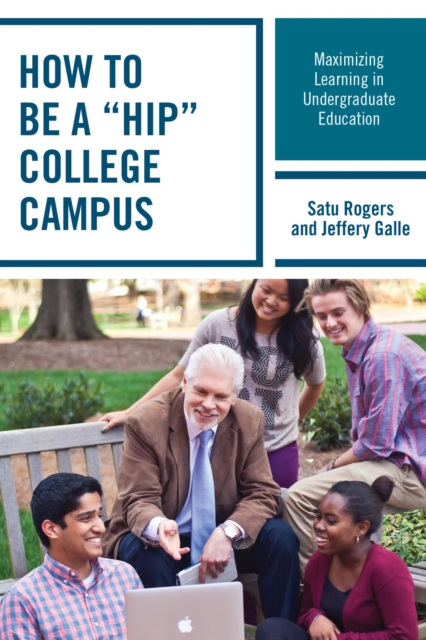
How to be a HIP \college campus\
This book is for current and future instructors of college courses, especially those wanting to use more active learning pedagogies. It makes the case for a campus-wide adoption of high-impact practices, across disciplines and in both academic and co-curricular life.
eBook

Academic work and performativity
Neoliberal reforms in higher education have resulted in corporate managerial practices in universities and a drive for efficiency and productivity in teaching and research. As a result, there has been an intensification of academic work, increased stress for academics and an emphasis on accountability and performativity in universities. This paper critically examines these developments in institutions and draws on evidence from universities across the sector and a detailed case study in one university to identify the impacts of these changes on academic work. Given its ubiquity and the link of academic productivity to institutional experience, the paper argues that assumptions underpinning academic performance management need to be rethought to recognise the fundamentally intrinsic motivational nature of academic work. The paper explores the effects of performance management on individual academics as a case study in one institution and proposes a re-design of academic performance management to improve productivity based on the evidence.
Journal Article

Does university play significant role in shaping entrepreneurial intention? A cross-country comparative analysis
Purpose
– The purpose of this paper is to foster entrepreneurship among students and incubate more start-ups for economic prosperity, universities around the globe are required to play key role in developing overall conducive eco-system for student fraternity. Some previous studies have analysed student entrepreneurship and impact of entrepreneurship courses. However, role of universities as provider and enabler of entrepreneurial environment and its impact on entrepreneurial intent among students has not been studied in a cross-cultural context. Considering this, present study seeks to examine role played by universities in fostering entrepreneurial intention among post-graduate students.
Design/methodology/approach
– Researcher has taken the framework suggested by Kraaijenbrink et al. (2010) to understand university environment and theory of planned behaviour (Ajzen, 1985) to measure entrepreneurial intention and its antecedents among final year post-graduate management students of India, Malaysia and Singapore. Total sample size is 1,097. Data are analysed with help of exploratory factor analysis, multivariate analysis of variance (MANOVA) and structural equation modelling (SEM).
Findings
– Two factors emerge out of analysis in relation to university environment and support: first, targeted cognitive and non-cognitive support and second, general educational support. With help of SEM, attempt is made to find relationship between these two factors and entrepreneurial intention. It is found that university environment and support has significantly positive relationship with perceived behavioural control. With help of MANOVA, it is found that there is statistically significant difference between perceived university environment and support factors among students of India, Singapore and Malaysia. With this, for both factors highest mean score is found among students of Malaysia, followed by students of Singapore and India.
Originality/value
– Study has closely examined role played by university environment and support to foster entrepreneurship among young students. Findings of the study can be used by post-graduate educational institutes to design pedagogy, create enabling entrepreneurship support system and work towards becoming an entrepreneurial university.
Journal Article