
Catalogue Search | MBRL


Are you sure you want to remove the book from the shelf?

{{itemTitle}}
2,377
result(s) for
"University extension."
Sort by:

Out there learning : critical reflections on off-campus study programs
\"Universities across North America and beyond are experiencing growing demand for off-campus, experiential learning. Exploring the foundations of what it means to learn \"out there,\" Out There Learning is an informed, critical investigation of the pedagogical philosophies and practices involved in short-term, off-campus programs or field courses. Bringing together contributors' individual research and experience teaching or administering off-campus study programs, Out There Learning examines and challenges common assumptions about pedagogy, place, and personal transformation, while also providing experience-based insights and advice for getting the most out of faculty-led field courses.\" --Provided by publisher.
Book
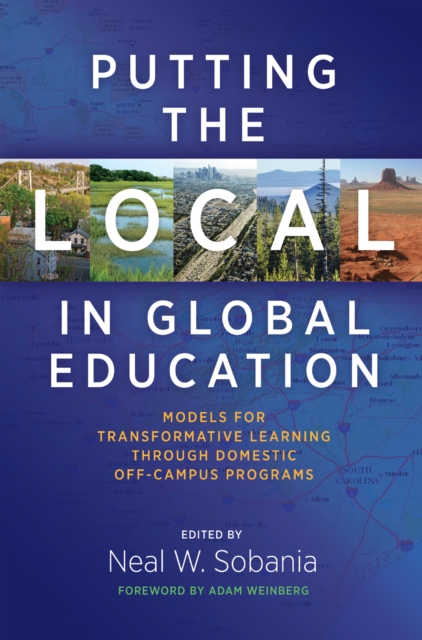
Putting the Local in Global Education
The position taken in this volume is that domestic off-campus study can be just as powerful a transformative learning experience as study overseas, and that domestic programs can equally expand students' horizons, their knowledge of global issues and processes, their familiarity and experience with cultural diversity, their intercultural skills, and sense of citizenship. This book presents both the rationale for and examples of \"study away\", an inclusive concept that embraces study abroad while advocating for a wide variety of domestic study programs, including community-based education programs that employ academic service-learning and internships. With the growing diversification-regionally, demographically, culturally, and socio-economically-of developed economies such as the US, the local is potentially a \"doorstep to the planet\" and presents opportunities for global learning. Moreover, study away programs can address many of the problematic issues associated with study abroad, such as access, finance, participation, health and safety, and faculty support. Between lower costs, the potential to increase the participation of student cohorts typically under-represented in study abroad, the lowering of language barriers, and the engagement of faculty whose disciplines focus on domestic issues, study at home can greatly expand the reach of global learning. The book is organized in five sections, the first providing a framework and the rationale for domestic study way programs; addressing administrative support for domestic vs. study abroad programs; exploring program goals, organization, structure, assessment and continuous improvement; and considering the distinct pedagogies of experiential and transformative education. The second section focuses on Semester Long Faculty Led Programs, featuring examples of programs located in a wide variety of locations - from investigations into history, immigration, culture, and the environment through localities in the West and th
eBook

Unlocking the Gates
Over the past decade, a small revolution has taken place at some of the world's leading universities, as they have started to provide free access to undergraduate course materials--including syllabi, assignments, and lectures--to anyone with an Internet connection. Yale offers high-quality audio and video recordings of a careful selection of popular lectures, MIT supplies digital materials for nearly all of its courses, Carnegie Mellon boasts a purpose-built interactive learning environment, and some of the most selective universities in India have created a vast body of online content in order to reach more of the country's exploding student population. Although they don't offer online credit or degrees, efforts like these are beginning to open up elite institutions--and may foreshadow significant changes in the way all universities approach teaching and learning.Unlocking the Gatesis one of the first books to examine this important development.
Drawing on a wide range of sources, including extensive interviews with university leaders, Taylor Walsh traces the evolution of these online courseware projects and considers the impact they may have, both inside elite universities and beyond. As economic constraints and concerns over access demand more efficient and creative teaching models, these early initiatives may lead to more substantial innovations in how education is delivered and consumed--even at the best institutions.Unlocking the Gatestells an important story about this form of online learning--and what it might mean for the future of higher education.
eBook

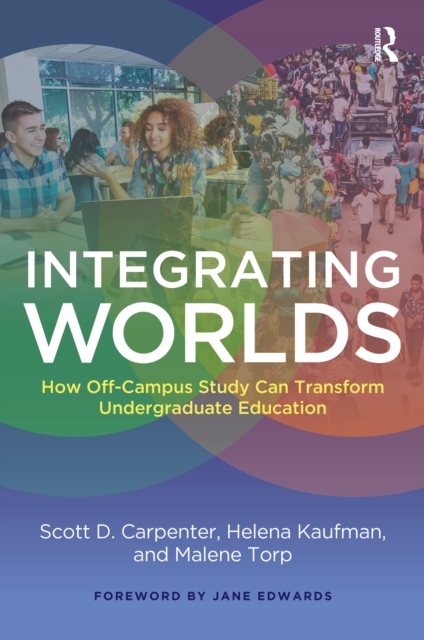
Integrating Worlds
What if our students learn the most when they're far from campus?Integrating Worlds demonstrates how high-quality off-campus study epitomizes integrative learning, both supporting and enhancing the entire undergraduate experience.While off-campus study (both study abroad or study away) occupies a marginal position on most campuses, it has the almost unique capacity to bring together a high concentration of high-impact educational practices. When we combine global learning with collaborative work, shared intellectual pursuits, learning communities, and more, these practices reinforce each other, exerting a multiplier effect that can potentially result in the most intense learning experience our students will have. It can energize and inspire them for the work they will continue to undertake on their home campus.It thus becomes crucial for us to identify or design high-quality programs that will achieve these goals. Moreover, we need to reimagine off-campus study as an integrated portion of the undergraduate arc-one that begins well before our students depart and continues long after they return. In this way, we help them understand the interconnectedness not only of the world, but also of their own education.At the same time, the authors recognize material constraints and educational imperatives. Off-campus study costs money; its complexity makes it difficult to assess; it overlaps increasingly with internships and civic engagement; and by its nature, it is more subject to external forces than the on-campus experience. In careful, practical ways Integrating Worlds advances suggestions for dealing with these issues.This book urges educators to go beyond the episodic ways we currently link on-campus curricula to off-campus experience. While of interest to specialists in international or intercultural education, it speaks most directly to faculty, deans and provosts-many of whom may have little (or dated) experience of study abroad and who thus feel unprepared to add
eBook

Study skills for foundation degrees
\"Study Skills for Foundation Degrees offers a step-by-step guide to the skills needed to successfully complete a Foundation Degree. Filled with activities and useful tips, it will help students to move from nervous novice to confident expert and provide them with the necessary tools to accomplish this. By reading this book, students will be able to learn new skills and enhance existing ones\"-- Provided by publisher.
BOOK
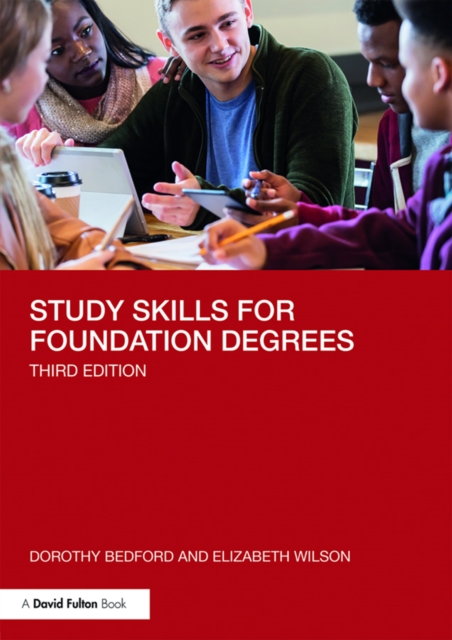
Study Skills for Foundation Degrees
Study Skills for Foundation Degrees offers a step-by-step guide to the skills needed to successfully complete a Foundation Degree. Filled with activities and useful tips, it will help students to move from nervous novice to confident expert and provide them with the necessary tools to accomplish this. By reading this book, students will be able to learn new skills and enhance existing ones.
This third edition has been fully updated and features new chapters on e-learning and dissertations as well as expanded sections on ethics, feedback and referencing. Each chapter includes practical guidance as well as student perspectives that will help students through their course of study. It includes advice on how to support learning, boost motivation and enhance time management, and covers all the essential skills required for successful study, including:
Effective reading and note-taking strategies
Developing oral skills in a wide range of presentation settings, including what makes a good presentation and how each stage of the process can be prepared for
Carrying out well-planned, methodologically sound and well-written research
Preparing for examinations and other forms of assessment
Producing a professional development portfolio or winning CV
Highly accessible, this new edition is an essential resource for all Foundation Degree students who want to get the most out of their course, mature students or anyone with limited or no experience of academic study.
eBook


University Extension Beyond the Educational Axis: Contributions and Challenges for the Empowerment Process of the Working Classes in Brazil
Objective: The objective of this article is to identify the contributions and challenges of the University Extension to the process of empowerment of the popular classes in Brazil. Theoretical Reference: The authors studied point to the possibility of the University Extension proposing dialogs and transformations between the university and various sectors of society (Soares, 2011). Maciel (2010) clarifies that the University Extension contributes to the approximation of the university with society, which contributes to the democratization of knowledge and development of the critical sense of the population. However, there are still challenges and difficulties regarding the implementation of the extensionist actions, both in relation to the implementation of the actions, as well as the continuity of the proposals developed. Design/Methodology/Approach: We research and study the articles on University Extension, from its genesis to the present day. A survey of articles on education in the capitalist society model was also carried out. The research was carried out from academic sites and periodicals. Results: Although there is a significant contribution of the University Extension to the process of empowerment of the popular classes in Brazil, there are still difficulties as to the continuous and effective execution in this process. Both as regards long-term actions, as well as the impact of the contradictions that exist in this model of society, which still persists inequalities, injustices and arbitrariness. Research, Practical and Social Implications: We suggest researches and in-depth studies on the theme, that make possible strategies for the Extension dialog with the community and be effective in a continuous and democratic manner. Originality/Value: The studies point to significant importance of the University Extension in terms of a dialogical relationship with society, as well as collaboration in the process of empowerment of the popular classes in Brazil.
Journal Article