
Catalogue Search | MBRL


Are you sure you want to remove the book from the shelf?

{{itemTitle}}
27
result(s) for
"University of Chicago Biography."
Sort by:

Yerkes Observatory, 1892-1950
Drawing on his experience as historian of astronomy, practicing astrophysicist, and director of Lick Observatory, Donald Osterbrock uncovers a chapter in the history of astronomy by providing the story of the Yerkes Observatory.
eBook

An academic life : a memoir
\" A compelling memoir by the first woman president of a major American university Hanna Holborn Gray has lived her entire life in the world of higher education. The daughter of academics, she fled Hitler's Germany with her parents in the 1930s, emigrating to New Haven, where her father was a professor at Yale University. She has studied and taught at some of the world's most prestigious universities. She was the first woman to serve as provost of Yale. In 1978, she became the first woman president of a major research university when she was appointed to lead the University of Chicago, a position she held for fifteen years. In 1991, Gray was awarded the Presidential Medal of Freedom, the nation's highest civilian honor, in recognition of her extraordinary contributions to education. An Academic Life is a candid self-portrait by one of academia's most respected trailblazers. Gray describes what it was like to grow up as a child of refugee parents, and reflects on the changing status of women in the academic world. She discusses the migration of intellectuals from Nazi-held Europe and the transformative role these exiles played in American higher education--and how the âemigrâe experience in America transformed their own lives and work. She sheds light on the character of university communities, how they are structured and administered, and the balance they seek between tradition and innovation, teaching and research, and undergraduate and professional learning. An Academic Life speaks to the fundamental issues of purpose, academic freedom, and governance that arise time and again in higher education and that pose sharp challenges to the independence and scholarly integrity of each new generation. \"-- Provided by publisher.
Book

Memoirs Red and White
Born after World War I into an educated and progressive Polish
family, Peter F. Dembowski was a teenager during the joint
occupation of Poland by Nazi Germany and the Soviet Union. His
account of life as a young Polish soldier, as an immigrant to
Canada, and finally as an American professor is a gripping
narrative of life before, during, and after the horrors of World
War II. Skillfully weaving a tapestry of emotion and history,
Dembowski recounts the effects of loss: at age twelve, his father's
death; and later, the arrest of his mother and sister by the
Gestapo and their execution in 1942 in the women's concentration
camp of Ravensbrück. Balancing those tragedies, Dembowski recalls
the loving care given him by Janina Dembowska, the wife of his
paternal uncle, as well as the inspiring strength of character he
witnessed in his teachers and extended family.
Still a very young-looking teenager, Dembowski became involved
with the Polish Underground in 1942. Suspected as a konspirator, he
was incarcerated in Pawiak Prison and later, after a rare release,
fought in the Warsaw Uprising of 1944. His on-the-ground account
describes the deprivations Polish soldiers faced as well as the
fierce patriotism they shared. With the defeat of the Uprising, he
was deported to Sandbostel; once liberated, he joined the Polish
Army in Italy, serving there for two years.
In 1947, Dembowski made the momentous decision not to return to
Poland but rather to emigrate to Canada. We learn of his stint as a
farmhand and, later, of his studies at the University of British
Columbia in Vancouver. He continued his education in France,
receiving a Doctorat de l'Université de Paris in Russian philology
and, in 1960, a PhD from the University of California at Berkeley
in medieval French. In tandem with his successful academic career
teaching at the University of Toronto and at the University of
Chicago, Dembowski describes his happy marriage and the joy of
family life.
eBook

Memoirs red and white : Poland, the war, and after
\"'Like the Polish flag, composed of two contrasting colors, red and white, my memoirs are cast in red and white. 'Red' treats largely my wartime life in Europe, life full of blood and death. My success in that part of my life was survival. 'White' represents my successful migration and peaceful life in America'--from the Preface; Born after World War I into an educated and progressive Polish family, Peter F. Dembowski was a teenager during the joint occupation of Poland by Nazi Germany and the Soviet Union. His account of life as a young Polish soldier, as an immigrant to Canada, and finally as an American professor is a gripping narrative of life before, during, and after the horrors of World War II. Skillfully weaving a tapestry of emotion and history, Dembowski recounts the effects of loss: at age twelve, his father's death; and later, the arrest of his mother and sister by the Gestapo and their execution in 1942 in the women's concentration camp of Ravensbruck. Balancing those tragedies, Dembowski recalls the loving care given him by Janina Dembowska, the wife of his paternal uncle, as well as the inspiring strength of character he witnessed in his teachers and extended family. Still a very young-looking teenager, Dembowski became involved with the Polish Underground in 1942. Suspected as a konspirator, he was incarcerated in Pawiak Prison and later, after a rare release, fought in the Warsaw Uprising of 1944. His on-the-ground account describes the deprivations Polish soldiers faced as well as the fierce patriotism they shared. With the defeat of the Uprising, he was deported to Sandbostel; once liberated, he joined the Polish Army in Italy, serving there for two years. In 1947, Dembowski made the momentous decision not to return to Poland but rather to emigrate to Canada. We learn of his stint as a farmhand and, later, of his studies at the University of British Columbia in Vancouver. He continued his education in France, receiving a Doctorat from l'Universite de Paris in Russian philology and, in 1960, a PhD from the University of California at Berkeley in medieval French. In tandem with his successful academic career teaching at the University of Toronto and at the University of Chicago, Dembowski describes his happy marriage and the joy of family life; 'Peter F. Dembowski's Memoirs Red and White : Poland, the War, and After is the moving testimony of an individual who has had firsthand knowledge of the most dramatic moments in the history of the twentierth century. His story is one of heroic courage, honesty, and optimism'--Thomas Pavel, Gordon J. Laing Distinguished Service Professor in Romance Languages and Literature, University of Chicago\"-- Provided by publisher.
Book

Autobiography of an Ex-White Man
An intensely personal meditation on the nature of America
by a White Philosopher who joined a Black Studies Department and
found his understanding of the world transformed by the
experience. Autobiography of an Ex-White Man is
an intensely personal meditation on the nature of America by a
White Philosopher who joined a Black Studies Department and found
his understanding of the world transformed by the experience. The
book begins with an autobiographical narrative of the events
leading up to Wolff's transfer from a Philosophy Department to the
W. E. B. Du Bois Department of Afro-American Studies at the
University of Massachusetts, and his experiences in the Department
with his new colleagues, all of whom had come to Academia from the
Civil Rights Movement of the 1960s. Wolff discovered that the
apparently simple act of moving across campus to a new Department
in a new building worked a startling change in the way he saw
himself, his university, and his country. Reading as widely as
possible to bring himself up to speed in his new field of academic
responsibility, Wolff realized after a bit that his picture of
American history and culture was undergoing an irreversible
metamorphosis. America, he realized, has from its inception been a
land both of Freedom and of Bondage: Freedom for the few, and then
for those who are White; Bondage at first for the many, and then
for those who are not White. Slavery is thus not an aberration, an
accident, a Peculiar Institution -- it is the essence and core of
the American experience. Wolff's optimistic outlook leads him to
express the hope that our acknowledging the realities of America's
racial history and present will begin to tear down the formidable
barrier to change. He sees this refashioning of the American
storyas a first step toward the crafting of a truly liberatory
project. Robert Paul Wolff is Professor of Afro-American Studies at
the University of Massachusetts-Amherst and the author of numerous
books, including Introductory Philosophy and In
Defense of Anarchism .
eBook
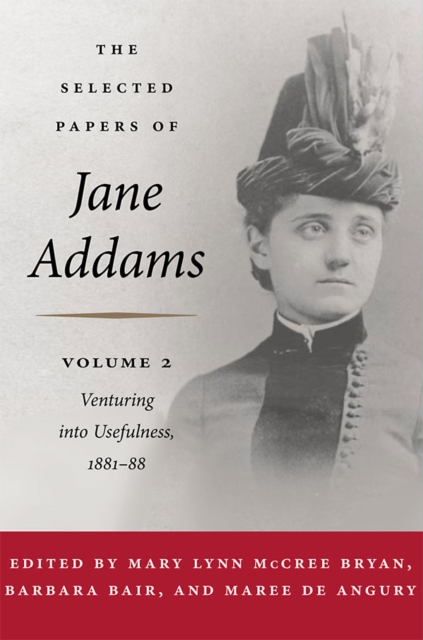
The selected papers of Jane Addams.: (Venturing into usefulness)
Venturing into Usefulness, the second volume of The Selected Papers of Jane Addams, documents the experience of this major American historical figure, intellectual, social activist, and author between June 1881, when at twenty-one she had just graduated from Rockford Female Seminary, and early 1889, when she was on the verge of founding the Hull-House settlement with Ellen Gates Starr. During these years she evolved from a high-minded but inexperienced graduate of a women's seminary into an educated woman and seasoned traveler well-exposed to elite culture and circles of philanthropy. Themes inaugurated in the previous volume are expanded here, including dilemmas of family relations and gender roles; the history of education; the dynamics of female friendship; religious belief and ethical development; changes in opportunities for women; and the evolution of philanthropy, social welfare, and reform ideas.
eBook

One Hundred Semesters
InOne Hundred Semesters, William Chace mixes incisive analysis with memoir to create an illuminating picture of the evolution of American higher education over the past half century. Chace follows his own journey from undergraduate education at Haverford College to teaching at Stillman, a traditionally African-American college in Alabama, in the 1960s, to his days as a professor at Stanford and his appointment as president of two very different institutions--Wesleyan University and Emory University.
Chace takes us with him through his decades in education--his expulsion from college, his boredom and confusion as a graduate student during the Free Speech movement at Berkeley, and his involvement in three contentious cases at Stanford: on tenure, curriculum, and academic freedom. When readers follow Chace on his trip to jail after he joins Stillman students in a civil rights protest, it is clear that the ideas he presents are born of experience, not preached from an ivory tower.
The book brings the reader into both the classroom and the administrative office, portraying the unique importance of the former and the peculiar rituals, rewards, and difficulties of the latter.
Although Chace sees much to lament about American higher education--spiraling costs, increased consumerism, overly aggressive institutional self-promotion and marketing, the corruption of intercollegiate sports, and the melancholy state of the humanities--he finds more to praise. He points in particular to its strength and vitality, suggesting that this can be sustained if higher education remains true to its purpose: providing a humane and necessary education, inside the classroom and out, for America's future generations.
eBook
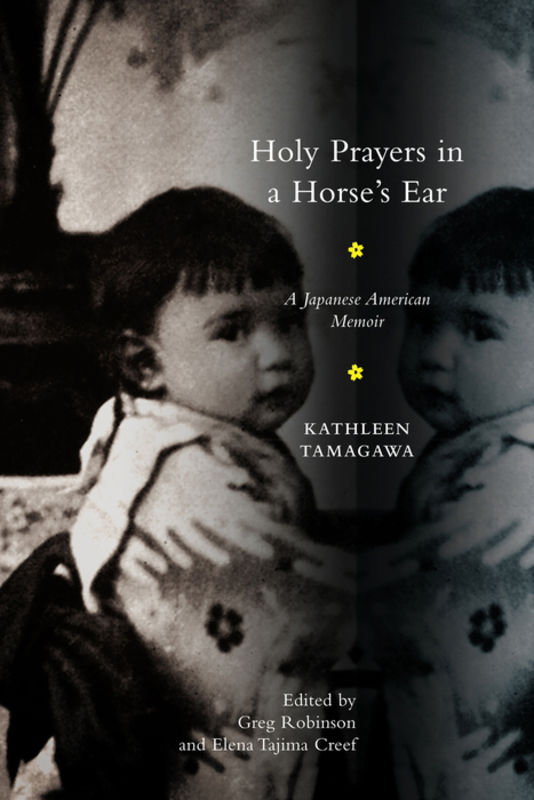
Holy Prayers in a Horse's Ear
Originally published in 1932, Kathleen Tamagawa's pioneering Asian American memoir is a sensitive and thoughtful look at the personal and social complexities of growing up racially mixed during the early twentieth century. Born in 1893 to an Irish American mother and a Japanese father and raised in Chicago and Japan, Tamagawa reflects on the difficulty she experienced fitting into either parent's native culture.
eBook

Henry Manne: A Man to Remember
There is no end to the superlatives that can he heaped upon the late Henry G. Manne for an academic career that spanned more than sixty years, from the day that he graduated from the University of Chicago Law School in 1952 until his death at the age of eighty-six in January 2015. Henry Manne, the American Spectator informs people, \"was law & economics\". That pithy description would have pleased him. He was not a man who tolerated nuances in argument. He was a man who loved hyperbole, especially when it was directed toward himself. Indeed, he thinks that it can be said that he was the embodiment of yet another maxim that speaks so well of his character: better to be attacked than ignored. It can be said against Manne that substantively many of the stark positions he advocated fifty years ago have not stood the test of time.
Journal Article