
Catalogue Search | MBRL


Are you sure you want to remove the book from the shelf?

{{itemTitle}}
1,381
result(s) for
"University of Oxford"
Sort by:

Oxford Botanic Garden & Arboretum : a brief history
Oxford Botanic Garden is the oldest surviving botanic garden in Britain and has occupied its site in central Oxford since 1621. Conceived as a place to grow medicinal plants, born in the turmoil of civil war and nurtured during the restoration of the monarchy, the garden has, unsurprisingly, a curious past. By tracing the work and priorities of each of the garden's keepers, this book explores its importance as one of the world's oldest scientific plant collections. It tells the story of the planting of the garden by its first keeper, Jacob Bobart, and his son, together with how they changed the garden to suit their own needs. The story develops during the eighteenth century as the garden grew exotic plants under glass and acquired a fine succulent collection but then experienced a downturn under the stewardship of the eccentric Professor Humphrey Sibthorp (famous for giving just one lecture in thirty-seven years). Finally, the narrative throws light on the partnership of gardener William Baxter and academic Charles Daubeny in the early nineteenth century, which gave the garden its glasshouses and ponds and contributed to its survival to the present day. This generously illustrated book is the first history of the garden and arboretum for more than a century and provides an essential introduction to one of Oxford's much-loved haunts.
Book
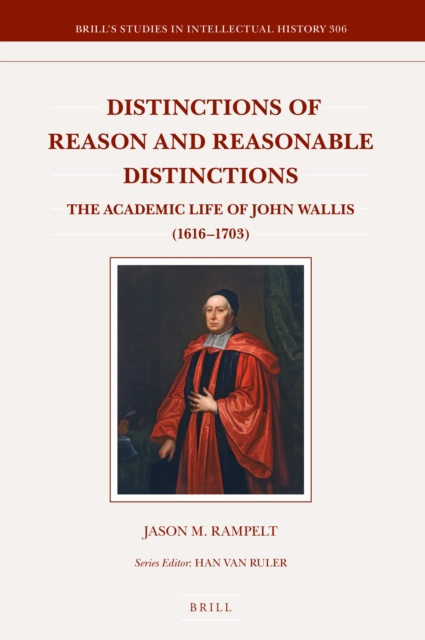
Distinctions of Reason and Reasonable Distinctions
An intellectual biography of John Wallis (1616-1703), professor of mathematics at Oxford. Despite war, church upheaval, and a revolution in science, Wallis advanced mathematics and natural philosophy within the university, bridging old and new.
eBook


Oxbridge men : British masculinity and the undergraduate experience, 1850-1920
The mythic status of the Oxbridge man at the height of the British Empire
continues to persist in depictions of this small, elite world as an ideal of
athleticism, intellectualism, tradition, and ritual. In his investigation of the
origins of this myth, Paul R. Deslandes explores the everyday life of undergraduates
at Oxford and Cambridge to examine how they experienced manhood. He considers
phenomena such as the dynamics of the junior common room, the competition of exams,
and the social and athletic obligations of intercollegiate boat races to show how
rituals, activities, relationships, and discourses all contributed to gender
formation. Casting light on the lived experience of undergraduates, Oxbridge Men
shows how an influential brand of British manliness was embraced, altered, and
occasionally rejected as these students grew from boys into men.
eBook

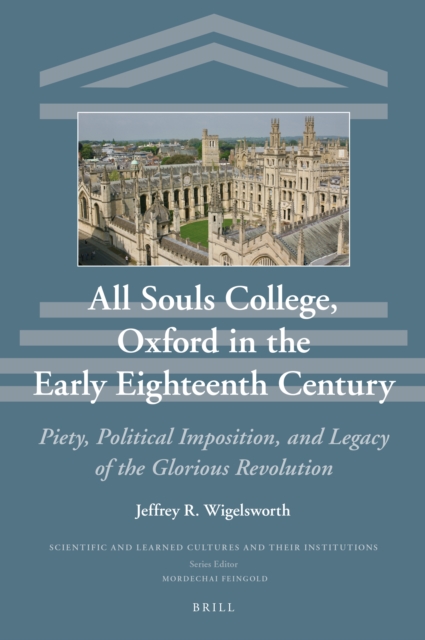
All Souls College, Oxford in the Early Eighteenth Century
A history of All Souls College under the Wardenship of Bernard Gardiner, that focuses on the ways in which the college and Gardiner were caught between competing visions of what England would look like in the aftermath of the Glorious Revolution.
eBook

Oxford college gardens
\"This revised and updated more affordable and smaller format hardback of Oxford College Gardens will be welcomed by alumni, the book trade and parents of the 25,000 students studying at Oxford at any one time. From the bijou corners of Corpus Christi to the wide open lawns of Trinity, Oxford's gardens are full of surprises and hidden corners - not least the fellows' or masters' gardens, which are usually kept resolutely private. Take a tour of the stunning gardens of this prestigious British institution without leaving your armchair with this elegant, authoritative analysis, full of glorious photographs which reveal their full interest and charm. The gardens of Oxford's thirty or so colleges are surprisingly varied in style, age and size, ranging from the ancient mound in the middle of New College to the fine modernist design which is St Catherine's. The eighteenth-century landscape school is represented in the magnificent acreage of Worcester, while the twentieth-century vogue for rock gardening is reflected at St John's. Founded in 1621, the university's Botanic Garden is the oldest botanic garden in Britain, holds one of the most diverse plant collections in the world, and has been a source of inspiration for writers from Lewis Carroll to Philip Pullman.\"--Provided by publisher.
Book
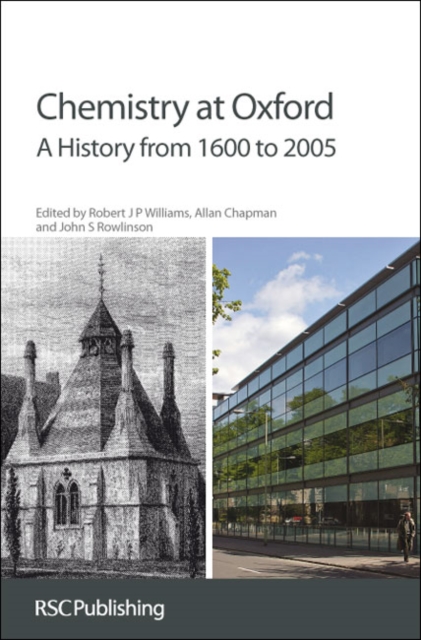
Chemistry at Oxford
This fascinating and unique history reveals the major influence of the Oxford Chemistry School on the advancement of chemistry. It shows how the nature of the University, and individuals within it, have shaped the school and made great achievements both in teaching and research. The book will appeal to those interested in the history of science and education, the city of Oxford and chemistry in general. Chemistry has been studied in Oxford for centuries but this book focuses on the last 400 years and, in particular, the seminal work of Robert Boyle, Robert Hooke, and the proto- Royal Society of the 1650's. Arranged in chronological fashion, it includes specialist studies of particular areas of innovation. The book shows that chemistry has advanced, not just as a consequence of research but, because of the idiosynchratic nature of the collegiate system and the characters of the individuals involved. In other words, it demonstrates that science is a human endeavour and its advance in any institution is conditioned by the organization and people within it. For chemists, the main appeal will be the book's examination of the way separate branches of chemistry (organic, physical, inorganic and biological) have evolved in Oxford. It also enables comparison with the development of the subject at other universities such as Cambridge, London and Manchester. For historians and sociologists, the book reveals the motivations of both scientists and non-scientists in the management of the School. It exposes the unusual character of Oxford University and the tensions between science and administration. The desire of the college to retain its academic values in the face of external and financial pressures is emphasized.
eBook
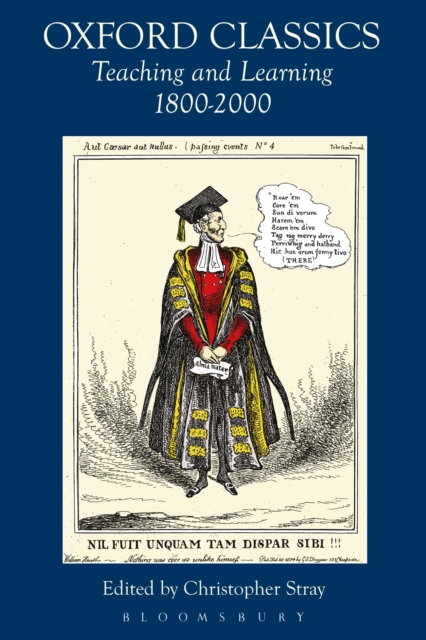
Oxford classics : teaching and learning, 1800-2000
Oxford, the home of lost causes, the epitome of the world of medieval and renaissance learning in Britain, has always fascinated at a variety of levels: social, institutional, cultural.Its rival, Cambridge, was long dominated by mathematics, while Oxford's leading study was Classics.
eBook