
Catalogue Search | MBRL


Are you sure you want to remove the book from the shelf?

{{itemTitle}}
16,836
result(s) for
"Urban animals."
Sort by:


horse in the city
Honorable mention, 2007 Lewis Mumford Prize, American Society of City and Regional Planning
The nineteenth century was the golden age of the horse. In urban America, the indispensable horse provided the power for not only vehicles that moved freight, transported passengers, and fought fires but also equipment in breweries, mills, foundries, and machine shops.
Clay McShane and Joel A. Tarr, prominent scholars of American urban life, here explore the critical role that the horse played in the growing nineteenth-century metropolis. Using such diverse sources as veterinary manuals, stable periodicals, teamster magazines, city newspapers, and agricultural yearbooks, they examine how the horses were housed and fed and how workers bred, trained, marketed, and employed their four-legged assets. Not omitting the problems of waste removal and corpse disposal, they touch on the municipal challenges of maintaining a safe and productive living environment for both horses and people and the rise of organizations like the American Society for the Prevention of Cruelty to Animals.
In addition to providing an insightful account of life and work in nineteenth-century urban America, The Horse in the City brings us to a richer understanding of how the animal fared in this unnatural and presumably uncomfortable setting.
eBook

What do you find in a backyard?
\"Photographs and accessible text combine to guide readers as they discover the often overlooked ecosystems found outside their own back doors\"-- Provided by publisher.
Book


Coyote moon
\"A nonfiction picture book about coyotes hunting in suburban neighborhoods at night.\"-- Provided by publisher.
Book
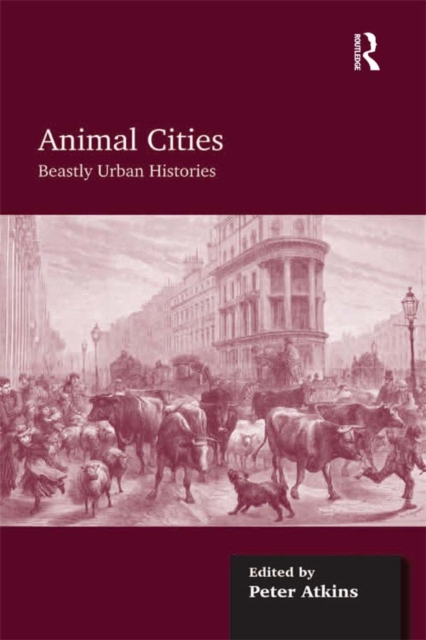
Animal Cities
Animal Cities builds upon a recent surge of interest about animals in the urban context. Considering animals in urban settings is now a firmly established area of study and this book presents a number of valuable case studies that illustrate some of the perspectives that may be adopted. Having an 'urban history' flavour, the book follows a fourfold agenda. First, the opening chapters look at working and productive animals that lived and died in nineteenth-century cities such as London, Edinburgh and Paris. The argument here is that their presence yields insights into evolving understandings of the category 'urban' and what made a good city. Second, there is a consideration of nineteenth-century animal spectacles, which influenced contemporary interpretations of the urban experience. Third, the theme of contested animal spaces in the city is explored further with regard to backyard chickens in suburban Australia. Finally, there is discussion of the problem of the public companion animal and its role in changing attitudes to public space, illustrated with a chapter on dog-walking in Victorian and Edwardian London. Animal Cities makes a significant contribution to animal studies and is of interest to historical geographers, urban, cultural, social and economic historians and historians of policy and planning.
eBook

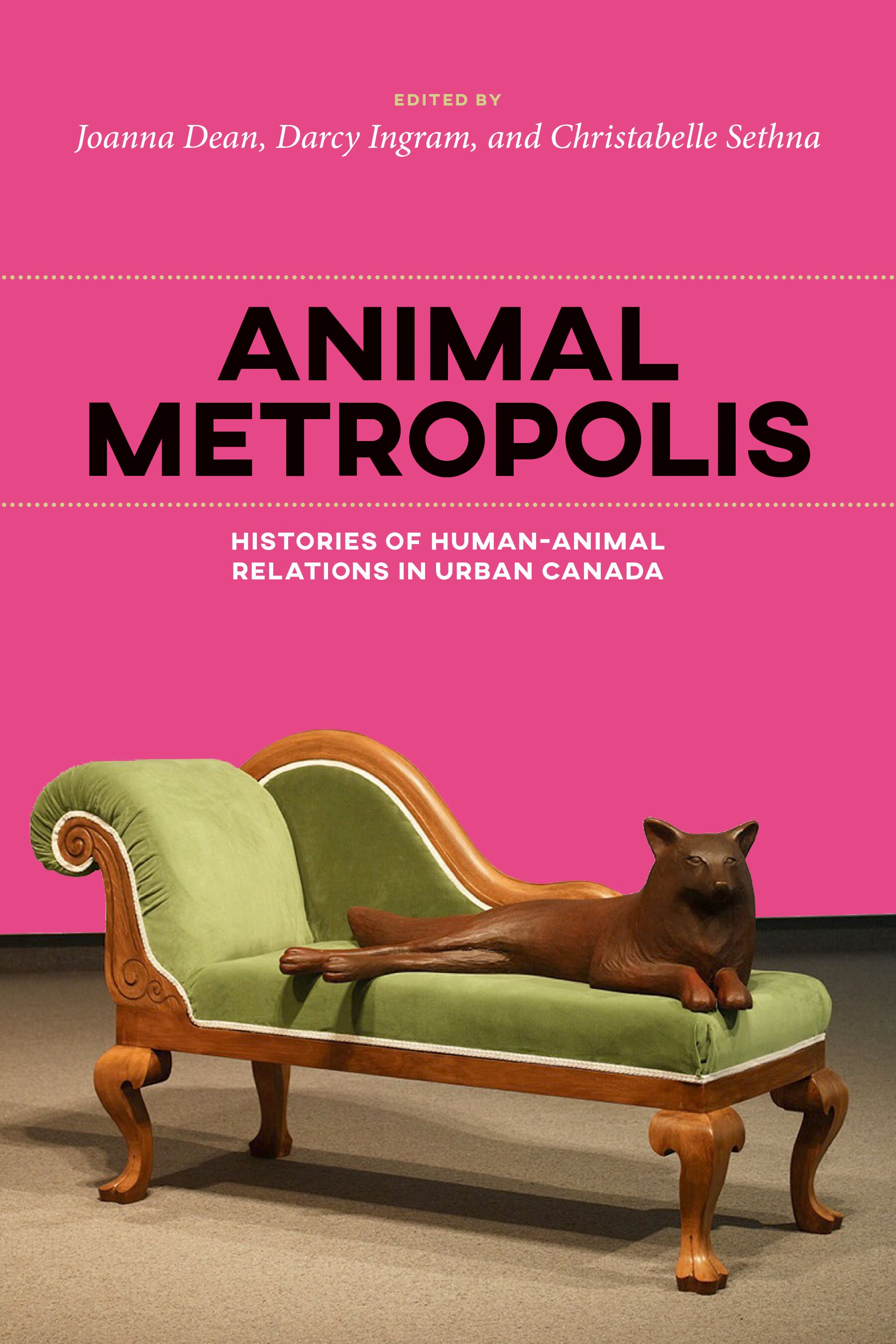
Animal Metropolis
Animal Metropolis brings a Canadian perspective to the growing field of animal history, ranging across species and cities, from the beavers who engineered Stanley Park to the carthorses who shaped the city of Montreal. Some essays consider animals as spectacle: orca captivity in Vancouver, polar bear tourism in Churchill, Manitoba, fish on display in the Dominion Fisheries Museum, and the racialized memory of Jumbo the elephant in St. Thomas, Ontario. Others examine the bodily intimacies of shared urban spaces: the regulation of rabid dogs in Banff, the maternal politics of pure milk in Hamilton and the circulation of tetanus bacilli from horse to human in Toronto. Another considers the marginalization of women in Canada’s animal welfare movement. The authors collectively push forward from a historiography that features nonhuman animals as objects within human-centered inquiries to a historiography that considers the eclectic contacts, exchanges, and cohabitation of human and nonhuman animals. With contributions by: Kristoffer Archibald, Jason Colby, George Colpitts, Joanna Dean, Carla Hustak, Darcy Ingram, Sean Kheraj, William Knight, Sherry Olson, Rachel Poliquin, and Christabelle Sethna
eBook

Going wild : helping nature thrive in cities
Readers will find out what urban rewilding is and how it can make our lives (and our planet) safer and healthier.
Book

Urban bird ecology and conservation
Now that more than half of the world's population lives in cities, the study of birds in urban ecosystems has emerged at the forefront of ornithological research. An international team of leading researchers in urban bird ecology and conservation from across Europe and North America presents the state of this diverse field, addressing classic questions while proposing new directions for further study. Areas of particular focus include the processes underlying patterns of species shifts along urban-rural gradients, the demography of urban birds and the role of citizen science, and human-avian interaction in urban areas. This important reference fills a crucial need for scientists, planners, and managers of urban spaces and all those interested in the study and conservation of birds in the world's expanding metropolises.
eBook