
Catalogue Search | MBRL


Are you sure you want to remove the book from the shelf?

{{itemTitle}}
1,893
result(s) for
"Urbanization India."
Sort by:


Ecologies of urbanism in India : metropolitan civility and sustainability
Essays follow rapidly proliferating and resource-intensive Indian urbanism in everyday environments. Case studies on nature conservation in cities, urban housing and slum development, waste management, urban planning, and contestations over the quality of air, water, and sanitation in Delhi and Mumbai illuminate urban ecology perspectives throughout the twentieth century. The collection highlights how struggles over the environment and one's quality of life in urban centers are increasingly framed in terms of their future place in a landscape of global sustainability. The text brings historical particularity and ethnographic nuance to questions of urban ecology and offers novel insight into theoretical and practical debates on urbanism and sustainability.
eBook
Urbanization beyond municipal boundaries
The report is organized into three chapters: chapter two looks at the pace and patterns of India's urbanization, providing a 100-year perspective on demographic shifts and a 20-year perspective on the spatial distribution of jobs across India's portfolio of settlements. The review is based on a careful, spatially detailed analysis of data from economic and demographic censuses, annual surveys of industry, national sample surveys, and special surveys of freight transport. This chapter provides diagnostics on whether Indian industry is adequately exploiting agglomeration economies and whether there are hints of specific barriers to the natural tendency of standardized industry to reshuffle from large metropolitan areas to smaller urban areas. Chapter three examines specific policy issues and investment bottlenecks that are curbing the pace and benefits of urbanization in India. The policy issues relate to land markets and housing, connectivity (within and between cities), and access to basic services. The purpose of this analysis is to unravel the specific distortions that may be preventing India from reaping the entire range of benefits of urbanization. Chapter four provides some options for policy reform, distilling lessons from relevant international experience. It provides options for establishing the 'rules of the game' that can define the workings of land and property markets as well as coordination of land use and infrastructure in cities. This chapter also provides a framework for policy makers to identify the role of regulatory and price reform in expanding infrastructure services and to make investments that enhance capacity.
eBook

Subaltern Urbanisation in India
âThis volume decentres the view of urbanisation in India from large agglomerations towards smaller urban settlements.It presents the outcomes of original research conducted over three years on subaltern processes of urbanization.The volume is organised in four sections.
eBook

India's reluctant urbanization : thinking beyond
\"Given the expected scale of the urban transformation in India over the next few years and the time span within which this will occur, this study presents a crucial analysis of the challenges facing 'urban' India. Through a close examination of India's policies, economic system, social systems and politics, it explores the numerous perspectives and debates on India's urbanization.The book attempts to disaggregate the overall macro 'picture' of increased urbanization painted in recent policy discourses to understand where it is happening, what the drivers/ forces are - local, regional, national and international, the dividends and perils of urbanization, actors/stakeholders and their engagement with 'urban' at various levels - from grass root level to overall city level, and the future of urbanization. The authors link contemporary urban issues with emerging challenges associated with policies and city management, matters which are yet to attract sufficient attention in public discourse. They present the alternative paradigms and 'innovative' responses that have emerged to deal with challenges of 'reluctant' urbanization, which often work on the boundaries of 'formal' systems. The findings identify overlapping and intertwined areas for possible action, although the objective of the book is not to be prescriptive of any particular strategy of paradigm, but rather survey the potential options for the future development.India's Reluctant Urbanization is essential reading for scholars and researchers of urban economics and those interested in development economics and in particular India's economy\"-- Provided by publisher.
Book
Nagar aur Lokniti
The book provides a large number of practical examples from India and abroad to enable policy-makers undertake reforms in urban and regional planning, financing, and governance to meet the challenges of urbanization in India. It combines theory and practice to draw lessons for an urban agenda for India and recognizes the central role of cities in catalysing growth and generating public finance for economic development.
eBook

Urban villager : life in an Indian satellite town
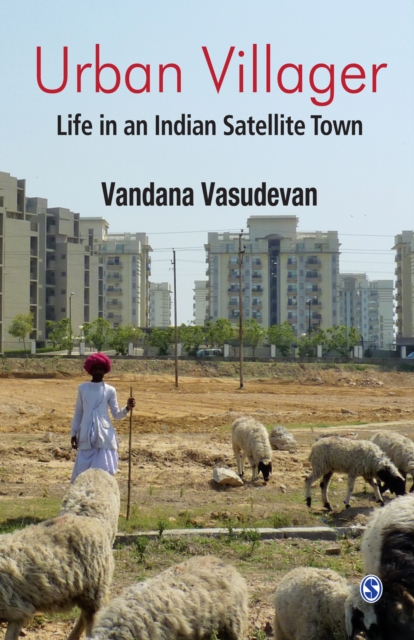
Urban Villager is a superbly etched and finely detailed representation of the life of an 'urban villager' in a modern satellite town of India. It describes how Delhi, as a city, is growing radially, stretching its way into the rural fringes of Haryana and Uttar Pradesh that border the city to form the National Capital Region. Through the microcosm of Greater Noida, a suburb of New Delhi, the author draws a portrait of life in a semi-urban town, where billion dollar homes and villages with no sewage system share the same pin code. Some farmers sell their land and try to cope with a new found prosperity; others refuse and break into agitations that make newspaper headlines. A builder destroys a wetland to make a township while the middle class in high rises frets about power and security. A few kilometres away, the Formula One event hosts international celebrities amidst bewildered villagers. Living here is being witness to the contradictions and ironies that occur when India is forced to co-exist with Bharat. The author frequently draws parallels with similar kinds of urbanisation on the outskirts of other Indian metros. Across the country, the city gobbles up more and more of what was once the countryside-whether it is Sriperumbudur in Chennai, Belapur in Mumbai, Yelahanka on the outskirts of Bengaluru or Rajarhat New Town in Kolkata. No matter where you live in India, the story of this book could be the story you see in your city.
eBook